






Large Porcelain Serving Plate
These large porcelain serving plate examples bring generous proportions and historic hand-painted palettes to the dining table.
Large Porcelain Serving Plate
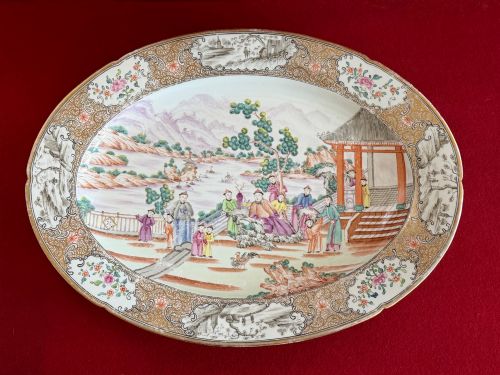
When you search for a large porcelain serving plate, you are looking at substantial chargers, meat platters and scalloped dishes designed for grand presentation. These pieces originate from varied historic workshops, spanning English factories and Asian export kilns.
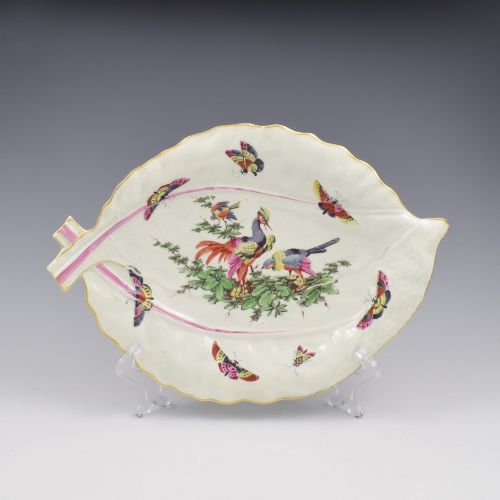
You are most likely to meet Chinese export wares, Japanese Imari chargers and Georgian English factory productions on this page. Forms range from heavy round chargers to square plates and leaf dishes.
The periods represented stretch from the seventeenth century through to the late nineteenth century. Each item demonstrates the generous scale required for historic dining arrangements.
How they were made
Potters shaped these large pieces from hard-paste and soft-paste porcelain before applying cobalt glazes and overglaze enamels. Many examples incorporate hand-painted details executed with fine brushwork.
Decorators frequently applied gold leaf and gold gilt highlights over the fired glaze to catch the candlelight. Kiln workers managed high temperatures to fuse the polychrome enamels and underglaze blues permanently to the ceramic body.
Large Porcelain Serving Plate Retail Price Guide 2026
Typical asking prices for large porcelain serving plate among the pieces listed under this phrase on Sellingantiques today, from the lower quarter to the upper quarter. They describe what is for sale here now, not the wider market.
Materials recorded across the inventory include soft-paste porcelain, cobalt glaze, gold leaf and overglaze enamels.
What varies in quality
The sophistication of the hand-painted decoration separates standard items from exceptional examples. Crispness in the overglaze enamels and cobalt glaze indicates superior control during the painting and firing stages.
The stability and weight of the porcelain body also distinguish finer items. Heavier chargers and platters often display more ambitious moulding, such as scalloped edges or complex leaf forms.
John Rose Coalport·Mintons
The Large Porcelain Serving Plate Glossary
- Charger
- A large decorative plate or platter used historically for service at grand meals or placed beneath smaller course dishes. These substantial pieces measure significantly wider than standard dinner plates.
- Imari
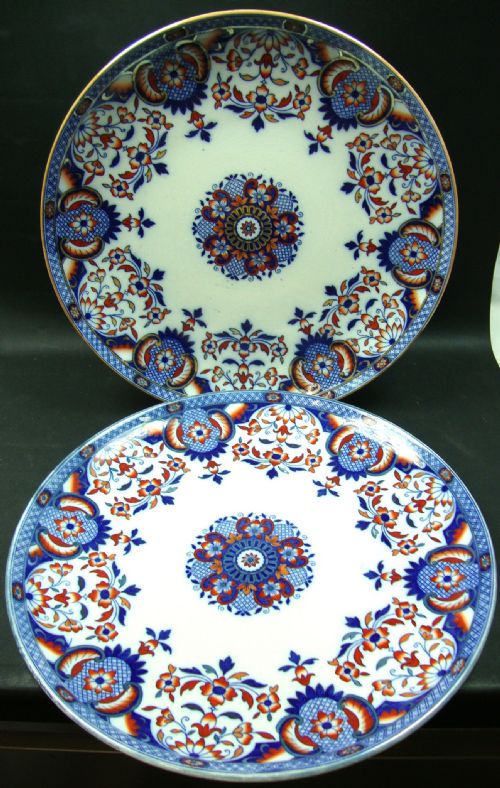
- A style of Japanese export porcelain featuring a distinctive palette of cobalt blue, iron red and gold gilt. The aesthetic was later copied by European factories.
- Soft-Paste Porcelain
- A ceramic composition containing glass frit and white clay, fired at lower temperatures than true hard-paste porcelain. It produces a warm tone beneath the glaze.
- Overglaze Enamels
- Coloured pigments painted onto an already fired and glazed ceramic surface, requiring a second, lower-temperature kiln firing to bond. This technique allows for vivid reds, greens and yellows.
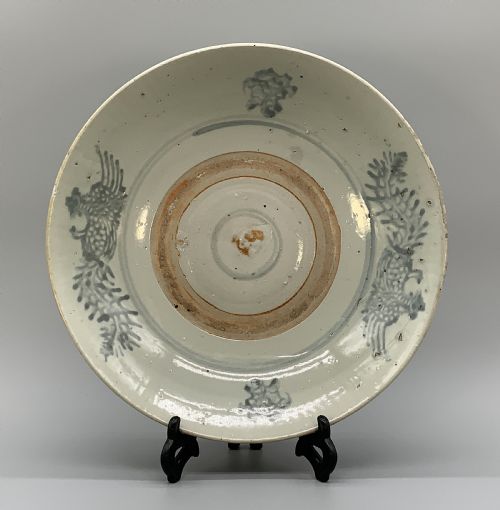
- Swatow Ware
- A category of Chinese export ceramics produced during the late Ming dynasty for overseas markets. These vessels often feature bold cobalt or polychrome brushwork.
Large Porcelain Serving Plate: Frequently Asked Questions
How were these large plates used historically?
These generous vessels served as central platters for meat, fish or fruit at formal dining tables. They functioned both as practical serving dishes and as decorative chargers displayed on sideboards.
In many households, such large pieces remained on permanent display to showcase household wealth and appreciation for imported ceramics.
Can I use these antique platters for food today?
While these pieces were originally functional tableware, centuries of age mean many owners now prefer to display them visually. Historic overglaze enamels and soft glazes can be sensitive to modern detergents and cutlery.
If you choose to serve food, hand washing is essential, and acidic foods should be avoided to protect the historic surface decoration.
How do I distinguish Chinese export from Japanese Imari?
Chinese export porcelain often employs famille rose pinks or deep underglaze cobalt with fine, narrative-driven brushwork. Japanese Imari typically relies on a strict triad of iron red, cobalt blue and gold leaf arranged in complex geometric and floral panels.
Examining the foot ring and paste body also helps reveal the regional characteristics of the manufacturing kiln.
How can I tell eighteenth-century pieces from nineteenth-century ones?
Eighteenth-century items frequently exhibit softer paste bodies and hand-mixed enamels that sit slightly raised on the surface. Nineteenth-century pieces, such as Victorian aesthetic movement or later Imari wares, often display harder, more uniform ceramic bodies and brighter, more mechanically consistent pigments.
Maker marks and factory stamps, where present, provide definitive chronological anchors.