

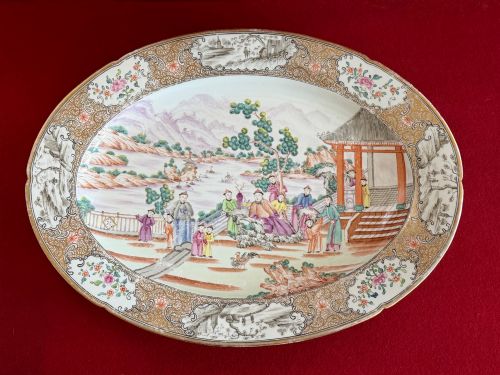
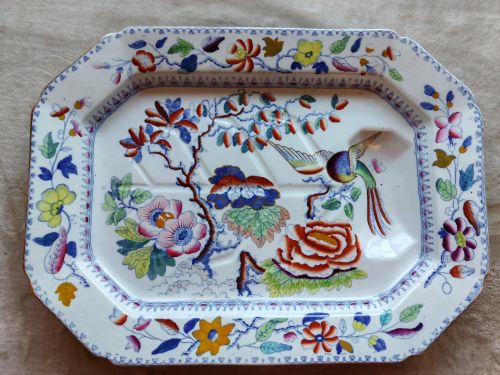
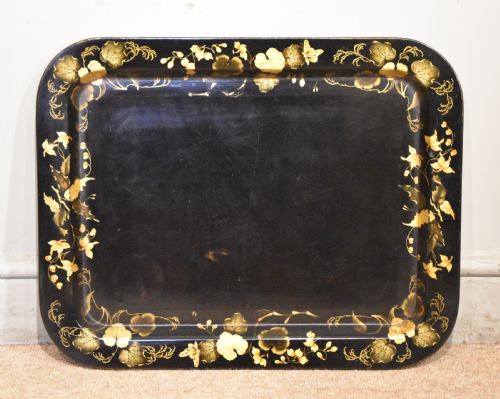
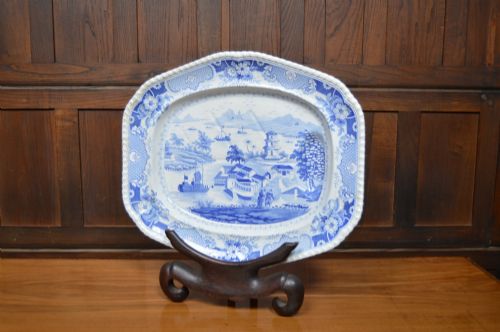



Regency Chinoiserie Platter
These regency chinoiserie platter pieces bring together 19th Century forms and East Asian motifs, offering a striking centrepiece for a table or sideboard.
Regency Chinoiserie Platter
A regency chinoiserie platter unites the bold decorative themes of East Asia with British manufacturing traditions spanning the Georgian, Regency, and Victorian eras. These items serve primarily as large serving platters, charger plates, trays, and platter drainers designed for dining or display.
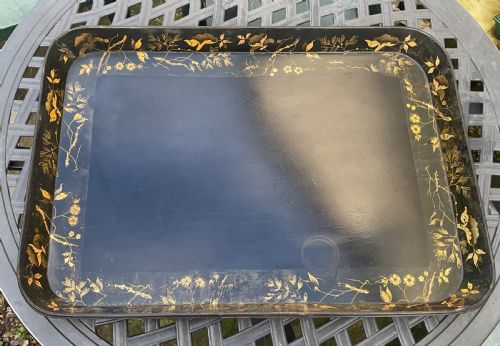
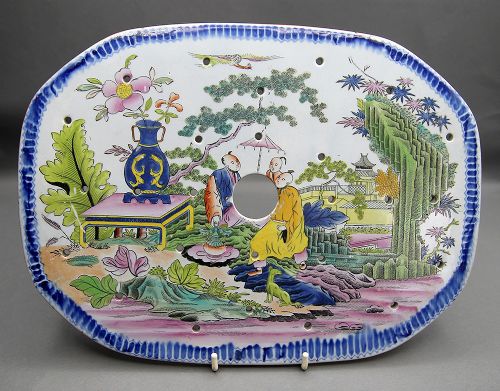
The objects seen here range from large papier-mâché and lacquered trays to ceramic meat platters and ironstone drainers. Buyers encounter pieces bearing transferware patterns such as India Temple, Mogul, and Indian Grasshopper, alongside gilded lacquer surfaces and Qianlong style porcelain.
Materials and construction
Makers utilised durable ironstone and earthenware alongside lightweight papier-mâché to form the core bodies of these serving vessels. Ceramic pieces often received blue and white transfer printing to apply intricate oriental scenes.
Lacquered papier-mâché items required careful application of glaze and gold leaf to achieve a reflective, ornamented surface. Potters and manufacturers combined these decorative layers with specialised drainage components like fitted platter drainers.
Regency Chinoiserie Platter Retail Price Guide 2026
Typical asking prices for regency chinoiserie platter among the pieces listed under this phrase on Sellingantiques today, from the lower quarter to the upper quarter. They describe what is for sale here now, not the wider market.
Several heavy meat platters come equipped with built-in drainers, proving that 19th Century dining took the management of roast meat juices very seriously.
Assessing quality
Quality rests upon the crispness of the transfer printing and the precision of the hand-applied gold leaf or lacquer. Finer examples display sharp detail in complex patterns such as Lanje Lijshen or specific coat of arms motifs.
The structural integrity of large papier-mâché trays and heavy ironstone meat platters dictates desirability. Superior pieces maintain their original glaze lustre and structural form without heavy wear to the decorative surface.
John Rose Coalport·Masons Ironstone·Minton·Spode·Clay
The Regency Chinoiserie Platter Glossary
- Chinoiserie
- European interpretation of Chinese and East Asian artistic traditions, frequently applied to ceramics and lacquerwork.
- Ironstone
- A heavy, durable type of earthenware patented in the 19th Century as a tough alternative to porcelain.
- Papier-mâché
- A composite material made of paper pulp or sheets of paper mixed with glue, pressed and lacquered to form rigid trays.
- Transferware
- Pottery decorated by pressing a design engraved on a copper plate onto paper, which was then transferred onto the unglazed ceramic body.
- Platter drainer
- A ceramic or metal insert placed inside a meat platter to allow juices to run away from the food.
Regency Chinoiserie Platter: Frequently Asked Questions
What is a regency chinoiserie platter used for?
These large vessels functioned primarily as serving platters for meat and large dishes at grand dining tables during the 19th Century.
Today, collectors utilise them as decorative wall plates, sideboard centrepieces, or functional serving trays for entertaining.
How do I identify a papier-mâché tray?
Papier-mâché items feel surprisingly light yet rigid, constructed from layers of paper pulp or bound paper finished with dark lacquer.
Many high-quality examples feature gilt ornamentation and maker stamps or signatures on the underside from prominent manufacturers like Clay.
What is ironstone?
Ironstone is a dense, opaque ceramic material developed in the 19th Century to offer the durability of stoneware alongside the refinement of porcelain.
It withstands heavy use, making it the preferred body for large meat platters and drainage stands.
What does transferware mean?
Transferware describes pottery decorated using a printed paper method to apply detailed blue and white scenes onto the ceramic surface.
This technique allowed factories to produce intricate oriental patterns consistently across large series of plates and chargers.