



Large Porcelain Punch Bowl
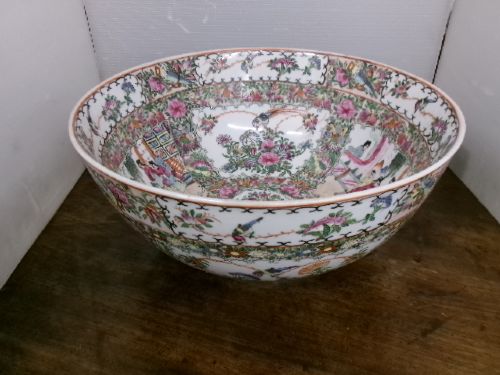
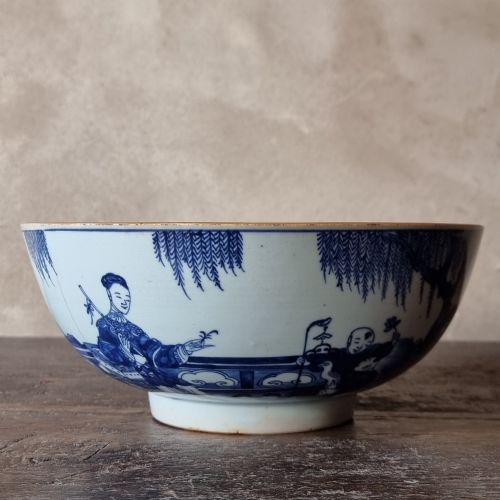
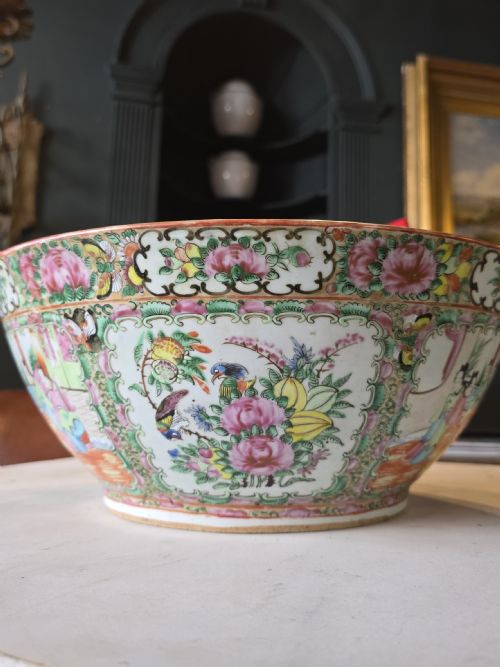
A large porcelain punch bowl commands the table with deep sides and painted decoration, offering both presence and history.
Large Porcelain Punch Bowl
A large porcelain punch bowl serves as a generous vessel designed for communal hospitality across centuries. When you search for a large porcelain punch bowl, you encounter pieces spanning the eighteenth, nineteenth and twentieth centuries, originating from Chinese Export workshops, Japanese kilns and European factories.
How they were made
These vessels utilise hard-paste or soft-paste porcelain shaped on the wheel or moulded before firing. Artisans applied cobalt blue underglaze decoration or polychrome overglaze enamels, often incorporating gold leaf and gilding to highlight intricate motifs.
Japanese and Chinese workshops relied on hand-painted techniques, building rich palettes of famille rose, Canton designs and Imari patterns. European makers such as Worcester and Samson replicated these Eastern aesthetics or applied native floral patterns.
Listings feature porcelain from the Ming dynasty, eighteenth-century Qing reigns, and nineteenth-century Japanese Satsuma and Imari kilns.
What varies in quality
The division between standard output and superior craftsmanship rests upon the crispness of the hand-painted brushwork and the complexity of the enamel palette. Pieces featuring detailed figural scenes, armorial bearings or uncommon butterfly motifs demonstrate greater artistic ambition than simpler floral repeats.
Purity of the white porcelain body, the evenness of the glaze without excessive bubbling, and the precise application of gold leaf distinguish finer studio output from everyday utilitarian wares. Scale and condition also govern desirability, particularly on wide vessels spanning sixteen to twenty inches.
Doulton Burslem·Ryuzan·Edm'e Samson·Chamberlain Worcester
The Large Porcelain Punch Bowl Glossary
- Famille Rose
- A palette of opaque overglaze enamels dominated by pink or rose colours, introduced in Chinese porcelain during the Qing dynasty. This technique allowed for nuanced shading in floral and figural compositions.
- Imari
- A style of Japanese porcelain featuring underglaze cobalt blue and iron red, complemented by gold highlights. These pieces were heavily exported to Europe from the Edo period onward.
- Armorial
- A term describing ceramics painted with specific European family coats of arms. Such pieces were custom ordered through Chinese Export trade routes.
- Canton
- A style of Chinese export porcelain characterised by panels of figures alternating with birds, butterflies and green foliage. Production flourished through the nineteenth century.
- Overglaze Enamel
- Coloured glass decoration applied to a previously fired and glazed porcelain surface, then fixed in a second, lower-temperature kiln. This method yields vibrant reds, greens, yellows and pinks.
Large Porcelain Punch Bowl: Frequently Asked Questions
What were large porcelain punch bowls used for?
These large vessels held mixed alcoholic or non-alcoholic punch for communal drinking at banquets and social gatherings during the eighteenth and nineteenth centuries. Guests ladled the drink directly from the centre of the table.
In later periods, owners repurposed these deep bowls as decorative centrepieces, fruit holders or display items in grand reception rooms.
How do I tell Chinese export from Japanese imari?
Chinese export porcelain often displays famille rose enamels, armorial crests or Mandarin figures within structured borders. The paste tends to be bright white with smooth glaze surfaces.
Japanese Imari relies on a distinct palette of dark cobalt blue, iron red and rich gilding, typically featuring dense brocade patterns and scalloped edges.
How do I live with a large antique bowl?
Position the bowl on a sturdy table or sideboard where its wide diameter and painted interior remain visible without risk of accidental knocks. Avoid placing heavy items inside that could scratch the interior glaze.
Clean the surface only with a dry or lightly damp soft cloth, keeping antique porcelain away from modern dishwashers and harsh detergents.
How do I distinguish eighteenth-century pieces from nineteenth-century ones?
Eighteenth-century Chinese export bowls generally exhibit finer potting, thinner walls and softer overglaze enamel colours associated with the Qianlong period. The painted figures and floral sprays display greater restraint. Nineteeeth-century Canton and Rose Medallion pieces often feature busier compositions, thicker porcelain bodies, heavier gilding and more saturated pink and green enamel tones.