



Large Pink Area Rug
A large pink area rug brings warmth and scale to a room, drawing on decades of woven tradition from Anatolia and Persia.
Large Pink Area Rug
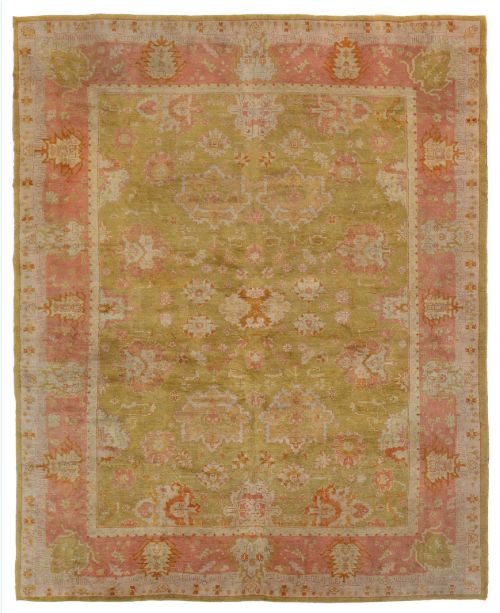
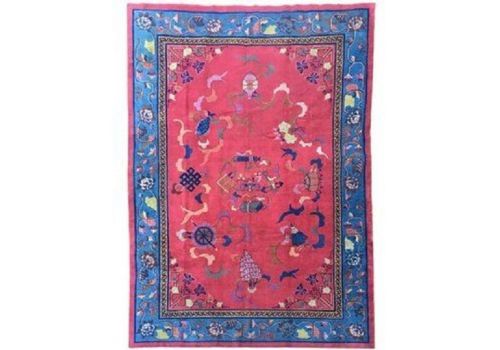
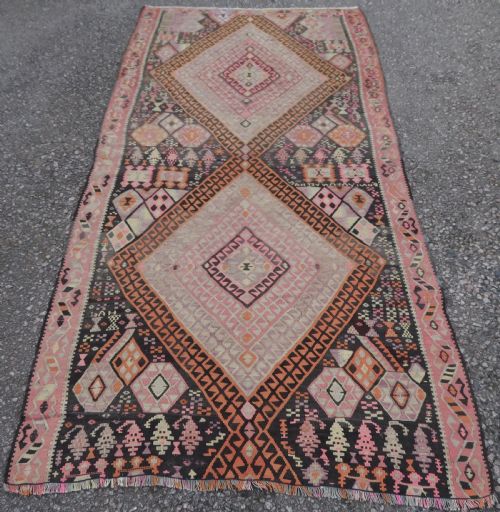
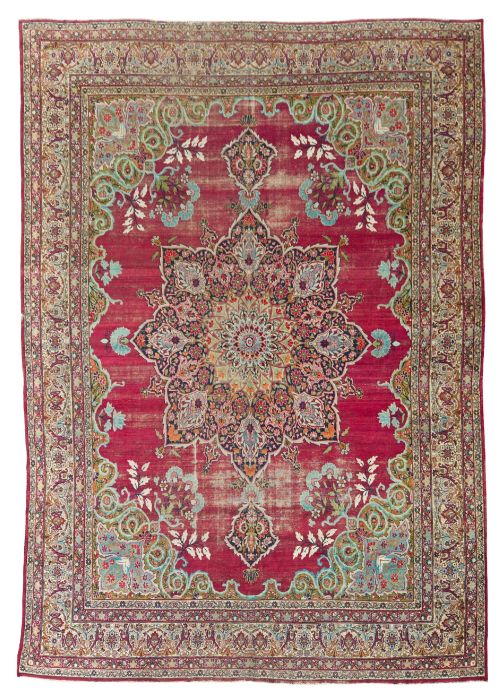
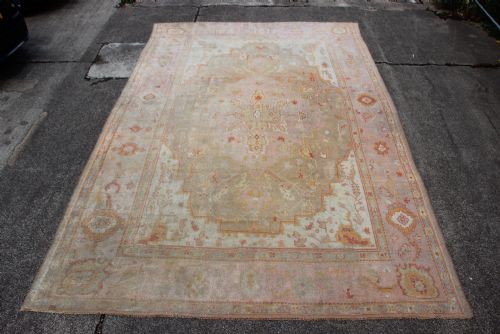
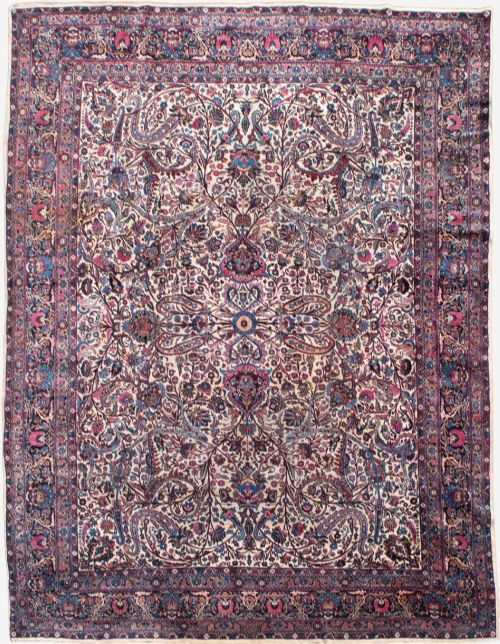
A large pink area rug is typically a generous floor covering originating from traditional weaving centres in Turkey and Persia, dating from the mid-nineteenth century to the early twentieth century. These pieces encompass roomsize carpets and expansive floor coverings in styles such as Oushak, Kirman, Hamadan, Sarouk, and Sivas.
The version you are most likely to meet on this page is an antique Turkish Oushak carpet displaying soft pinks and pastel colours, often measuring well over three metres in length. Alongside these, Persian roomsize carpets in Kirman or Sarouk variations frequently appear, offering distinctive floral or pictorial motifs on expansive fields.
How they were made
These floor coverings are constructed primarily from wool and cotton, utilising traditional hand-knotting techniques on sturdy foundations. Wool provides the resilient, tactile pile necessary for heavy domestic use, while cotton typically forms the warp and weft threads that give the carpet its structural stability.
Weavers achieved the characteristic pink grounds and muted pastels through natural dyeing methods applied to the wool before knotting. The density of the knotting and the quality of the fleece determine the drape and handle of each individual carpet.
Large Pink Area Rug Retail Price Guide 2026
Typical asking prices for large pink area rug among the pieces listed under this phrase on Sellingantiques today, from the lower quarter to the upper quarter. They describe what is for sale here now, not the wider market.
Anatolian and Persian weaving traditions account for the primary styles found across the inventory, including Oushak and Kirman.
What varies in quality
Quality in these carpets rests on the integrity of the wool, the fineness of the knotting, and the balance of the composition across a grand scale. A superior piece maintains structural harmony and pile resilience even when dimensions exceed four metres.
The nuance and depth of the pink dye ground also separate standard examples from exceptional ones. Subtle tonal variations within the pastel fields indicate careful dye preparation and skilled execution by the weaver.
Gavin Morton
The Large Pink Area Rug Glossary
- Oushak
- A traditional style of carpet originating from the town of Usak in western Turkey. These pieces are known for their luminous wool and expansive floral or geometric designs.
- Kirman
- A Persian carpet style hailing from a prominent weaving region in south-central Iran. They frequently feature intricate floral medallions and delicate pastel palettes.
- Warp
- The stationary vertical threads stretched onto the loom before weaving begins. The pile knots are tied around these foundational threads.
- Weft
- The horizontal threads passed through the warp threads after each row of knots is completed. This process secures the pile in place.
- Pile
- The upright cut loops of wool that form the usable surface of the carpet. Its thickness and density dictate the tactile feel underfoot.
Large Pink Area Rug: Frequently Asked Questions
How do I choose the right size?
Measure your floor space carefully, ensuring the rug sits comfortably beneath your main furniture groupings rather than floating entirely in the centre of the room. Large formats require adequate clearance around the edges to display the border patterns properly.
Consider the scale of the room and the pathways you use daily. A generous roomsize carpet anchors large seating areas effectively.
Are these carpets suitable for heavy traffic?
Traditional wool pile provides natural resilience and elasticity underfoot. These woven pieces were originally built to endure generations of domestic use in reception rooms and grand halls.
Regular rotation and gentle maintenance help distribute wear evenly across the surface. Proper underlay adds essential cushioning and prevents slip.
How do I care for antique wool?
Vacuum gently using a suction-only attachment without a rotating brush bar. This removes embedded dust without abrading the antique wool pile or catching the foundation threads.
Address accidental spills immediately by blotting with a clean, dry cloth. Avoid harsh chemical cleaners and consult a specialist for professional washing.
How do I date an older carpet?
Examine the materials, the construction techniques, and the characteristic dye palette of the field. Subtle shifts in colour and variations in the weave often point toward specific production periods.
Comparing regional motifs, such as Oushak or Kirman characteristics, helps narrow down the decade of manufacture.