

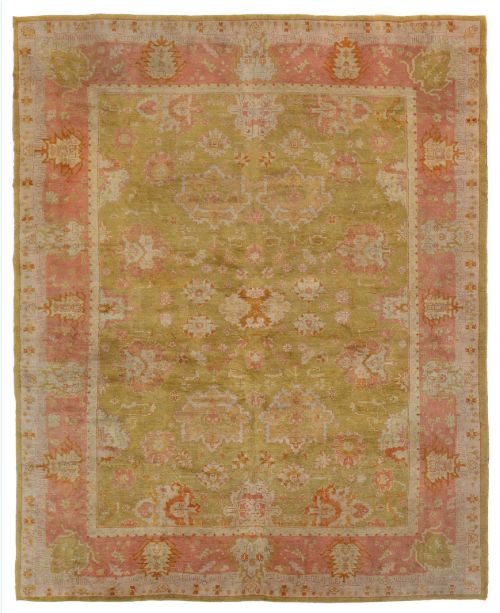


Pink Ushak Rug
A pink ushak rug brings warmth and historic pattern to a room, offering large-scale carpets woven with soft tones.
Pink Ushak Rug
A pink ushak rug represents a specific category of antique floor covering originating from Turkey, defined by large formats and distinctive coloration. Buyers searching for a pink ushak rug encounter generous area rugs and carpets dating from the late nineteenth and early twentieth centuries, specifically spanning the 1880s through to 1920. These pieces function as substantial room-anchoring textiles rather than small mats, often measuring over four metres in length.
The aesthetic of a pink ushak rug centres on faded terracotta, salmon and rose ground colours combined with large-scale floral or geometric motifs. Listings on this page demonstrate that these carpets belong to the broader Ottoman, Anatolian and Turkish traditions, carrying names such as Oushak alongside Ushak. Most examples surviving from this era are antique carpets produced for domestic and international drawing rooms.
How they were made
The construction of a pink ushak rug relies on traditional textile materials, using wool for the pile and cotton for the foundational structure. Weavers knotted the wool yarn onto cotton warps andwefts, creating a durable yet supple textile that yielded underfoot while maintaining structural integrity.
Production techniques followed centuries-old Anatolian traditions associated with the region of Ushak, employing hand-spun materials and natural or early synthetic dyes to achieve the characteristic faded pink and red hues. These methods produced floor coverings designed to withstand heavy use while developing a softer patina over decades.
Pink Ushak Rug Retail Price Guide 2026
Typical asking prices for pink ushak rug among the pieces listed under this phrase on Sellingantiques today, from the lower quarter to the upper quarter. They describe what is for sale here now, not the wider market.
Some carpets measure up to four and a half metres long, demanding serious dedication from anyone tasked with rolling them out.
What varies in quality
The quality of a pink ushak rug depends on the crispness of the drawing and the harmonious fading of the wool pile over time. Superior examples display balanced proportions and sophisticated integration of the traditional motifs across large fields.
Another factor influencing quality is the density and handle of the wool used in the pile, which dictates how the surface catches the light. Pieces that retain structural stability in the cotton foundation alongside even wear represent the higher tier of these antique carpets.
The Pink Ushak Rug Glossary
- Ushak
- A town in western Anatolia renowned for carpet production since the Ottoman period. Ushak rugs are famous for their large-scale designs and softer colour palettes.
- Anatolian
- Pertaining to the Asian territory of Turkey, encompassing historical weaving centres and tribal traditions. This term identifies the geographic origin of the carpets.
- Ottoman
- Relating to the historical empire that ruled large parts of Southeast Europe, Western Asia and North Africa. Ottoman design influences many traditional Turkish carpets.
- Oushak
- An alternative spelling for Ushak, frequently used in the international carpet trade to denote these specific Turkish rugs. It refers to the same provenance and style group.
Pink Ushak Rug: Frequently Asked Questions
How do I date a pink ushak rug?
Dating a pink ushak rug involves examining the materials, structural characteristics and dye palette used in the carpet. Pieces on this page generally date from the 1880s up to the 1920s.
Changes in wool texture and foundation tightness help distinguish pieces from the late nineteenth century versus the early twentieth century. Comparing known examples from the Ottoman and Anatolian traditions provides further context for specific decades.
Where were these carpets made?
These carpets were woven in the historic manufacturing region of Ushak in western Turkey. The area has a long tradition of producing distinctive floor coverings for export and domestic use.
Production centres in Anatolia utilised local materials such as wool and cotton to create these substantial rugs. The regional style is tied closely to broader Ottoman aesthetic traditions.
What materials are used in these rugs?
A pink ushak rug is constructed primarily from wool and cotton. Wool forms the soft pile on the surface, while cotton provides the strong foundation of warps andwefts.
These materials were chosen for their durability and ability to hold dye effectively. Over time, the wool pile softens while the cotton base maintains the structural shape of the large carpet.
How do I care for an antique carpet?
Caring for an antique carpet requires gentle maintenance such as regular vacuuming without a beater bar. Keeping the textile away from direct, harsh sunlight prevents the pink and salmon tones from fading further.
Professional cleaning by specialists in antique textiles ensures the wool and cotton foundations remain undamaged. Rotating the carpet periodically also distributes foot traffic evenly across the surface.