
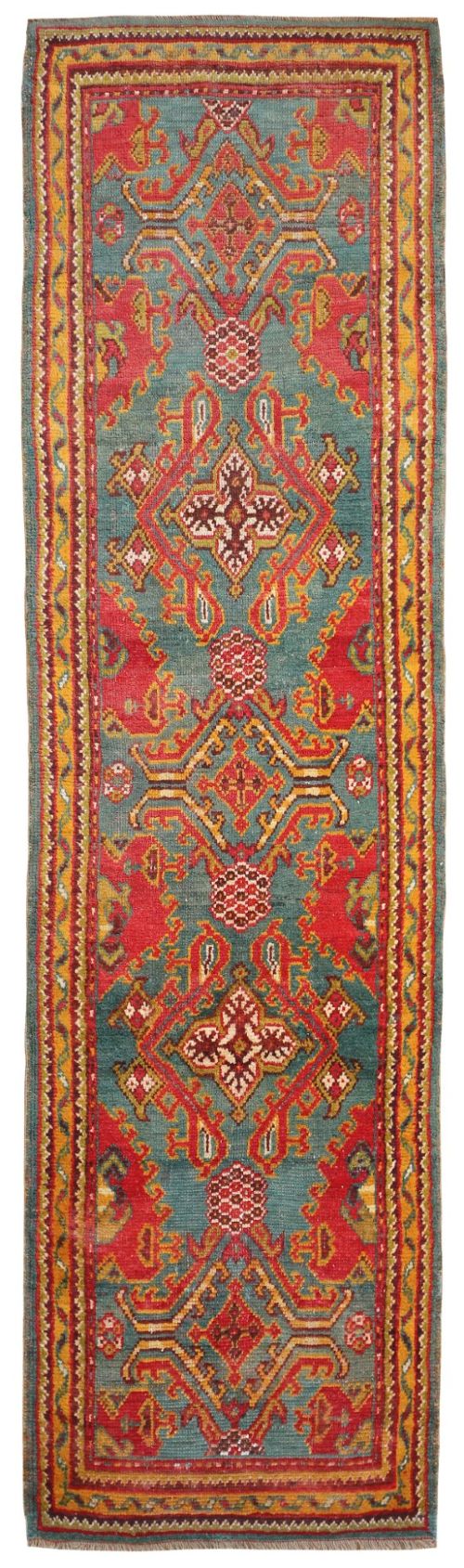



Traditional Ushak Carpet
A traditional ushak carpet brings enduring warmth to a room through centuries of Anatolian weaving tradition.
Traditional Ushak Carpet
A traditional ushak carpet represents a distinct lineage of floor coverings originating from the town of Ushak in western Anatolia. These pieces are defined by distinct Ottoman styles and large-scale floral or medallion designs that have populated fine interiors since the nineteenth century.
The selections available here range from expansive room-sized carpets and oversized formats to long runner rugs and flatwoven kilims. Many examples date from the late nineteenth and early twentieth centuries, spanning periods such as 1880, 1890, 1900, 1910, and 1920.
Beyond standard rugs and carpets, the grouping occasionally encompasses related seating forms incorporating authentic carpet textiles, such as armchairs upholstered in genuine materials. Most pieces you encounter adhere to traditional formats with ivory or muted grounds paired with characteristic Anatolian motifs.
Materials and Construction
These floor coverings are built upon sturdy cotton foundations that provide structural stability and tensile strength for the textile. Wool pile forms the primary surface, delivering tactile depth and resilience underfoot across decades of domestic use.
Certain specialised pieces incorporate angora wool, which yields a softer handle and a subtle sheen across the pile surface. Artisans utilised traditional knotting techniques alongside flatweaving methods for kilims, while subsidiary wooden and brass elements appear in associated furniture pieces.
Even a club armchair can wear an Ottoman carpet disguise, proving that historic weavers liked their seating as well-dressed as their floors.
Distinctions in Quality
Quality in a traditional ushak carpet rests upon the fineness of the weave and the deliberate handling of the wool. Finer knot counts allow for crisper articulation of the intricate Ottoman and Anatolian medallion designs.
The character of the wool itself dictates the visual depth of the pile, with select angora fibres offering a distinct lustre. Additionally, the subtlety of faded coloration and the integrity of the original proportions elevate certain examples above standard production.
Howard And Sons·Maples
The Traditional Ushak Carpet Glossary
- Ushak
- A traditional style of carpet originating from the town of Ushak in western Turkey, known for large floral motifs and subdued palettes. These textiles often feature prominent central medallions set against soft grounds.
- Kilim
- A flatwoven carpet or rug produced without a pile through the interweaving of warp and weft threads. This technique yields a lightweight textile suitable for both floor placement and wall hanging.
- Angora Wool
- Fibre sourced from angora goats, prized for its exceptional softness and natural sheen. When utilised in these carpets, it imparts a distinctive tactile quality.
- Runner
- A long, narrow carpet format designed specifically for hallways, corridors, or alongside beds. These pieces repeat central patterns to fit restricted spatial dimensions.
Traditional Ushak Carpet: Frequently Asked Questions
How do I date a traditional ushak carpet?
Dating relies on stylistic analysis of the Ottoman patterns, structural examination of the wool and cotton foundations, and historical production markers from the nineteenth and early twentieth centuries.
Changes in dyestuffs and weave density across decades such as 1880 through 1920 provide reliable chronological indicators for experienced collectors.
Where were these carpets originally made?
These textiles were produced in and around the historic weaving hub of Ushak in western Anatolia, Turkey. The region has sustained a continuous tradition of carpet manufacturing supplying both domestic and international markets.
Anatolian workshops adapted classical Ottoman designs to suit evolving aesthetic tastes throughout the nineteenth century.
How do I maintain a wool carpet?
Regular gentle vacuuming without a rotating brush roll prevents dust accumulation within the wool pile. Professional cleaning suited to antique textiles preserves the natural lanolin in the fibres.
Keeping the carpet out of direct, harsh sunlight prevents premature fading of the traditional vegetable or natural dyes.