
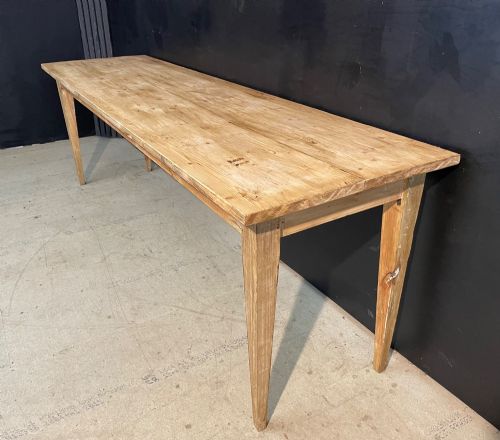
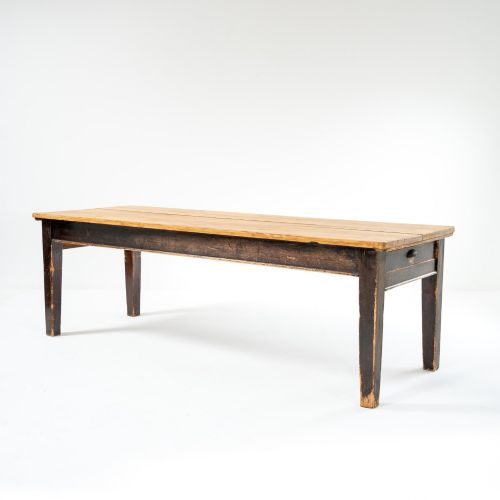
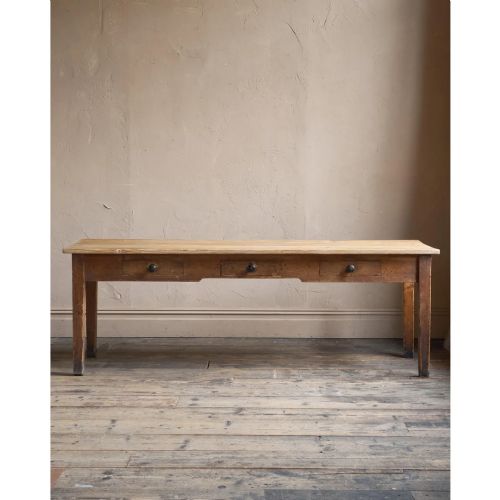
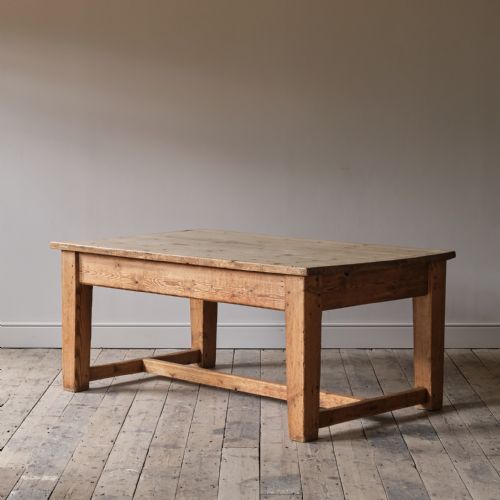

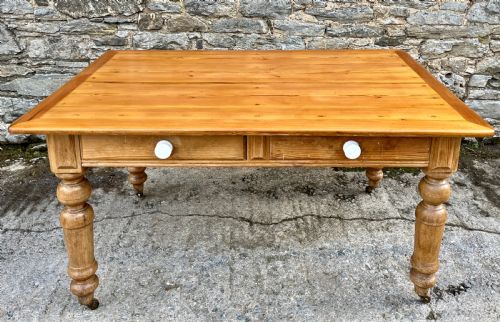


Large Pine Prep Table
A large pine prep table brings robust utility and honest charm to a working kitchen or dining space.
Large Pine Prep Table
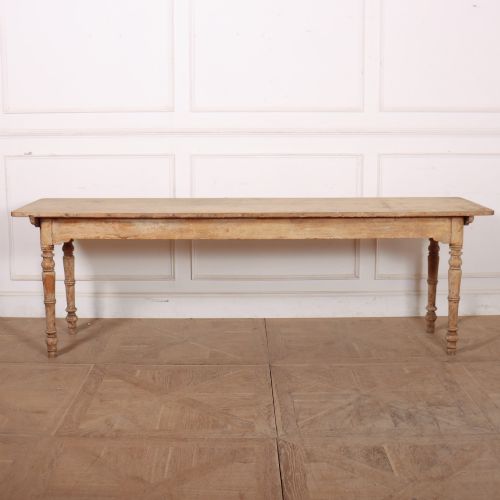
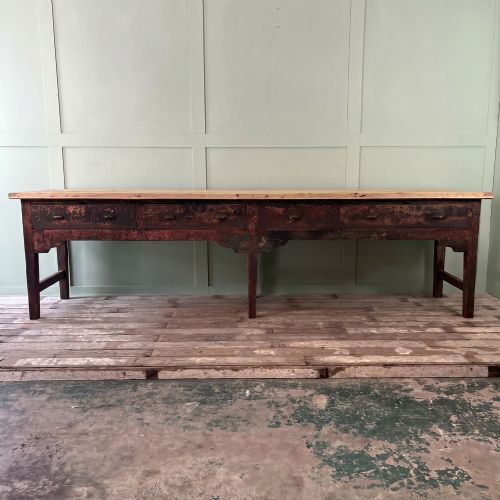
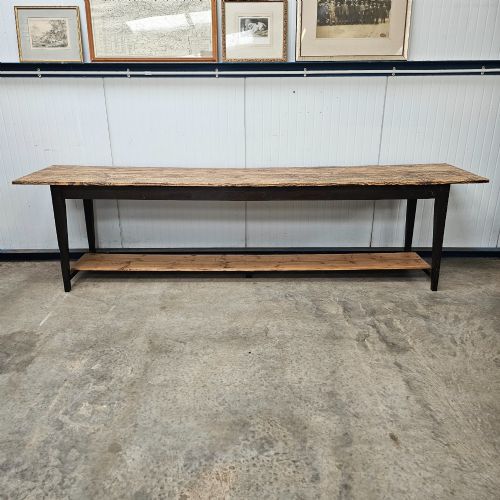
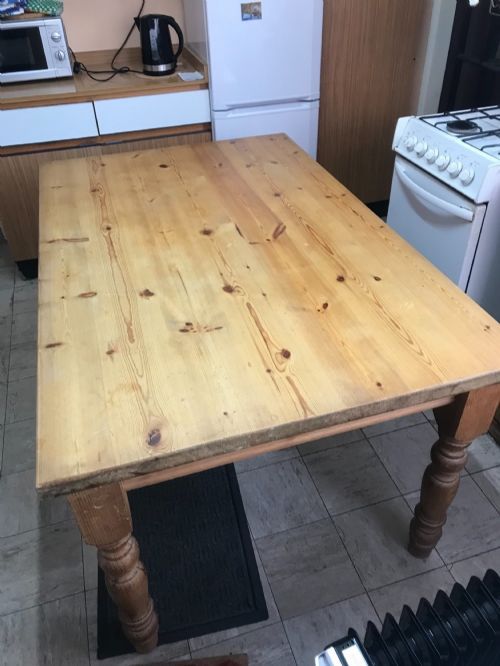
A large pine prep table is a heavy-duty working surface designed for domestic or commercial food preparation, scullery use, and large gatherings. You encounter these utility pieces primarily from the nineteenth century and the early twentieth century, spanning English, French, and Scandinavian origins. The forms range from scrubbed kitchen tables to two-tier harvest boards and drapers tables equipped with drawers.
These sturdy pieces arrive in various styles including Victorian farmhouse, rustic country, and Scandinavian country variants. Most examples measure significantly in length, often accommodating seating for multiple people or providing generous surface area for culinary tasks. They reflect an era of utilitarian design where solid timber and functional proportions were paramount.
How they were made
Makers constructed these tables predominantly from solid pine, frequently pairing the soft timber with oak structural elements, iron brackets, or brass fittings for added durability. Surfaces were either left as scrubbed bare wood or finished with traditional paint, particularly on bases and console frames. Joinery relied on heavy timber framing, square section supports, and sturdy drawers designed to withstand daily domestic labour.
Workshop methods prioritised utility, resulting in thick plank tops capable of enduring heavy chopping, kneading, and serving. Where paint was applied to the body, it often weathered naturally over decades of use in sculleries, farmhouses, and estate kitchens.
Many surviving prep tables still bear faint flour dust and ink stains embedded in the grain from past kitchen duties.
What varies in quality
The distinction between standard utility tables and superior examples lies in the integrity of the timber and the retention of original surface finishes. Tables retaining their early scrubbed pine top or authentic period paintwork command greater interest from collectors seeking genuine patina. Proportion, scale, and the presence of original drawers or two-tier shelving further elevate the character of a piece.
Construction methods also dictate grade, with solid timber framing and square section supports offering superior stability compared to altered or heavily restored alternatives. The balance between utilitarian wear and structural soundness defines the overall standard of each survivor.
The Large Pine Prep Table Glossary
- Prep table
- A heavy-duty working table designed for culinary tasks, food preparation, or scullery use. These pieces typically feature thick timber tops and sturdy frames.
- Drapers table
- A long, often narrow table originally utilised in textile shops for measuring and cutting cloth. They frequently incorporate lower shelves or multiple drawers.
- Harvest table
- An elongated dining or work table traditionally used during seasonal gatherings. They provide generous length to seat many people.
- Scrubbed pine
- Pine timber that has been repeatedly washed and scrubbed clean, producing a pale, weathered surface texture. This finish is characteristic of antique kitchen furniture.
- Dresser base
- The lower section of a kitchen dresser, often functioning independently as a sideboard or preparation surface with drawers and cupboards.
Large Pine Prep Table: Frequently Asked Questions
How do I clean a pine prep table?
Maintain the wood by wiping surfaces with a damp cloth and mild soap, avoiding harsh chemical cleaners that strip the historic finish.
For scrubbed pine tops, occasional light sanding or waxing preserves the pale, dry texture without removing the character accumulated over generations.
Are these tables suitable for daily kitchen use?
These robust surfaces were built specifically for heavy domestic labour, making them exceptionally practical for modern culinary preparation and dining.
Their solid construction handles daily wear comfortably, though using boards for heavy chopping protects the historic timber top from deep scars.
How do I date a 19th-century pine table?
Examine the construction methods, tool marks on the underside, and the type of fixings used in the frame and drawer assembly.
Earlier pieces from the early nineteenth century often display hand-planed surfaces and pegged joinery, whereas later Victorian and Edwardian examples show machine-sawn components.
What is the difference between a prep table and a harvest table?
Prep tables generally focus on utilitarian tasks with thick boards and sometimes lower storage tiers for kitchen equipment.
Harvest tables are typically designed for seating large groups during meals, prioritising legroom and length over lower shelving.