
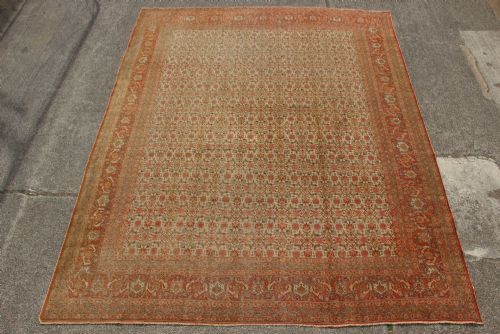
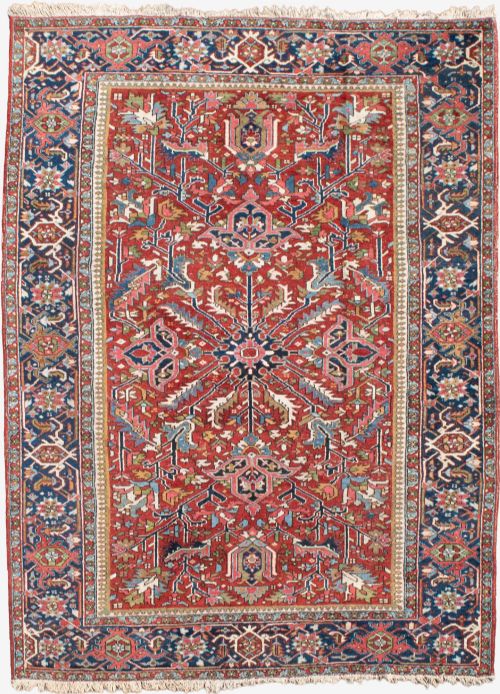

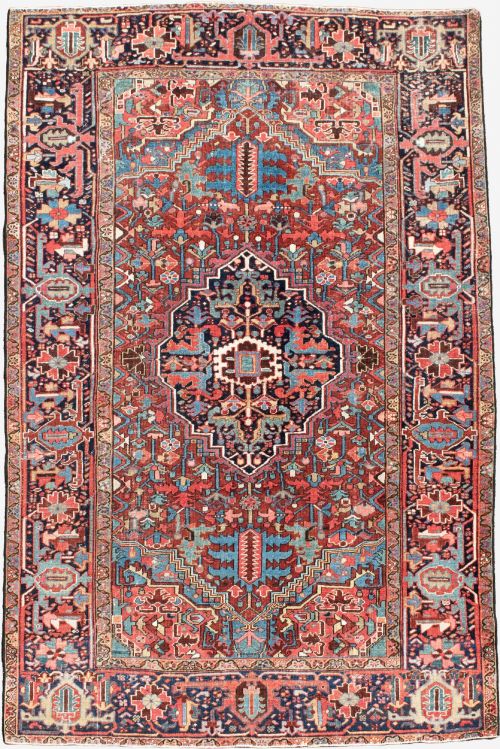
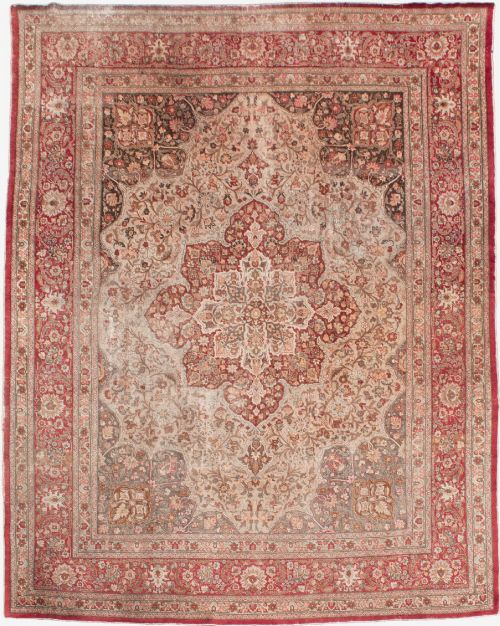

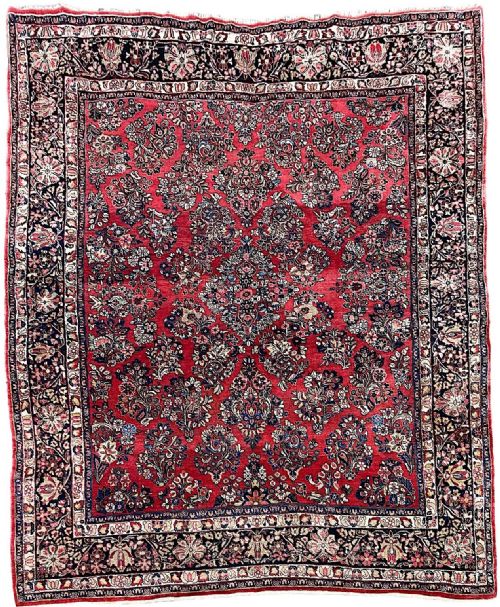


Large Persian Room Rug
A large persian room rug anchors a substantial space with woven history, offering complex traditional patterns and considerable floor coverage for the discerning interior.
Large Persian Room Rug
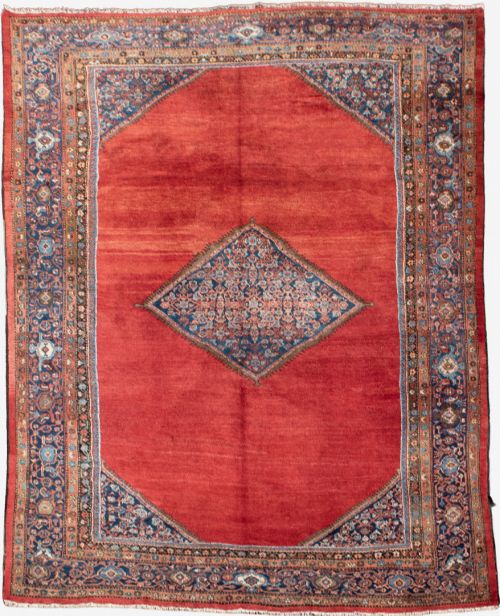
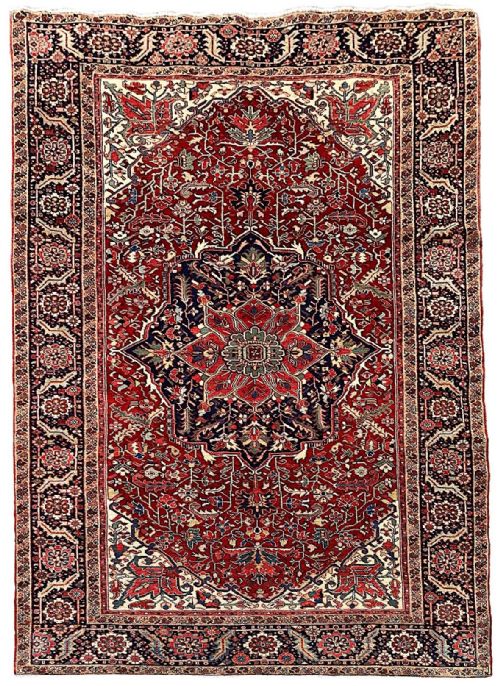
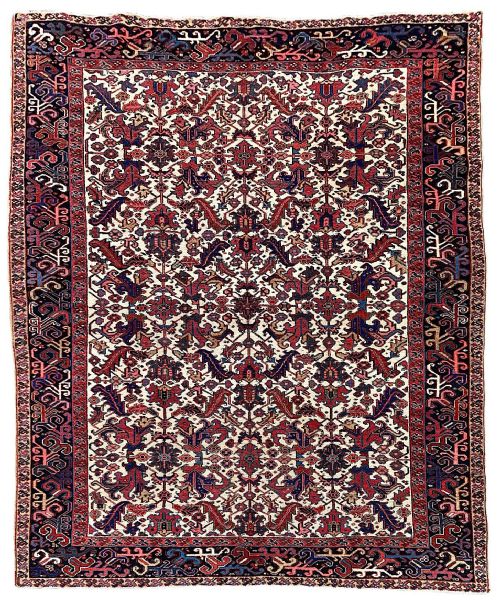
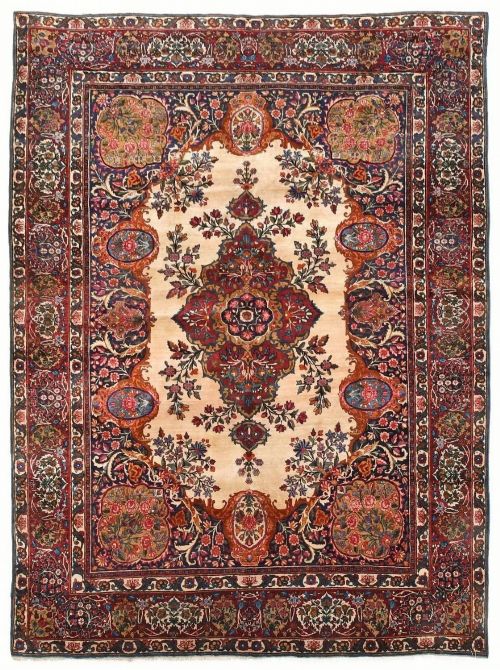
Buyers seeking a large persian room rug encounter substantial floor coverings originating from various regional workshops across the nineteenth and early twentieth centuries. These pieces encompass named styles such as Heriz, Tabriz, Sarouk, and Kashan, often produced in generous proportions suited for country houses and spacious interiors.
The selection on this page relies heavily on antique carpets dating from the eighteen-fifties through to the nineteen-thirties. Heriz and Tabriz examples appear frequently, alongside Oushak, Kirman, and Sultanabad weaves, representing the diverse aesthetic output of Persian and related regional weaving traditions.
How they were made
These carpets are constructed using wool, cotton, and occasionally silk materials, combined in traditional hand-woven techniques. Foundation threads typically employ cotton or wool to support dense pile knotted by hand.
Weavers utilised natural and early synthetic dyes to create the rich palettes seen across these room-size formats. The structural integrity depends on tight knotting and sturdy selvedges designed to withstand decades of foot traffic.
Several carpets retain minor weaver errors in symmetry, reminding us of the human hand behind intricate geometric masterworks.
What varies in quality
Quality separates across these rugs according to the finesse of the knot density and the precision of the drawing within the field. Superior examples demonstrate expert balance in proportion and harmonious dye distribution across the wool pile.
The handling of regional motifs, from geometric Heriz medallions to intricate Tabriz floral curves, defines the artistic merit of individual pieces. Preservation of the original pile depth and structural edges also distinguishes finer survivors from heavily worn examples.
Benlian Tabriz
The Large Persian Room Rug Glossary
- Pile
- The upright yarn loops that form the usable surface of a carpet. It is shorn to an even height after knotting to display the design.
- Medallion
- A large central ornamental motif placed in the middle of the carpet field. It serves as the primary focal point of the composition.
- Warp
- The stationary vertical threads stretched on the loom prior to weaving. Weft threads are inserted across them to secure the knots.
- Weft
- The horizontal threads passed through the warp threads alternating with rows of knots. They bind the structure together firmly.
- Kilim
- A flat-woven carpet or rug produced without a pile. These pieces rely on interlocking weft techniques to create geometric patterns.
Large Persian Room Rug: Frequently Asked Questions
How do I clean a large rug?
Professional specialist cleaning is essential for antique wool and cotton carpets to preserve natural dye stability. Regular gentle vacuuming without a beater bar prevents dust accumulation within the pile.
Avoid chemical spot treatments or immersion washing at home, as older foundations require controlled drying environments to prevent shrinkage or distortion.
Where were these carpets made?
Production centred on historic weaving cities and regional districts throughout Persia, including Tabriz, Heriz, Sarouk, and Kirman. Selected pieces also originated in adjacent regions such as Oushak and Northern India.
Each location developed distinct aesthetic traits, utilising local wool varieties and specific regional colour palettes.
Are these carpets suitable for heavy traffic?
Traditional hand-woven wool construction provides remarkable durability, making many room-size examples well-suited for active living spaces. Dense knotting and strong cotton foundations help withstand regular daily use.
Using a quality underlay beneath the carpet prevents slippage and reduces friction against the floor surface, extending the lifespan of the textile.
How do I date an antique rug?
Dating relies on stylistic analysis of the border motifs, structural materials, and dye characteristics observed across the piece. Early synthetic dyes emerged in the late nineteenth century, providing a useful chronological marker for the transition from purely natural colourants.
Construction quirks, such as minor asymmetries in tribal weaving, also assist experts in placing carpets within specific decades from the eighteen-fifties onward.