
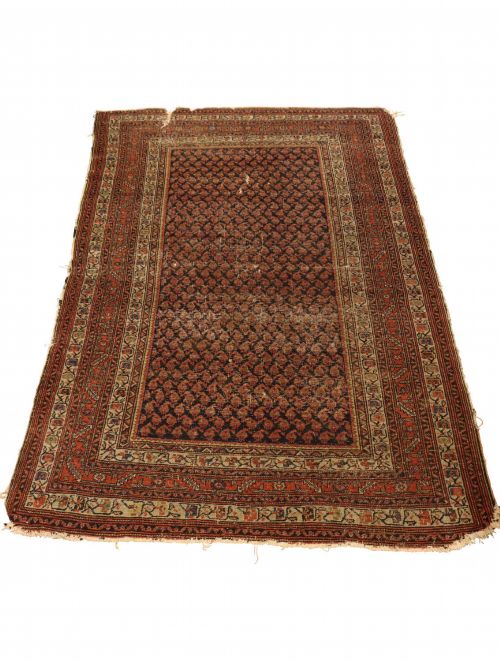


Rust Red Wool Carpet
A rust red wool carpet brings warmth and deep pigment into a room, offering the tactile weave of traditional Persian and tribal floor coverings.
Rust Red Wool Carpet
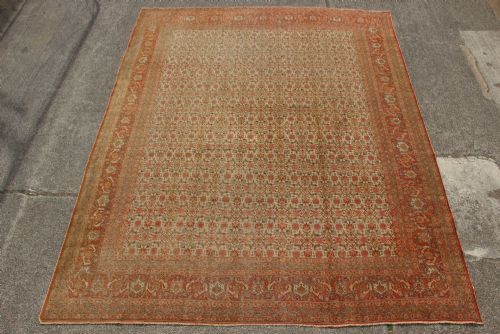
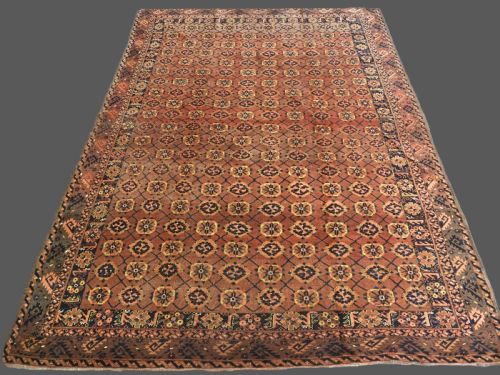
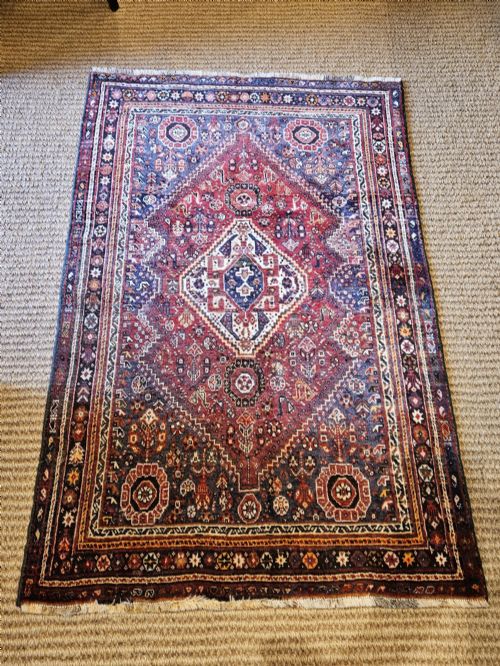
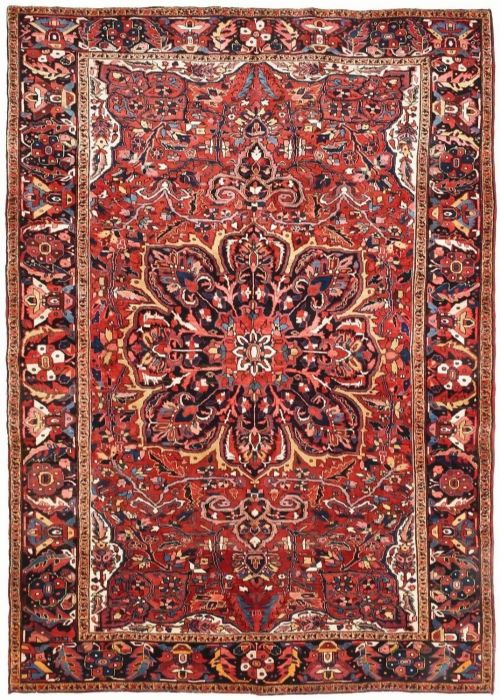
A rust red wool carpet encompasses room-sized floor coverings, smaller scatter rugs, and specific woven panels originating from Persian and tribal workshops. The selections available span from the geometric robustness of Heriz and Bakshaish weaving to the deep hues found in Baluch and Ersari Turkoman pieces.
The prevalent forms on this page include large country house carpets alongside compact village rugs and smaller torba faces. These pieces date across the latter half of the nineteenth century and well into the twentieth century, reflecting varied regional traditions from Central Persia and Central Asia.
Buyers seeking this specific aesthetic will find floor coverings defined by rich vegetal grounds, traditional medallion layouts, and intricate all-over boteh or gul patterns. Each specimen carries the distinct structural hallmarks of hand-knotted village and workshop production.
How they were made
Construction relies primarily on natural wool pile hand-knotted onto sturdy cotton foundations, though certain tribal pieces integrate goat hair for structural reinforcement. These materials provide the dense, resilient nap necessary for centuries of domestic use.
Dye methods utilise traditional plant and insect sources to achieve the deep rust red tones characteristic of these textiles. Artisans tied individual knots by hand across varied warp and weft counts, creating durable floor coverings designed to withstand heavy wear.
Listings feature pieces dated from the 1850s through to the 1930s, spanning Persian, Turkmen, and Baluch tribal traditions.
What varies in quality
Quality rests upon the fineness of the knotting density and the crispness of the geometric or floral drawing across the field. Higher grade examples display precise symmetry in tribal motifs and tightly beaten foundations that ensure structural longevity.
The depth and saturation of the natural dyes also dictate distinction, where complex abrash variations in the rust red field add visual movement. Superior pieces combine robust wool selection with balanced proportions between the central medallion and surrounding border systems.
The Rust Red Wool Carpet Glossary
- Boteh
- A traditional almond-shaped or pine-cone motif frequently repeated across Persian and tribal textile fields. This ancient symbol often represents fertility or a cypress tree.
- Gul
- An octagonal or medallion-like motif central to Turkmen and Baluch tribal weaving traditions. Each distinct tribe utilised specific forms to signify lineage and origin.
- Abrash
- A natural variation in carpet colour caused by changes in dye batches or hand-spun wool lots. This subtle striping adds depth and authenticity to antique wool surfaces.
- Torba
- A small utilitarian tribal wall-hanging or storage bag face produced by Turkmen weavers. These pieces typically feature dense geometric layouts and rich red grounds.
- Warp
- The vertical foundation threads stretched tightly on the loom before knotting begins. Cotton and wool cords form this essential structural skeleton.
Rust Red Wool Carpet: Frequently Asked Questions
Where should I place a rust red wool carpet?
These floor coverings anchor sitting rooms, studies, and dining areas by introducing strong natural pigment and heavy texture to the interior. Their robust wool pile stands up well to moderate domestic foot traffic.
Smaller formats and tribal bag faces suit hallways, entryways, or wall display where their intricate geometric patterns can be viewed closely.
How do I care for an antique wool rug?
Routine maintenance requires gentle vacuuming without a rotating power brush to protect the delicate hand-knotted pile and fringes. Professional specialist cleaning remains essential for addressing deep soil and preserving natural wool oils.
Keeping the textile out of direct, harsh sunlight prevents the rust red dyes from fading unevenly over time.
How do I distinguish Heriz from Baluch rugs?
Heriz carpets generally present large-scale geometric central medallions and robust, architectural corner spandrels woven on sturdy cotton foundations. Their palette relies heavily on terracotta, rust, and navy tones.
Baluch pieces are typically smaller tribal formats featuring darker, saturated colour fields with repeat octagon or lattice patterns, occasionally incorporating goat hair.
What does a Turkoman design look like?
Turkoman weaving is characterised by repetitive octagonal gul motifs arranged in neat rows across deep rust red or brown grounds. These designs often feature crisp geometric borders and minimal floral elements.
Such patterns reflect the strict tribal heritage and nomadic traditions of Central Asian makers from the nineteenth and early twentieth centuries.