

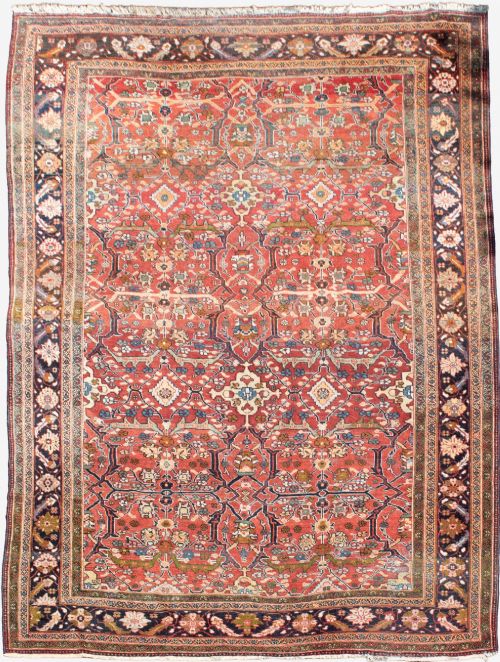


Vintage Mahal Carpet
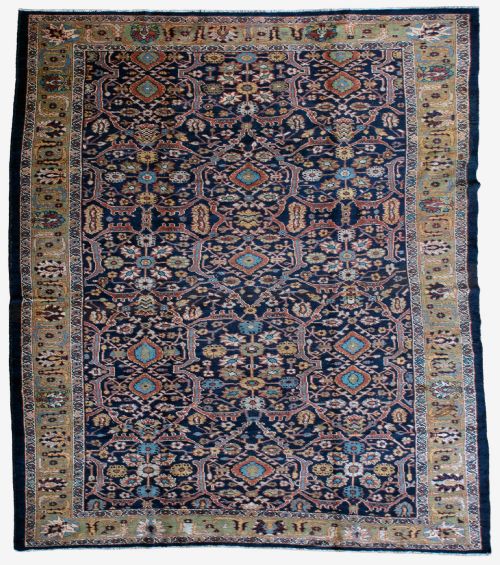
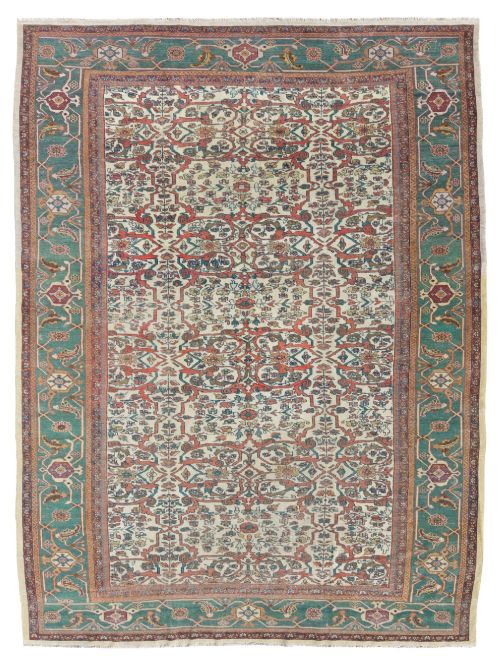
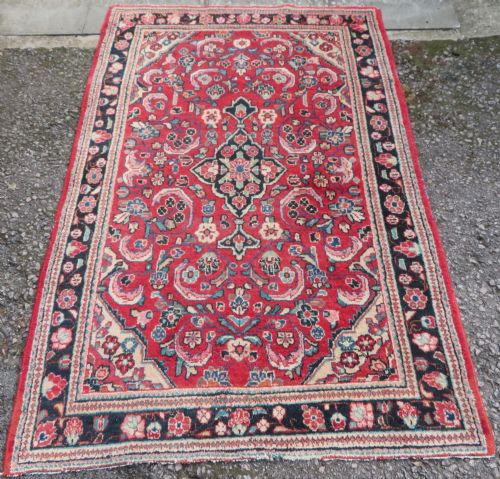
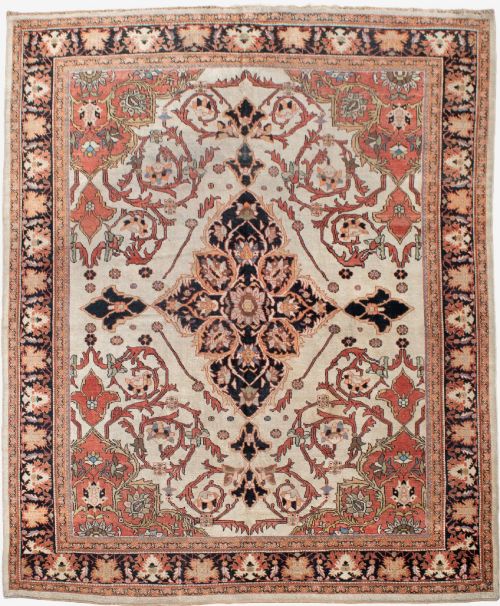
These vintage mahal carpet examples offer grand room-scale designs and rustic village charm from Western Persia.
Vintage Mahal Carpet
A vintage mahal carpet represents woven artistry originating from the West Persian region, often associated with the wider Mahal, Sultanabad, and Bakhtiari traditions. Buyers search for these pieces to anchor large spaces with room-size or oversize formats, alongside smaller village rugs and runners. The selection spans the late nineteenth century through to the early decades of the twentieth century.
The aesthetic frequently leans towards traditional Persian layouts, including all-over shrub designs and distinctive ivory or terracotta grounds. Village examples provide a more rustic country house character, whilst grander room-size pieces balance monumental scale with softer, aged palettes. Each specimen reflects the specific weaving heritage of Western Persia.
Makers and weavers across the Chahar Mahal valley and surrounding districts produced these carpets using durable natural fibres suited to domestic wear. The forms range from wide floor coverings down to long corridor runners. Surviving pieces display the enduring popularity of these classic Persian designs in modern interiors.
Materials and construction
The foundation of a vintage mahal carpet relies on a sturdy cotton warp and weft, which provides structural stability for large room-size dimensions. Wool forms the thick pile woven into the surface, chosen for resilience and its ability to take rich dyes over decades of use. These natural materials allow the carpets to soften gracefully in texture as they age.
Weavers in Western Persia utilised traditional hand-knotting techniques passed down through generations in villages and tribal regions. The dyes applied to the wool yield deep terracotta, ivory, and earthy tones that define the visual impact of these rugs. Careful spinning and knotting ensure the pile remains dense across both small village formats and oversized carpets.
Vintage Mahal Carpet Retail Price Guide 2026
Typical asking prices for vintage mahal carpet among the pieces listed under this phrase on Sellingantiques today, from the lower quarter to the upper quarter. They describe what is for sale here now, not the wider market.
Certain runners bring an unexpected country house look to narrow hallways, proving that nineteenth-century weavers understood the drama of a long corridor.
Assessing quality and character
The distinction between standard examples and superior pieces rests on the fineness of the weave and the clarity of the design. Greater knot density allows intricate details within shrub patterns and floral motifs to remain sharp across large surfaces. Proportion and balance in the layout further elevate the visual presence of a room-size carpet.
Condition and scale also shape the character of each piece, with oversize dimensions requiring exceptional structural integrity in the cotton foundation. The harmony of the faded wool palette and the originality of the dye work determine the overall aesthetic success. Village rugs achieve distinction through robust folk charm, whilst formal pieces rely on balanced symmetry.
The Vintage Mahal Carpet Glossary
- Mahal
- A style of Persian carpet originating from the district of that name in Western Persia, known for large-scale patterns. These rugs often feature muted, harmonious palettes.
- Sultanabad
- A nineteenth-century designation for carpets produced in the same region as Mahals, sharing bold designs and heavy construction. They are closely linked to commercial production for Western markets.
- Ziegler
- A specific class of nineteenth-century Persian carpet produced under European influence, noted for softer colours and room-size formats. They typically employ refined interpretations of traditional motifs.
- Bakhtiari
- Carpets and rugs woven by tribal groups in the Chahar Mahal region of Western Persia, frequently displaying geometric or compartment designs. Their sturdy construction suits heavy domestic use.
- Warp
- The vertical threads stretched on the loom that form the skeletal structure of the carpet. The cotton fringe at either end of the rug consists of these exposed threads.
Vintage Mahal Carpet: Frequently Asked Questions
Where were these carpets made?
These carpets originate from Western Persia, specifically the Mahal and Chahar Mahal valley regions. Villages and tribal areas across this territory produced both large room-size floor coverings and smaller utility rugs.
Production spanned from the nineteenth century into the early twentieth century. Many pieces reflect regional weaving traditions tied to specific local markets.
How do I style a large carpet?
Large room-size pieces work well as the central anchor for living rooms and dining spaces. Their muted terracotta and ivory grounds pair effectively with both period furniture and modern interiors.
Oversize formats require adequate floor space to allow the border designs to remain visible. Placing them in hallways or corridors highlights the runner variations.
What is the difference between a Mahal and a Ziegler?
A Ziegler carpet represents a specific commercial adaptation designed for Western tastes in the nineteenth century, often featuring softer palettes. Standard Mahals share similar West Persian origins but can display bolder village designs.
Both types utilise wool pile on a cotton foundation. The distinction usually lies in the subtlety of the colouration and the formality of the layout.
How do I care for an antique wool rug?
Regular gentle vacuuming without a rotating brush helps remove dust from the wool pile. Professional cleaning suited to antique textiles ensures the natural dyes remain stable.
Keeping the carpet out of harsh direct sunlight prevents the terracotta and ivory tones from fading unevenly. Rotating the rug periodically balances foot traffic across the surface.