

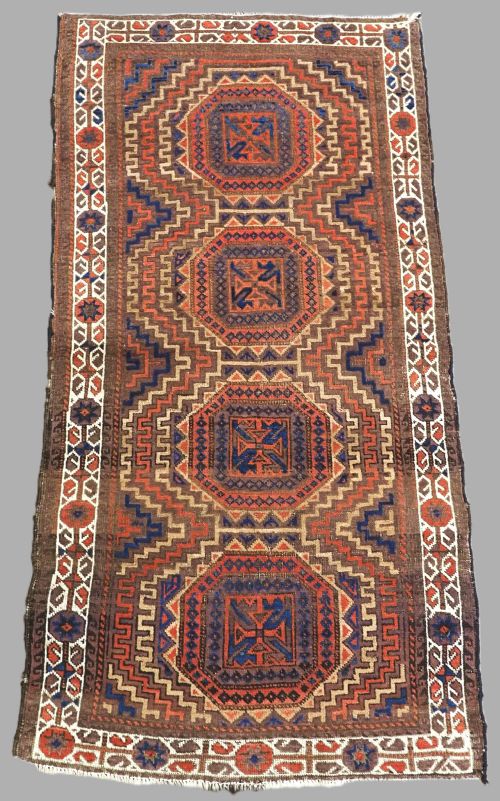
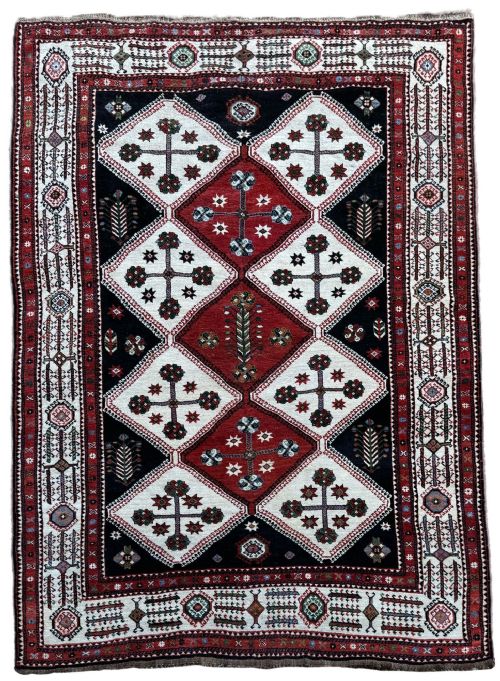
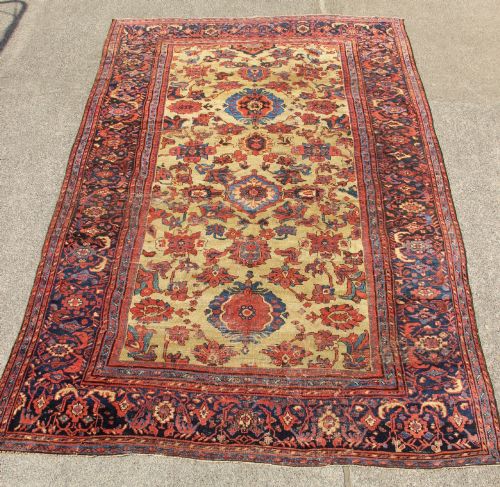
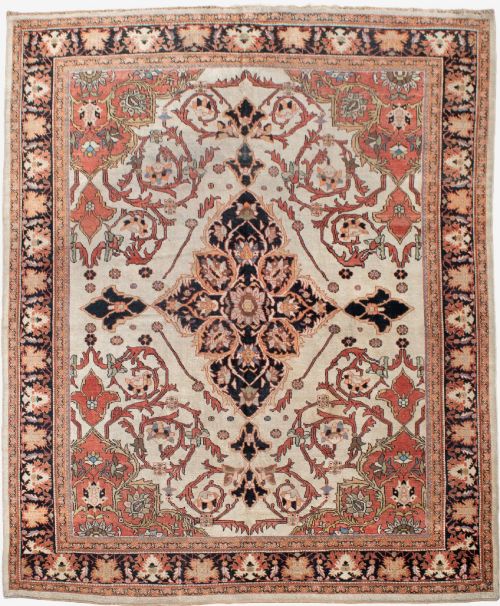


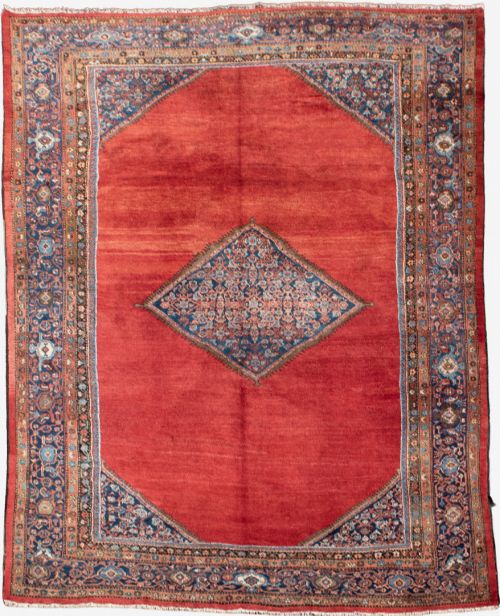
Large Persian Area Carpet
When buying a large persian area carpet, you acquire a substantial hand-knotted floor covering originating from nineteenth and twentieth-century workshops and villages.
Large Persian Area Carpet
A large persian area carpet is a room-sized floor covering woven in workshops and villages across Persia and neighbouring regions. These pieces span from the mid-nineteenth century through to the mid-twentieth century, showcasing regional identities through distinct patterns.
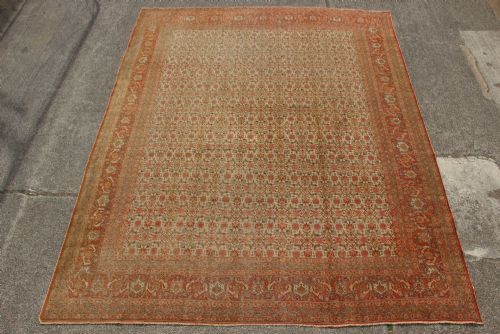
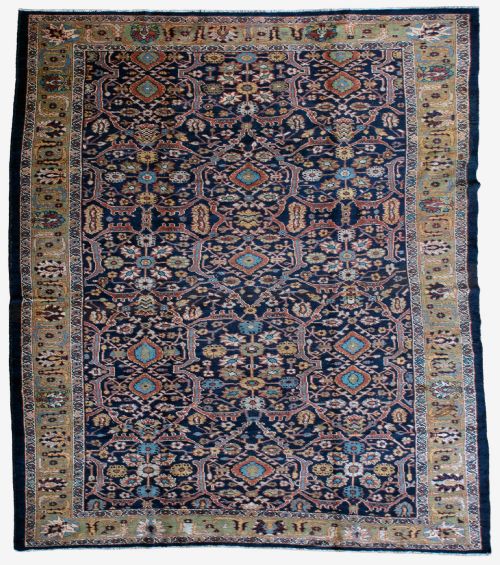
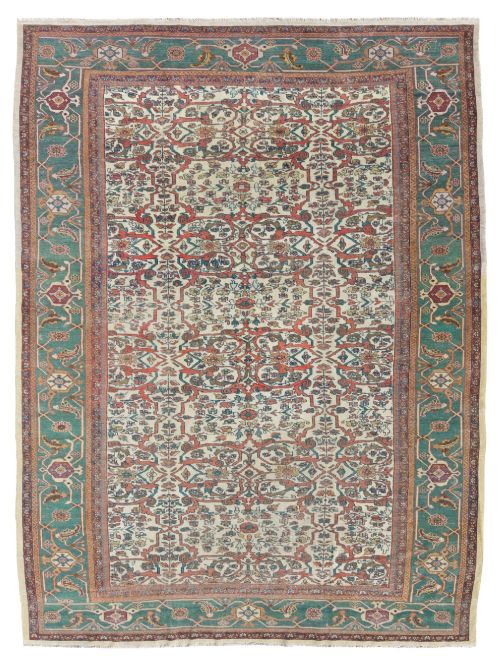
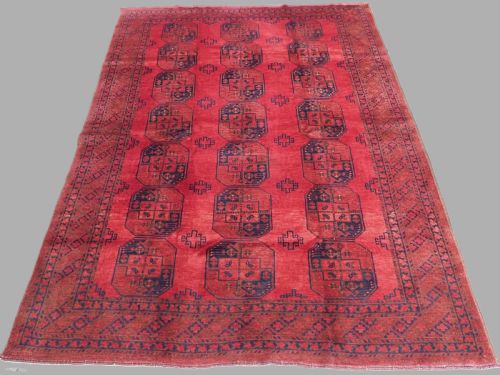
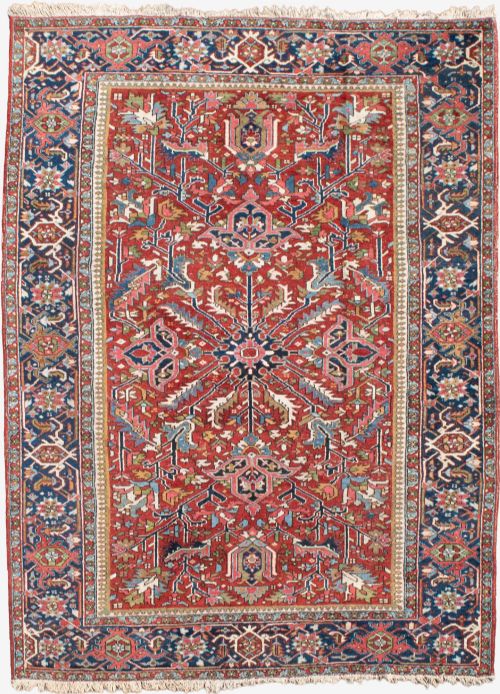
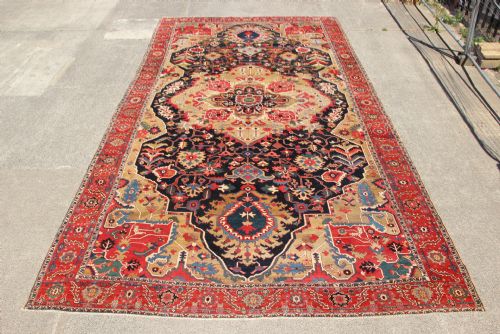
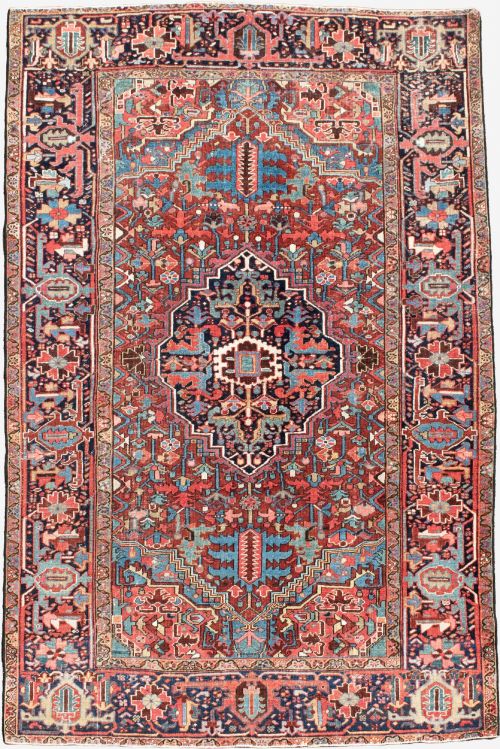
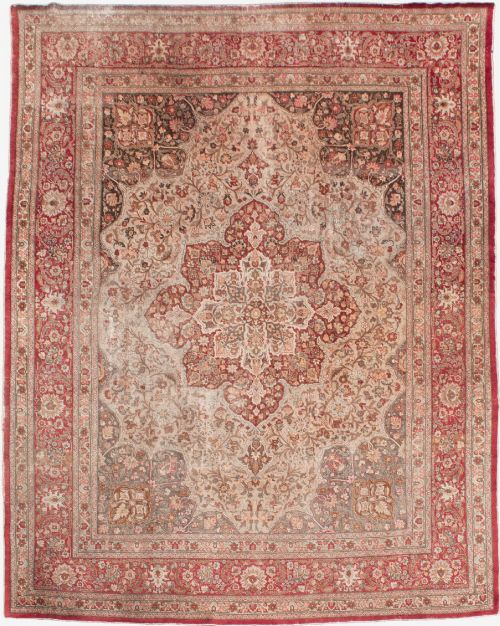
The selections available here lean heavily toward Heriz, Mahal, Tabriz, and Sultanabad styles, often displaying room-scale dimensions suited for principal living spaces. Buyers encounter both geometric village compositions and curvilinear workshop designs.
Originating from traditions established over centuries, these floor coverings utilise durable structures of wool and cotton. Each piece reflects the specific weaving centres of north-west Persia and beyond.
How they were made
The construction relies on hand-knotted techniques using wool pile foundation threads of cotton. Weavers tie symmetrical or asymmetrical knots onto vertical looms, building dense structures designed to endure heavy foot traffic.
Natural and early synthetic dyes colour the wool, yielding rich reds, deep indigos, and soft ivory grounds that mellow with age. The warp and weft threads utilise sturdy cotton, providing stability across grand room dimensions.
Even grand room-size carpets occasionally reveal minor irregularities in straight lines, proof of human hands working at the vertical loom.
What varies in quality
Quality rests in the precision of the knotting and the integrity of the wool pile. Denser knots allow for sharper pattern definition and greater durability underfoot.
The depth and consistency of the colour palette determine visual success. Finely balanced natural dyes produce harmonious patination over decades, separating standard utility pieces from master workshop output.
Haji Jalili Tabriz
The Large Persian Area Carpet Glossary
- Heriz
- A style originating from north-west Persia, known for bold geometric medallions and robust structural durability. These pieces often feature large central star motifs framed by strong corner spandrels.
- Sultanabad
- A nineteenth-century commercial weaving type characterised by large-scale, open floral patterns and subdued colour palettes. They were produced primarily for Western export markets.
- Warp
- The vertical foundation threads stretched lengthwise on the loom, carrying the tension of the weave. Cotton is the standard material found in these pieces.
- Weft
- The horizontal threads passed alternately over and under the warp strings to lock the rows of knots in place. They contribute to the handle and rigidity of the carpet.
- Gul
- A medallion or repeating octagonal motif commonly found in tribal and village weaving traditions. The term translates loosely to flower or rose.
Large Persian Area Carpet: Frequently Asked Questions
How do I choose the right size?
Measure your floor space to allow a uniform border of exposed flooring around the perimeter of the carpet. Large persian area carpets typically anchor principal seating arrangements in spacious rooms.
Ensure heavy furniture legs sit comfortably on the textile rather than teetering on the edge. Room-scale dimensions require careful planning regarding doorways and structural clearances.
What is the difference between Heriz and Tabriz styles?
Heriz carpets display bold, geometric medallion designs woven with sturdy, thick wool suited for heavy use. Their motifs rely on rectilinear angles and robust structural framing.
Tabriz carpets present finer, curvilinear floral patterns with intricate detail and higher knot densities. These workshop pieces often reflect classical Persian art traditions.
How should I care for an antique carpet?
Vacuum gently using suction only, avoiding the rotating brush bars that can pull at the wool pile. Periodic professional cleaning by specialists in antique textiles preserves the fibre integrity.
Rotate the carpet every year to ensure even exposure to foot traffic and sunlight. Keep them away from damp environments to protect the cotton foundations.
Are these carpets suitable for heavy traffic?
The dense wool piles and sturdy cotton foundations make these carpets durable enough for daily domestic use. Traditional hand-knotted construction withstands decades of normal movement.
Place a quality underlay beneath the carpet to reduce friction against hard floors and prevent slipping. This extra layer absorbs impact and extends the life of the textile.