
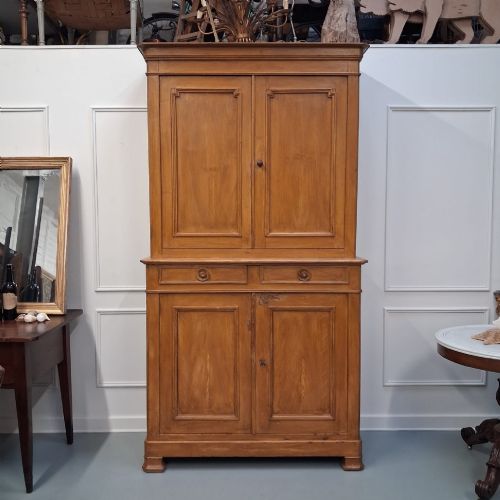

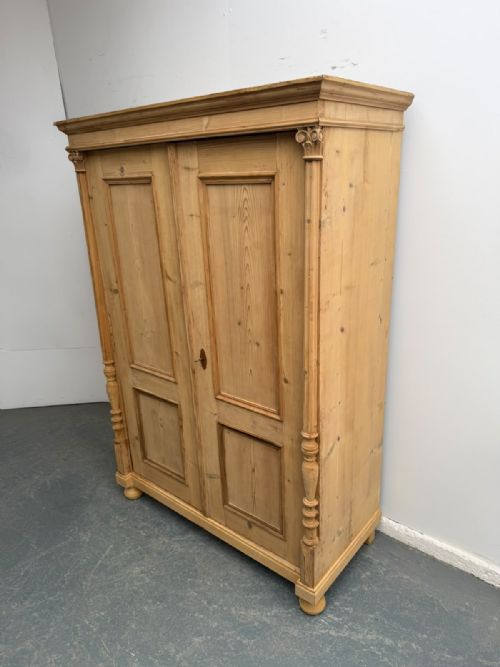
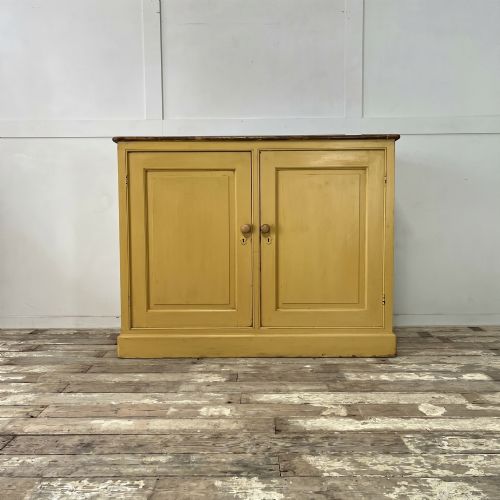


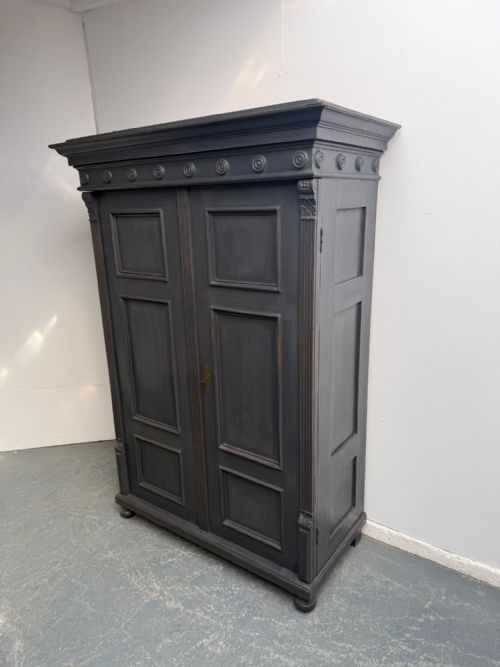


Large Painted Larder Cupboard
A large painted larder cupboard offers generous domestic storage wrapped in authentic provincial character.
Large Painted Larder Cupboard
When you search for a large painted larder cupboard, you encounter substantial storage furniture designed for food preservation and household provisions. These pieces originate from domestic settings like country houses, farmhouses, and school rooms, serving practical everyday functions.
The versions you are most likely to meet on this page span the Georgian, Victorian, and nineteenth-century periods. They take forms such as housekeepers cupboards, kitchen dressers, and tall storage cabinets.
Geographic origins vary across English, French, Danish, and Hungarian traditions. English regional pieces, including West Country and Yorkshire examples, sit alongside continental interpretations sharing the same utilitarian roots.
Materials and construction
Construction relies primarily on pine and painted wood, providing a stable carcase for daily use in kitchens and sculleries. Cabinetmakers shaped these functional pieces using solid timber boards assembled with traditional joinery.
Surface treatments involve layers of paint, with many examples retaining original paint finishes or later historic coatings in shades like green and grey. Iron and brass hardware such as hinges and latches complete the construction.
Listings feature pine, painted wood, and brass materials across Georgian and Victorian periods.
What separates the finest examples
Quality in a large painted larder cupboard rests on the integrity of the original timber and the survival of early or original paint surfaces. Untouched paintwork carrying honest patination holds greater appeal than heavily restored or modernised finishes.
Structural proportion and internal configuration also distinguish superior examples, particularly where adjustable shelving or compartmentalised storage remains intact. The balance between utilitarian scale and refined regional craftsmanship defines the upper tier.
The Large Painted Larder Cupboard Glossary
- Housekeepers Cupboard
- A large storage piece traditionally used by a housekeeper to store linens, dry goods, and provisions. These typically feature multiple doors and internal shelving.
- Pine
- A soft timber widely utilised in regional furniture making due to its availability and workability. It serves as the primary structural wood for painted country pieces.
- Original Paint
- Surface coating applied during the period of manufacture that has survived without later repainting. This finish displays natural wear and historic patination.
- Scullery Cupboard
- A utilitarian storage cabinet designed for auxiliary kitchen spaces where washing and food preparation occurred. These pieces prioritise robust construction over decorative flourish.
Large Painted Larder Cupboard: Frequently Asked Questions
How were these cupboards used originally?
These large cupboards served as central storage hubs in large country houses, farmhouses, and domestic sculleries. Households relied on them to keep dry goods, provisions, and household linens organised and protected from pests.
Their substantial internal space accommodated bulk foodstuffs and everyday kitchen equipment before fitted kitchens became standard. Domestic staff accessed them constantly throughout the day for meal preparation and household management.
How do I fit one into a modern kitchen?
A large painted larder cupboard works effectively as a freestanding pantry or standalone storage tower in contemporary spaces. Position it against a blank wall where its height and scale can anchor the room without cluttering the floor plan.
Utilise the interior shelving for dry foods, crockery, or glassware to combine traditional storage with modern utility. The painted exterior allows the piece to complement existing kitchen cabinetry or serve as a contrasting focal point.
How do I tell Georgian periods apart from Victorian ones?
Georgian examples, dating from the eighteenth century or around eighteen hundred, often display simpler architectural proportions with restrained detailing. Their construction reflects earlier cabinetmaking methods and regional English joinery traditions.
Victorian pieces, emerging from the mid to late nineteenth century, frequently feature heavier cornices, beaded panels, or more complex door arrangements. They also encompass a wider geographic spread including continental European workshops.
Why do some have original paint while others do not?
Many cupboards were repainted by successive generations as domestic fashions changed or woodwork required maintenance. Pieces described as having original paint have retained their early or first surface layers, often showing authentic crazing and wear. Naked pine or wax-finished alternatives often reflect nineteenth-century practices where surfaces were stripped or finished to suit changing aesthetic preferences in later decades.