


Two Piece Kitchen Dresser
A two piece kitchen dresser gives a room solid storage and display space.
Two Piece Kitchen Dresser
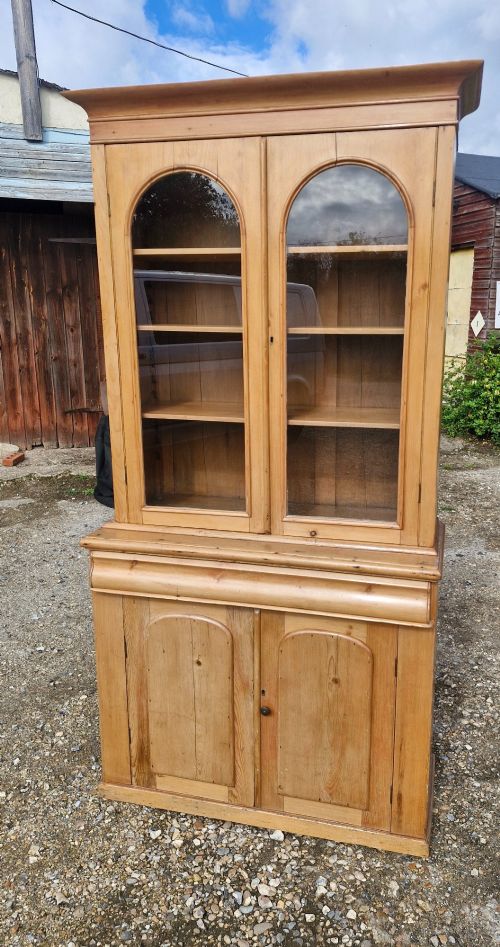
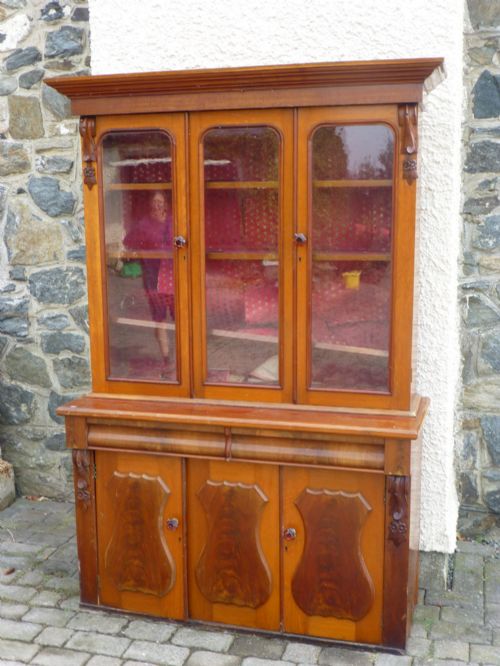
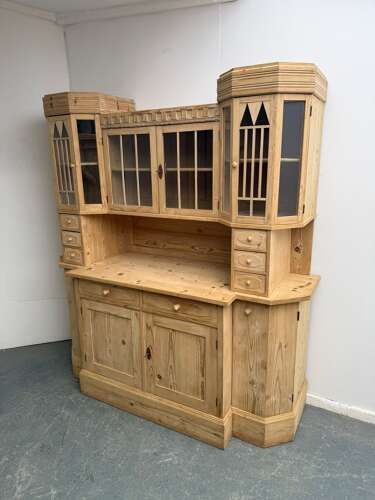
A two piece kitchen dresser is a large storage unit built in an upper and lower section for everyday utility and display. The pieces here date from the nineteenth century up to nineteen ten, covering Victorian and Arts and Crafts examples.
The form appears in English, West Country, Cornish, and Welsh vernacular traditions, alongside Hungarian painted pieces. Most examples use pine or oak, sometimes combined with mahogany or finished with paint.
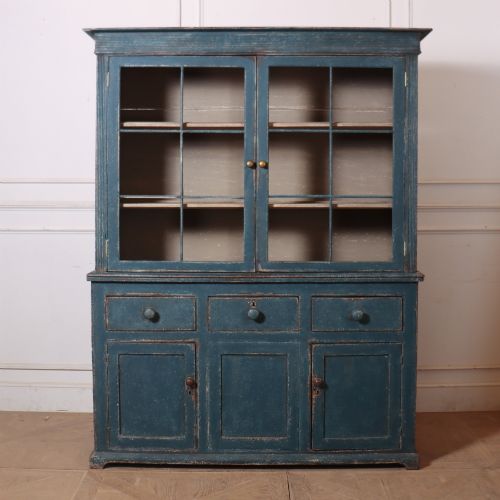
Buyers meet glazed bookcases, cupboards, and open-topped kitchen dressers split into separate parts for easier transport. These items function as heavy utilitarian furniture designed for domestic storage.
How they were made
Cabinet makers constructed these units predominantly in solid pine and oak, occasionally incorporating mahogany for contrast or detailing. Iron and brass hardware such as hinges and handles secured doors and drawers.
Glazing appears in the upper sections of bookcases and cabinets to display contents behind glass panes. Surfaces were left as bare wood, waxed, stripped, or painted in cream and teal colours.
Some tall cupboards stand at an impressive eight feet, towering over ordinary kitchen ceilings with stubborn charm.
What varies in quality
Quality depends on the timber selection and the complexity of the regional construction, such as the joinery in Welsh and Cornish oak pieces versus simpler pine utility cupboards. Timber choice ranges from basic utilitarian softwood to figured hardwoods and well-executed painted finishes.
Proportion and scale dictate the visual weight, seen in very tall eight-foot examples compared to standard lower heights. Original hardware like brass and iron fittings alters the integrity of the piece.
The Two Piece Kitchen Dresser Glossary
- Two piece
- Construction method where a tall cabinet separates into an upper section and a lower base for movement and placement. This design eases transport through doorways.
- Glazed
- Fitted with glass panels in the doors of the upper section to protect items from dust while keeping them visible. This treatment is common on bookcase and cabinet hybrids.
- Vernacular
- Regional furniture built by local craftsmen to traditional local patterns rather than high-style metropolitan designs. Welsh and West Country pieces show distinct local characteristics.
- Stripped
- Wood furniture from which later paint or dark varnish has been removed to expose the raw timber underneath. Stripped pine is a frequent finish on Victorian kitchen furniture.
Two Piece Kitchen Dresser: Frequently Asked Questions
What is a two piece kitchen dresser?
A two piece kitchen dresser is a large storage item made of an upper display or cupboard section resting on a lower base. They were traditionally used in kitchens and pantries to hold crockery and foodstuffs.
Most surviving examples date from the Victorian period and are built from pine or oak with wood, glass, and brass elements.
How do I date a kitchen dresser?
Dating relies on timber types, construction methods, and stylistic cues like Victorian or Arts and Crafts details. Nineteenth-century pieces often display hand-cut joinery and period hardware.
Regional variations also point to specific eras, such as stripped pine finishes popular in later Victorian contexts.
Are these dressers heavy to move?
Yes, because they are constructed from solid hardwoods and softwoods like oak and pine. The two-piece design allows the upper section to lift off the base, making transport manageable.
Extra hands are necessary due to the sheer height and bulk of tall eight-foot cupboards.
Where were these dressers made?
They originate from various regions including England, Wales, Cornwall, the West Country, and Hungary. Local woodworkers used available regional timbers like oak and pine.
Each area developed distinct proportions and decorative treatments, from painted finishes to glazed bookcase tops.