
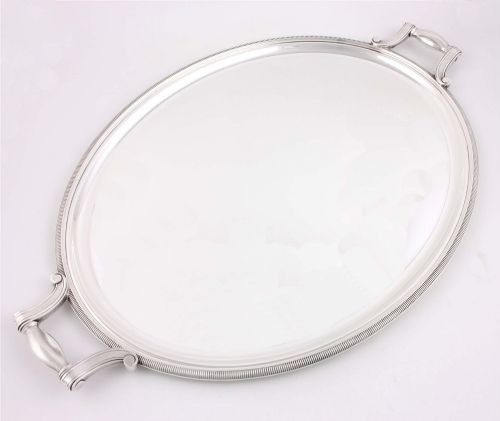

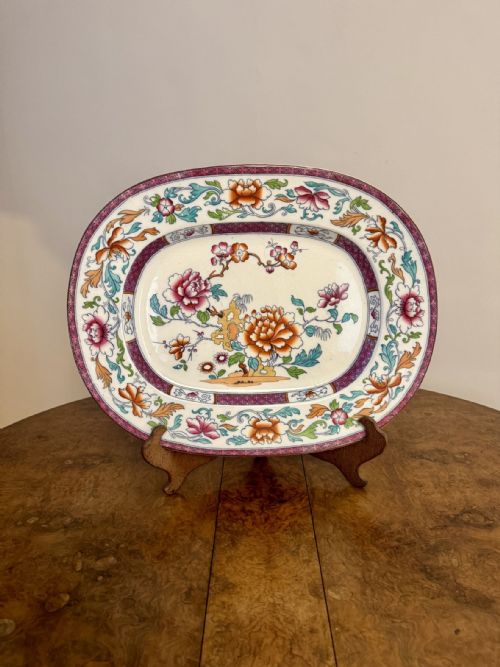


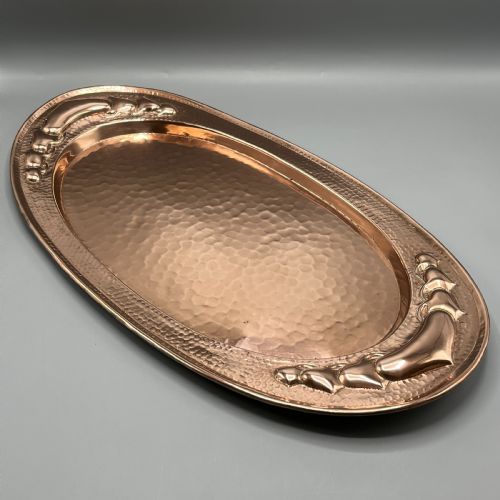
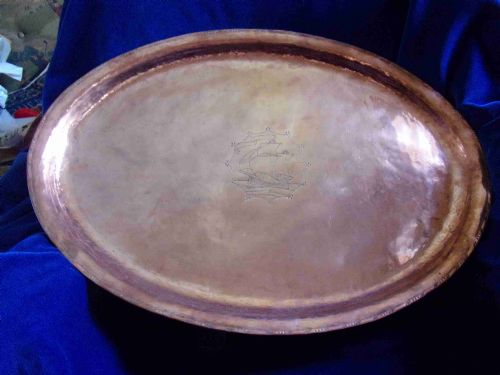


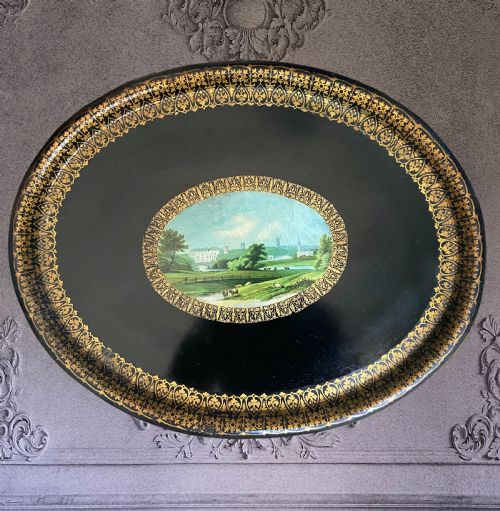


Large Oval Serving Tray
When you need a large oval serving tray, you will find substantial metal and timber pieces built for hosting.
Large Oval Serving Tray
A large oval serving tray serves as a practical centrepiece for carrying drinks, tea, and meat platters across dining rooms and drawing rooms. These items span periods from the Georgian era through the Victorian and Edwardian decades up to the mid-twentieth century.
The most common examples you encounter on this page are silver plated designs from the Victorian and Edwardian periods, frequently fitted with pierced galleries or handles. Alongside these metal items, you also find timber, copper, earthenware, and tole ware variations.
Makers utilised diverse materials to create functional objects that ranged from heavy silver on copper to lacquered wood and hand-beated metalwork. Each period brought distinct stylistic choices, shifting from Georgian mahogany to ornate Victorian engraving and Arts and Crafts repoussé.
Materials and construction
Silversmiths and manufacturers built these serving items using sterling silver, electroplated nickel silver, and silver plate over copper bases. Silver plating techniques allowed workshops to produce weighty, lustrous pieces without the prohibitive cost of solid silver.
Coopers and cabinetmakers fashioned timber versions from solid oak and mahogany, sometimes adding brass handles or raised galleries. Metalworkers shaped copper sheets by hand, employing repoussé techniques to hammer raised patterns into the surface.
Potters and ceramicists utilised earthenware and porcelain, applying blue and white glazes or transfer printing for meat platters. Tole ware makers painted and lacquered metal sheets, while others applied gold leaf to create decorative surfaces.
Ceramic platters on this page originate from diverse traditions, ranging from English earthenware to Meissen porcelain and Chinese Canton bowls.
Quality differences
The distinction between ordinary and superior pieces rests on the crispness of the engraving and the weight of the metal or timber used. Heavier silver plate and substantial gauge copper resist bending and hold their plating more evenly through decades of use.
In silver plated items, the thickness of the applied silver layer and the preservation of the base metal determine longevity. Fine examples exhibit sharp, deep hand-chasing rather than shallow machine stamping.
For timber and ceramic variants, the joinery of the gallery, the stability of the wood, and the hand-painted detail on porcelain dictate the standing of the piece. Master craftsmen ensured handles were securely fastened to bear the weight of heavy decanters.
Hugh Wallis·Harrison Bros·Christofle·Elkington & Co·Walker & Hall·Mappin & Webb
The Large Oval Serving Tray Glossary
- Gallery
- A raised rim or pierced metal fence surrounding the edge of a tray to prevent items from sliding off. This feature is common on tea and cocktail trays from the Edwardian period.
- Electroplated Nickel Silver
- A base metal alloy of copper, nickel, and zinc coated with a thin layer of pure silver through electrolysis. This method became widespread in the nineteenth century for producing affordable tableware.
- Repoussé
- A metalworking technique where the artisan hammers the metal from the reverse side to form a raised design on the front. Arts and Crafts trays frequently display this hand-beated decoration.
- Tole Ware
- Enamelled or lacquered metalware, usually iron or steel, popular for decorative trays and vessels during the nineteenth century. The painted finishes often mimic Japanese or Chinese lacquer.
- Salver
- A flat metal plate or tray used for serving food or drinks, or for presenting calling cards. These items typically feature feet and lack high galleries.
Large Oval Serving Tray: Frequently Asked Questions
How do I clean a silver plated tray?
Use a soft cloth and a specialised silver polish designed to remove tarnish without abrading the thin silver layer. Avoid harsh chemical dips that strip away the original finish.
After polishing, rinse the tray in warm soapy water and dry it thoroughly with a lint-free cloth to prevent water spots on the metal surface.
Can I use these trays for serving food?
Many of these items were originally made for serving meat platters, tea, or cocktails and remain entirely functional for hosting today. Metal and ceramic versions clean easily for modern dining use.
Take care with antique lacquered or wooden pieces, as moisture and acidic foods can damage historic finishes and varnishes over time.
What is the difference between a tray and a salver?
Trays generally feature handles or raised edges and are designed for carrying multiple items across a room. They include tea trays, cocktail trays, and larger serving platters.
Salvers usually rest on small feet and were traditionally used for presenting single items, letters, or glasses. They place greater emphasis on decorative engraving than on transport.
How do I identify an Edwardian silver plated tray?
Edwardian pieces often combine heavy silver plating with elaborate engraved floral borders and pierced galleries. Look for maker marks and registry numbers stamped on the reverse or rim.
Stylistically, these items bridge Victorian heaviness and early twentieth-century cleaner lines, frequently incorporating handles designed for carrying decanters.