

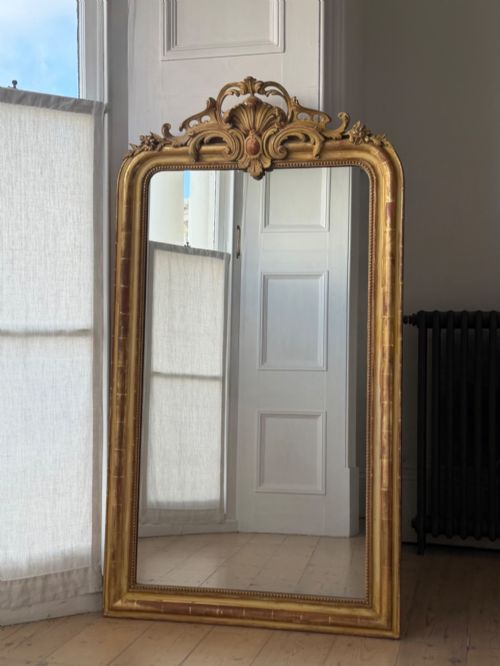
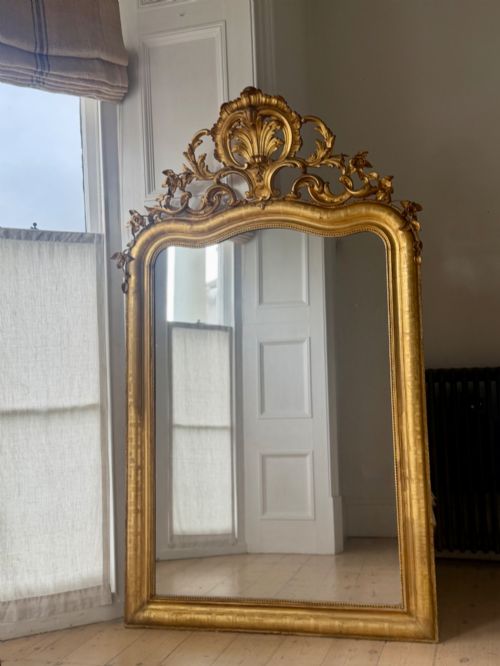
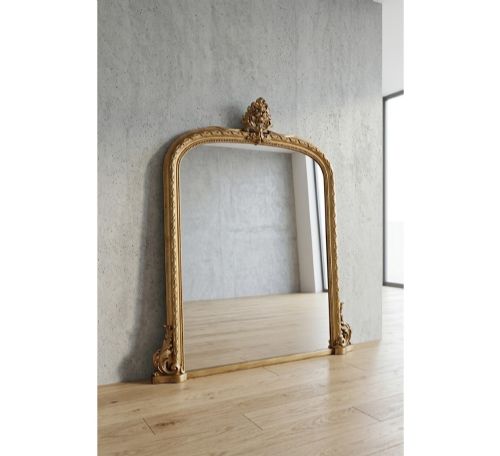
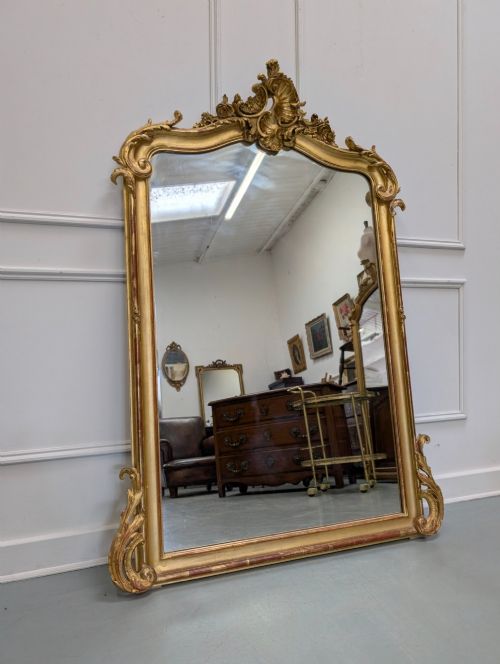
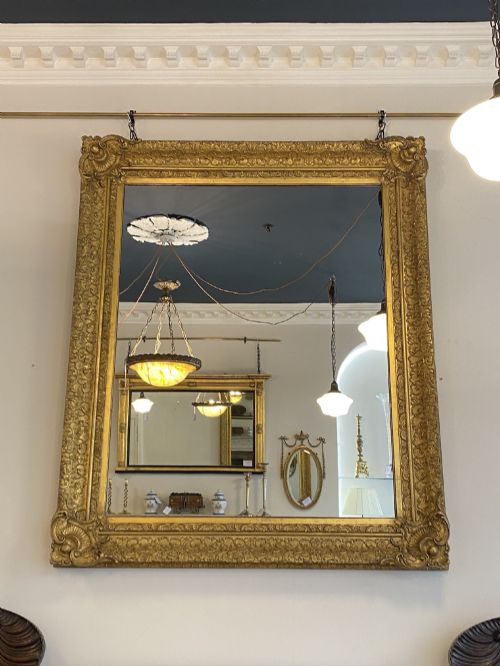
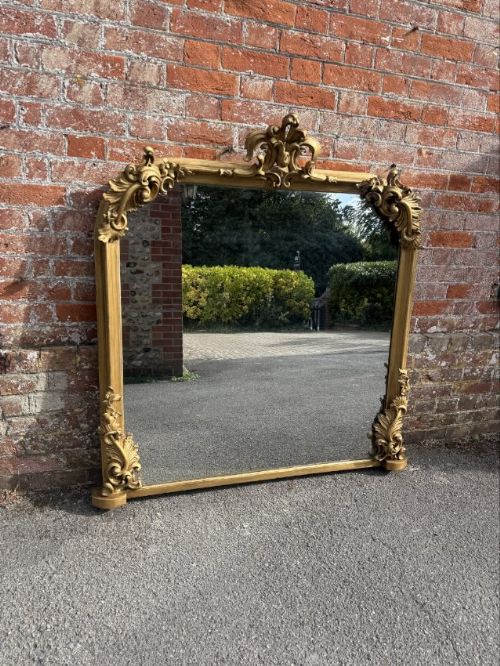
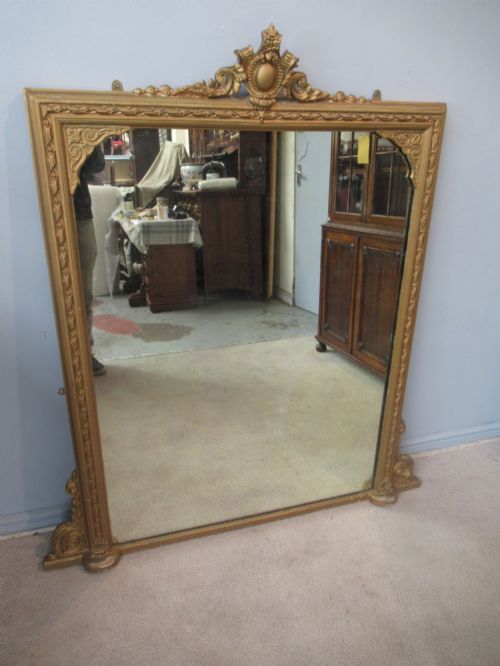
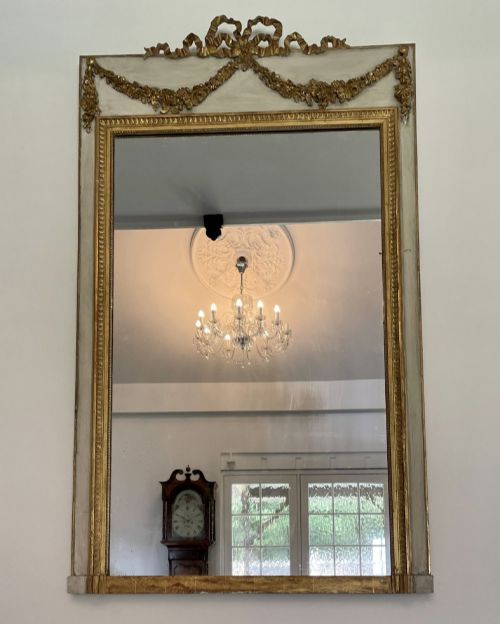
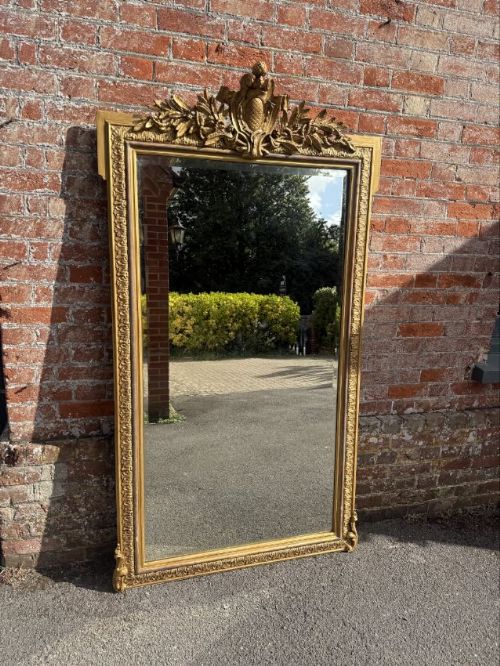
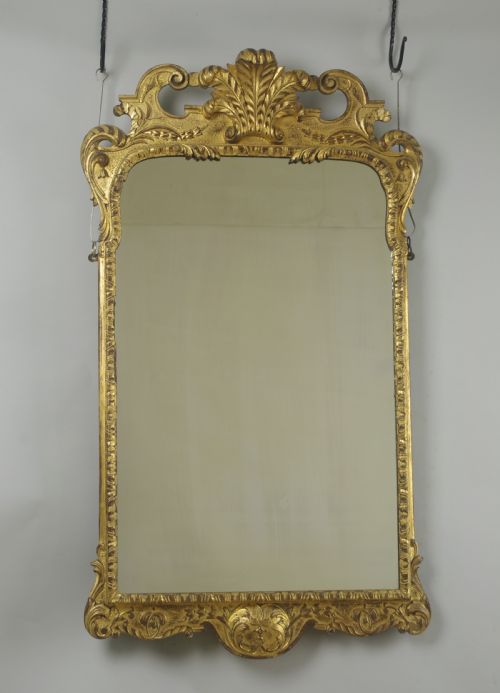
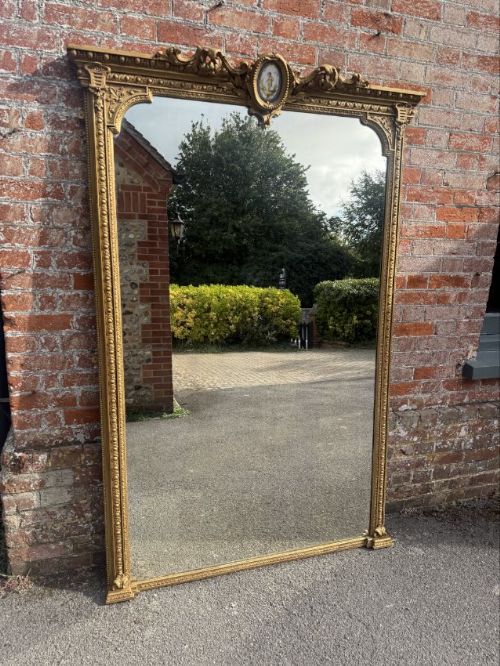
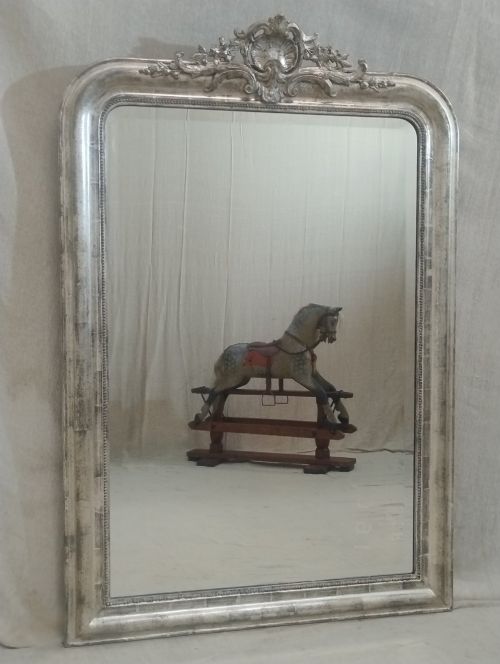
Large Ornate Overmantel
A large ornate overmantel brings substance and historic depth to a room, framing light with elaborate carvings and generous proportions.
Large Ornate Overmantel
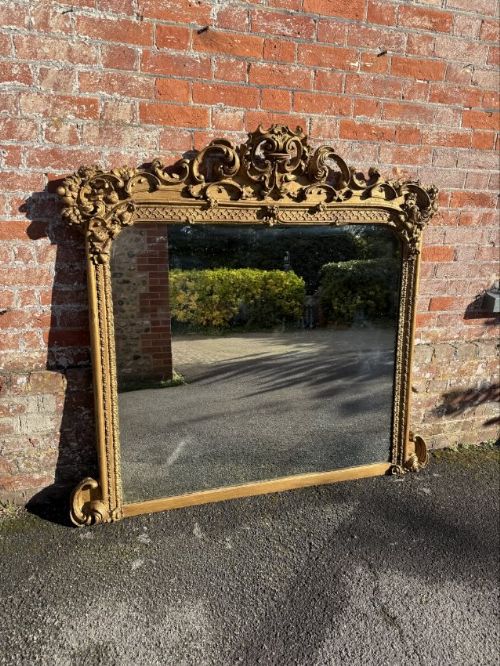
A large ornate overmantel is a substantial wall glass designed historically to sit above a fireplace hearth, anchoring the architecture of a room. Buyers seeking this phrase encounter imposing mirrors intended to reflect light and expand the visual space of a grand interior.
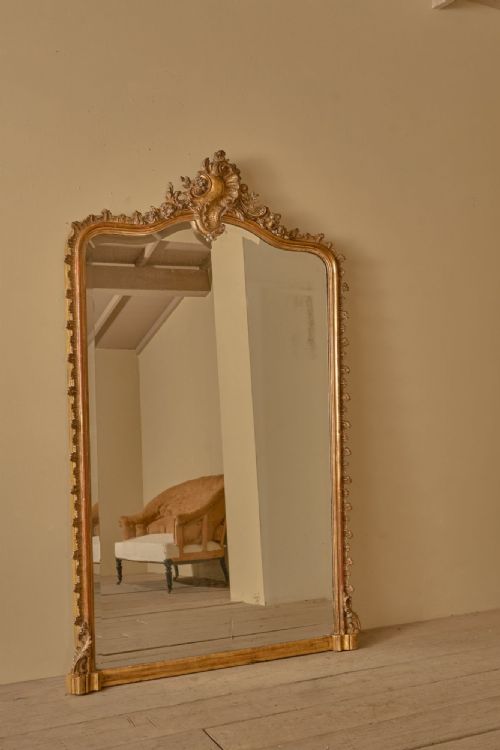
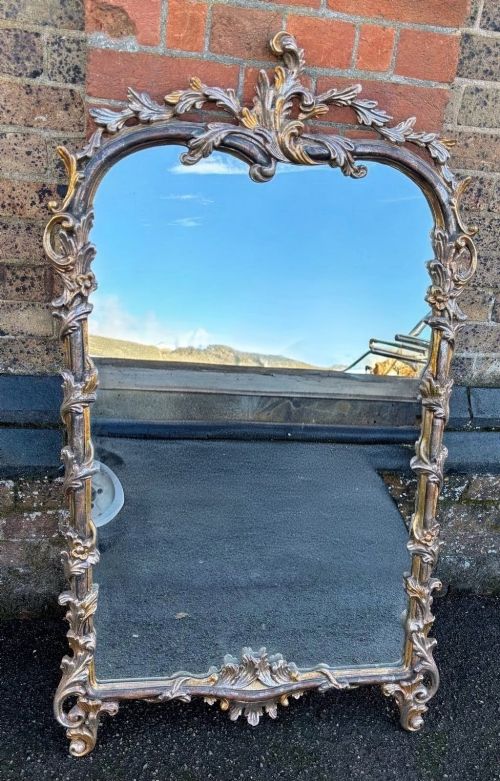
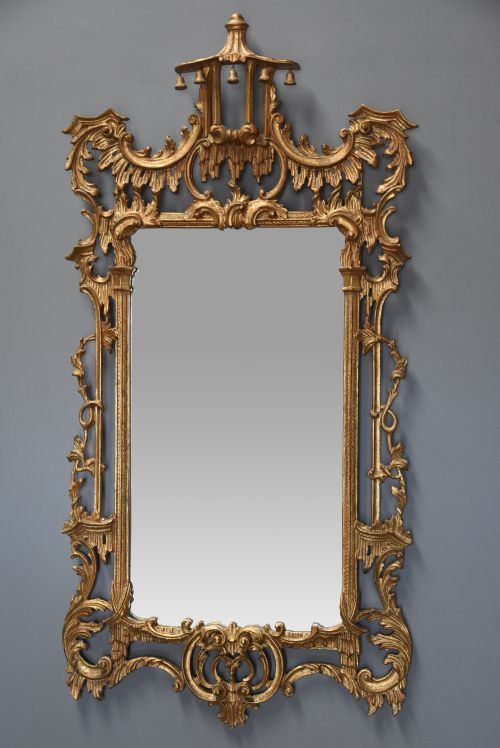
The pieces on this page are predominantly Victorian and nineteenth-century French examples, alongside Chinese Chippendale interpretations and early twentieth-century variations. Forms range from arched tops and shaped crests to expansive leaner mirrors.
Makers and artisans employed ornate frames to project status and artistic ambition, drawing on Rococo Revival, Louis Philippe, and French Chateau vocabularies. These heavy wall mirrors serve as commanding focal points rather than quiet decorative accessories.
How They Were Made
Carved wood provides the structural foundation for many frames, utilising timber shaped by hand before receiving decorative enrichment. Artisans applied gesso and composition over the wood substrate to build up relief details, scrolls, and floral motifs.
Giltwood and gold or silver leaf applications create the reflective metallic surfaces characteristic of these mirrors, often laid over bole layers. Alternatively, plaster and paint treatments deliver contrasting finishes, while historic glass plates range from standard bevelled silvered mirrors to early mercury glass.
Large Ornate Overmantel Retail Price Guide 2026
Typical asking prices for large ornate overmantel among the pieces listed under this phrase on Sellingantiques today, from the lower quarter to the upper quarter. They describe what is for sale here now, not the wider market.
Listings span the nineteenth century through the 1930s, featuring gesso, giltwood, and carved wood across Victorian and French styles.
What Varies In Quality
The crispness and depth of the carved elements separate standard production from superior craftsmanship. Master carvers and modellers achieved intricate, undercut foliage and balanced symmetry that lesser workshops approximated with heavy, flat composition mouldings.
The integrity of the original gilding and the character of the glass plate dictate the standard of the piece. Authentic period surfaces retain subtle tool marks and organic wear, while the choice between standard mirror plates, bevelled edges, and aged mercury glass alters the visual depth.
The Large Ornate Overmantel Glossary
- Overmantel
- A mirror specifically proportioned to hang on the wall directly above a mantelpiece or fireplace surround. These pieces often feature low-slung bases and elaborate crests.
- Gesso
- A plaster-like mixture applied to wood frames to provide a smooth surface for gilding or deep relief modelling. It allows artisans to carve intricate details before applying gold leaf.
- Mercury glass
- A double-walled glass blown type popular in nineteenth-century mirrors, silvered on the interior with a mercury and tin amalgam. It produces a deep, softly mottled reflection.
- Composition
- A mouldable mixture of whiting, resin, linseed oil, and glue pressed into decorative ornaments. It was widely utilised as a cost-effective alternative to hand-carving intricate frame details.
- Louis Philippe
- A mid-nineteenth-century French style defined by restrained curves and softer neoclassical proportions. These frames often feature rounded top corners and subtle crests.
- Chinese Chippendale
- A decorative style incorporating asymmetrical rococo scrolls, pagodas, and exotic motifs. It appears in eighteenth-century revivals through elaborate fretwork and gilded frames.
Large Ornate Overmantel: Frequently Asked Questions
Where should an overmantel mirror be hung?
These mirrors are traditionally positioned directly above a fireplace mantel to reflect room light and draw the eye upward.
They also function effectively as leaner mirrors placed directly on the floor against a principal wall in a drawing room or hallway.
How do I identify a nineteenth-century French mirror?
Nineteenth-century French examples frequently display distinctive crests, Louis Philippe curves, or Rococo revival motifs executed in gesso and giltwood.
Examination of the reverse often reveals historic pine backboards, old fixings, and occasionally the characteristic dark speckling of mercury glass.
What is Chinese Chippendale style?
Chinese Chippendale refers to eighteenth-century aesthetics revived in later periods, characterised by intricate woodwork and Asian-inspired architectural motifs.
Mirrors in this style incorporate elaborate fretwork frames, pagodas, and flowing naturalistic carvings finished in gilt.
How do I care for antique giltwood frames?
Giltwood surfaces require gentle dusting with a soft, dry brush to prevent the accumulation of particles in the carved recesses.
Moisture and harsh cleaning agents must be avoided entirely to protect the delicate underlying gesso and gold leaf layers from lifting.