
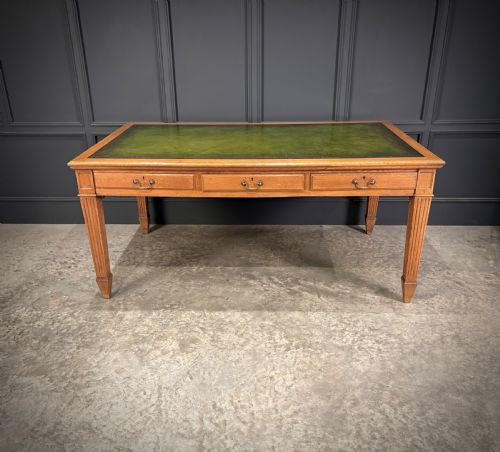


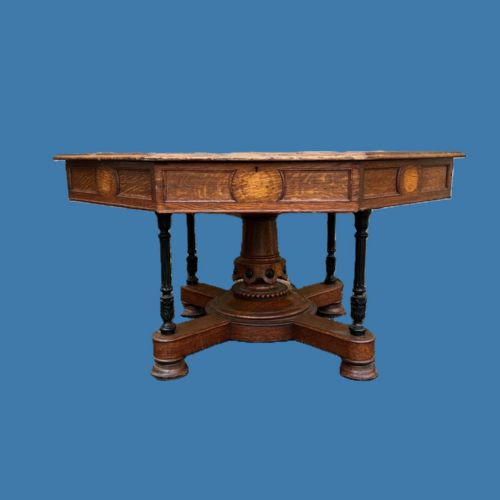
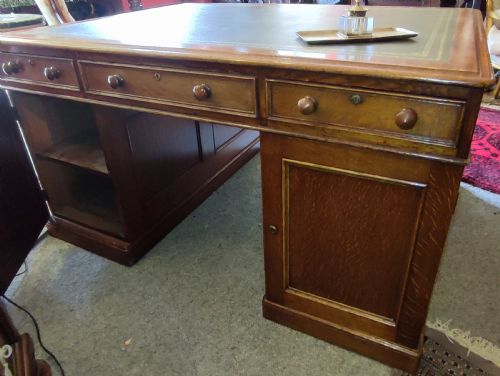


Large Oak Writing Desk
These large oak writing desk pieces are substantial working furniture built for serious commerce and study, offering generous proportions and durable timber.
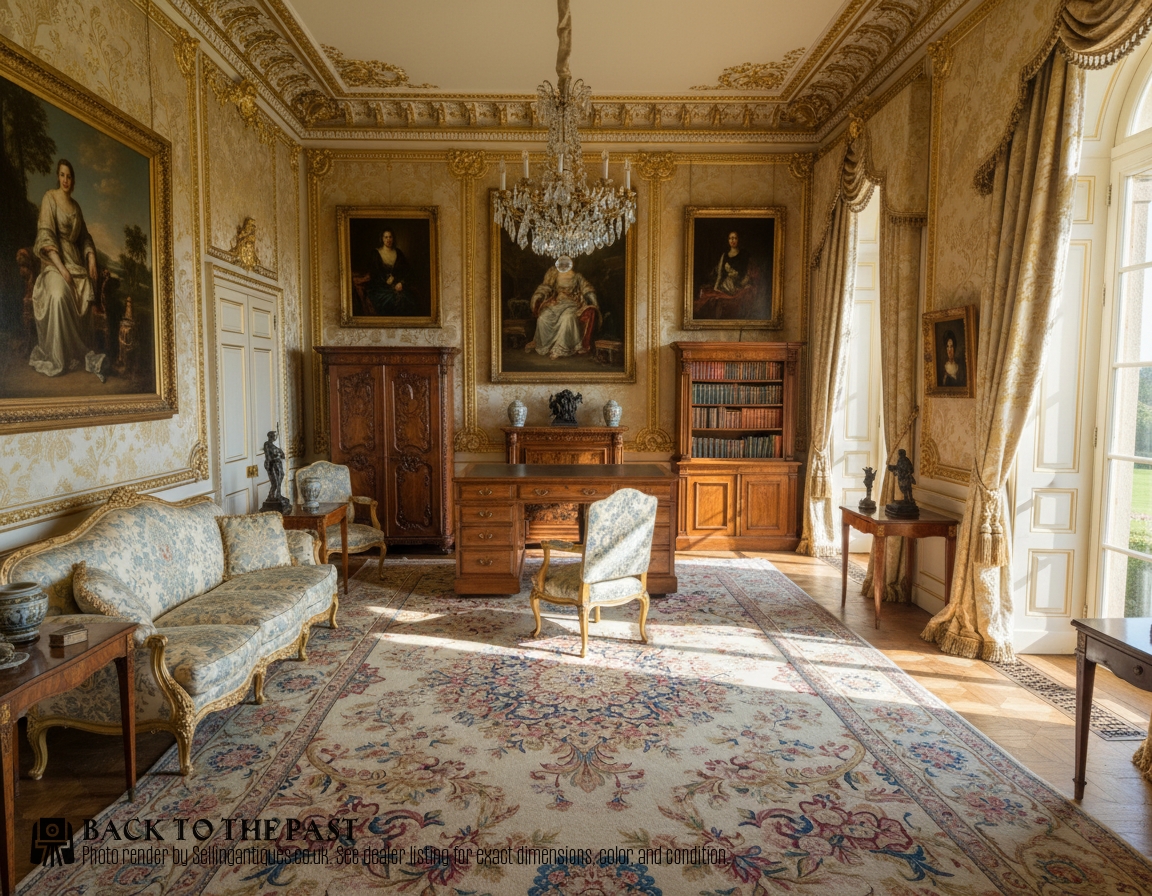
Large Oak Writing Desk
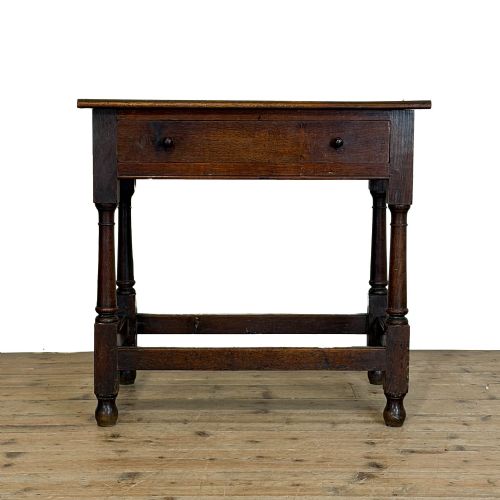
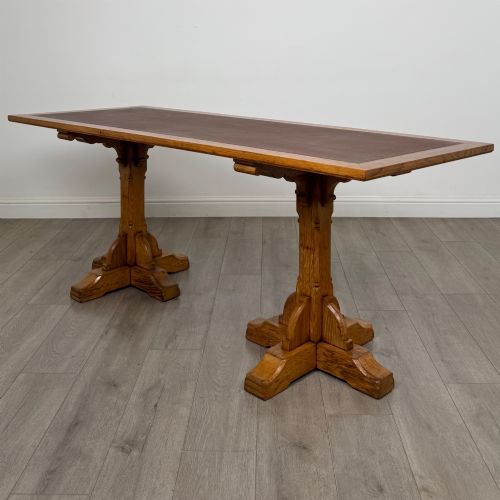
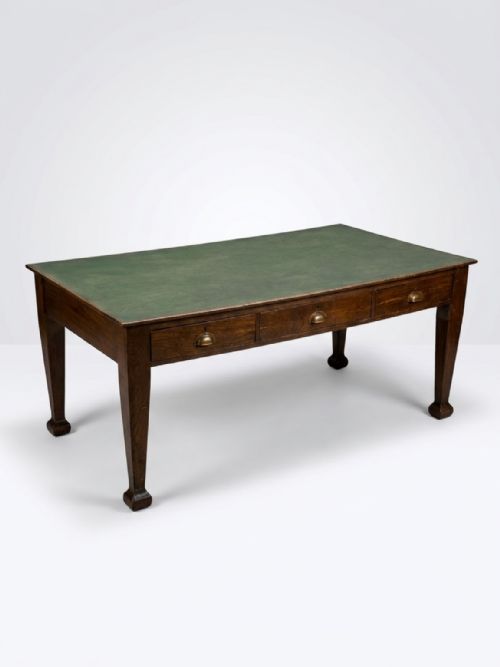
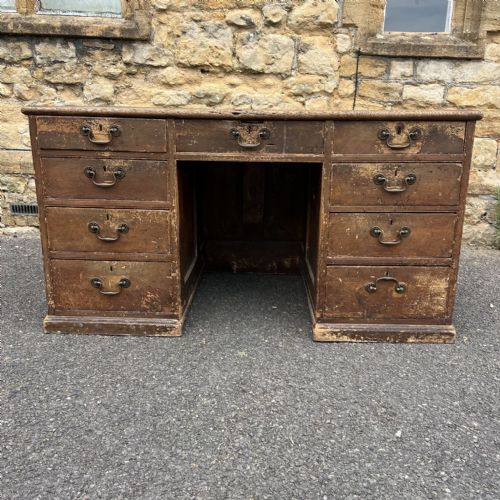
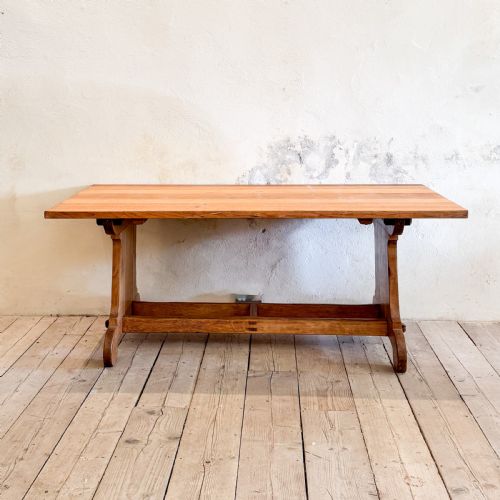
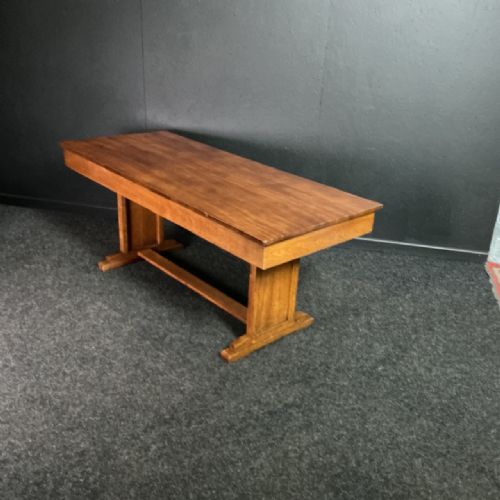
A large oak writing desk provides an expansive surface for administrative work, correspondence, and large volumes, often taking the form of partners desks, pedestal formats, and broad library tables. These items serve as central architectural pieces in studies and offices, reflecting the grand scale of nineteenth and early twentieth-century workspaces. Buyers encounter numerous Victorian and Edwardian examples alongside earlier Georgian bureau forms and arts and crafts tables.
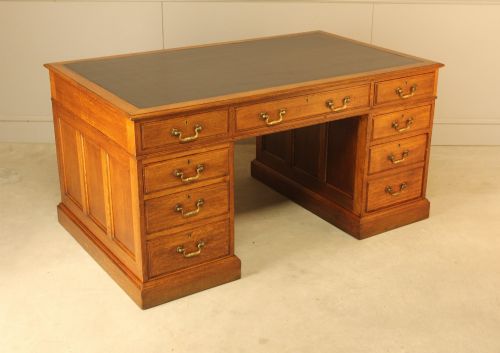
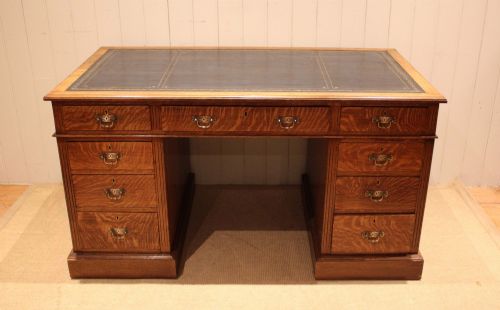
The material palette focuses heavily on solid oak and burr oak, frequently complemented by inset surfaces of leather or green baize for writing comfort. Brass handles, escutcheons, and drawer pulls appear regularly across pedestal and kneehole configurations. Secondary woods such as pine occasionally support internal drawer structures within estate and office pieces.
Pedestal formats and partners desks dominate the available selection, offering drawers on both sides for dual use in professional environments. Roll-top mechanisms and fall-front bureau variants also emerge, concealing internal compartments for correspondence. Simpler library tables and side tables provide open under-spaces without banks of drawers.
How they were made
Cabinet makers constructed these large oak writing desks using heavy timber frames joined by traditional methods to withstand daily professional use. Oak panels formed the structural carcasses of pedestals, drawers, and upright roll-top housings, providing immense rigidity and natural resistance to wear.
Writing surfaces incorporated vegetable-tanned leather or green baize, secured to the timber top with decorative tooling around the perimeter. Brass hardware, including drop handles and keyhole escutcheons, fastened onto the drawer fronts to complete the utilitarian assembly.
Listings span the eighteenth, nineteenth, and twentieth centuries, incorporating oak, burr oak, leather, and brass across pedestal and library table forms.
What varies in quality
The degree of figuration in the timber distinguishes standard utility office furniture from superior examples made with burr oak or selected grain patterns. Construction depth, such as heavy panelled timber work and substantial gauge brass fittings, elevates certain pieces above simpler commercial builds.
Proportion and scale dictate the visual impact of a partners desk or library table, where balanced pedestal arrangements and harmonious drawer distributions create presence. Maker attribution, through stamps or known workshop designs, adds historical weight to the finished item.
T Wilson·Heals·Gillows·Bryn Mawr·Angus of London
The Large Oak Writing Desk Glossary
- Partners desk
- A double-sided writing table fitted with drawers and cupboards on opposing faces, allowing two people to work opposite one another.
- Pedestal desk
- A form comprising a top surface resting upon two separate banks of drawers or columns.
- Kneehole desk
- A configuration featuring a central recess for the user's legs, flanked by vertical stacks of drawers.
- Fall-front bureau
- A writing cabinet with a hinged sloping flap that folds down to reveal an internal writing surface and small pigeonholes.
- Library table
- A large freestanding table designed for reading and sorting papers, typically lacking built-in drawer pedestals.
- Green baize
- A coarse woollen woven fabric used traditionally as a durable writing surface inset on table tops.
Large Oak Writing Desk: Frequently Asked Questions
What is a partners desk?
A partners desk is a large double-sided writing table designed with drawer banks accessible from both opposing faces. This layout allowed two clerks or business partners to sit and work at the same piece simultaneously.
Such desks typically feature large dimensions to accommodate paperwork and ledgers for two users. They serve as commanding centrepieces in large studies and administrative rooms.
How do I care for leather desk tops?
Leather or baize writing surfaces require gentle dusting and occasional treatment with appropriate conditioning creams to prevent drying and cracking. Avoiding direct sunlight helps preserve the colour and supple texture of the hide.
Using blotters and avoiding liquid spills protects the underlying wood and leather from staining. Proper maintenance keeps the writing surface functional and preserves its tactile quality.
How do I identify Victorian oak desks?
Victorian oak desks often display heavy proportions, robust brass hardware, and deep carved details or panelled construction. The introduction of mass production alongside traditional hand joinery marks this era's furniture.
Examining the interior drawer construction and secondary timbers like pine helps confirm the nineteenth-century origin. Stylistic markers range from plain commercial office pieces to gothic revival and heavy partners formats.
Can these desks be disassembled for moving?
Many large pedestal and partners desks separate into modular sections, such as two drawer pedestals and a heavy top board. This modular construction assists with transport through tight doorways and up staircases.
Securing or removing internal drawers prior to moving prevents shifting and protects the joint work. Assessing the assembly method ensures safe relocation without straining the oak frame.