


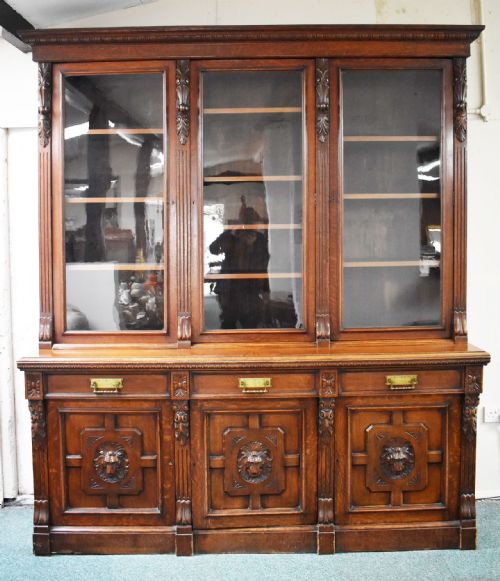


Large Oak Glazed Cabinet
When you need a large oak glazed cabinet, you are looking for substantial storage that puts your books and collections on display.
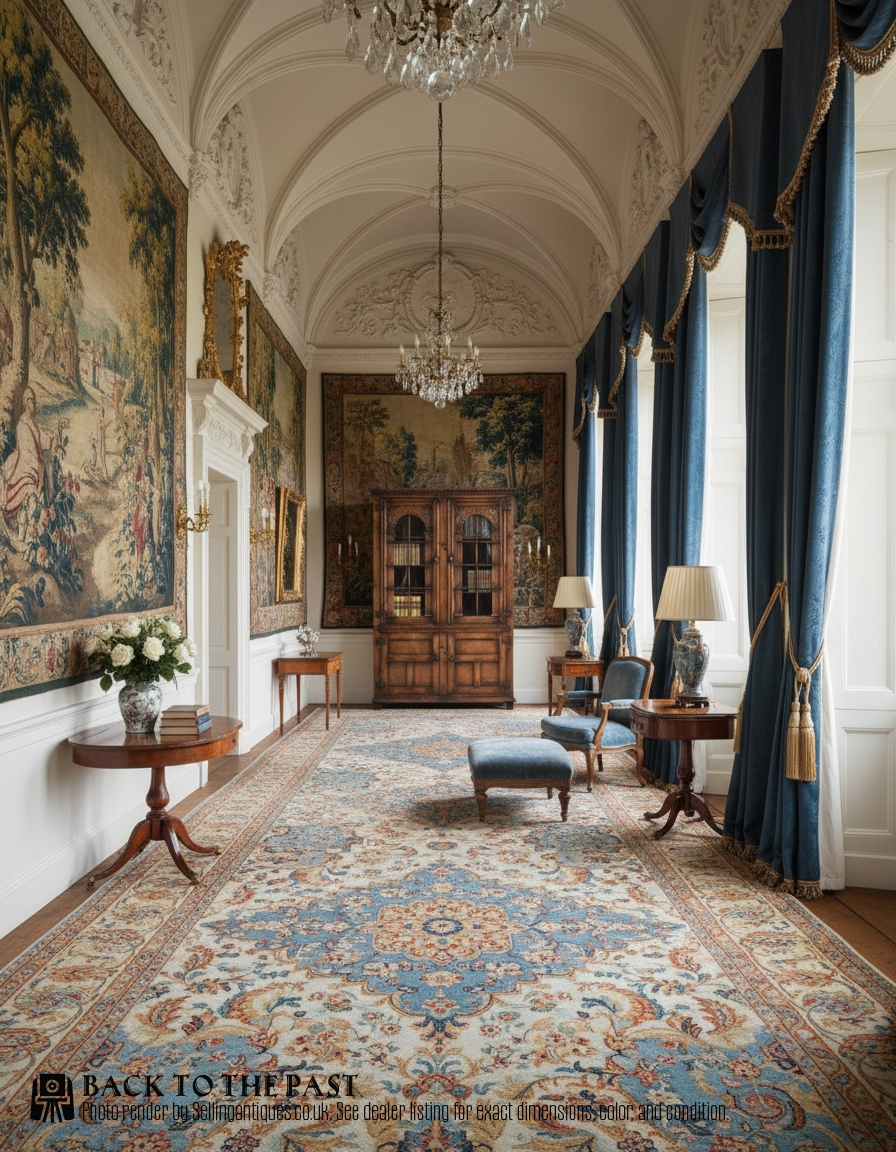
Large Oak Glazed Cabinet
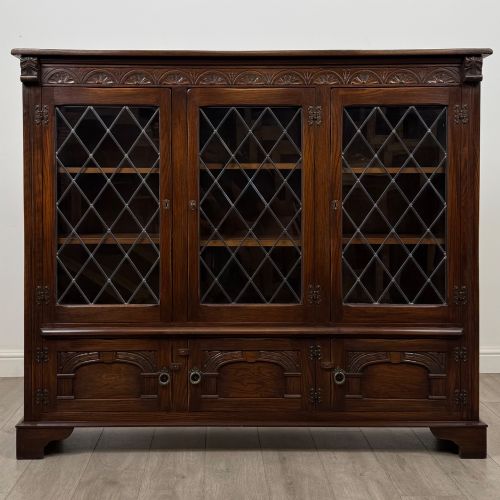
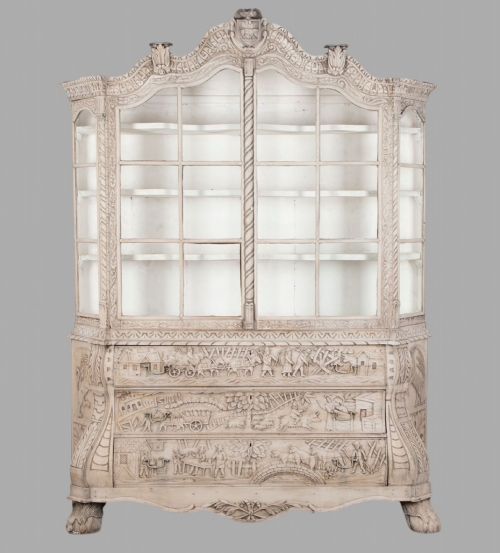
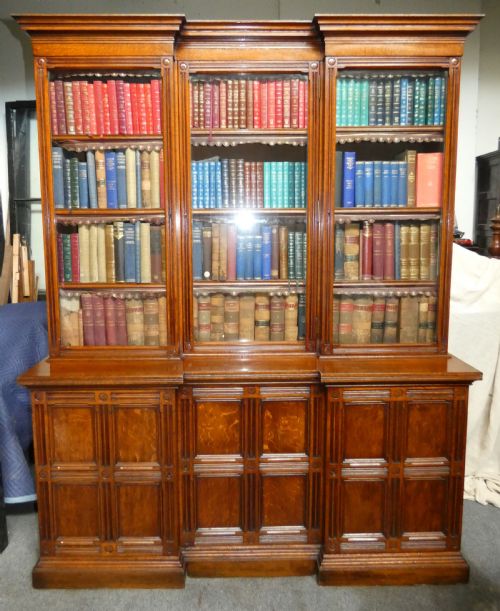
A large oak glazed cabinet serves primarily as a library bookcase, breakfront cabinet, or display piece designed to house volumes and treasured objects securely behind glass. These substantial pieces frequently date from the Victorian and Edwardian eras, incorporating earlier revival styles such as Jacobean and Gothic Revival.
The forms range from monumental three-door library bookcases and breakfronts to school department cabinets and housekeepers cupboards. Most examples utilise sturdy timber construction combined with extensive glazing to allow clear visibility of the interior shelving.
How they were made
Cabinet makers constructed these large pieces using solid oak and pollard oak, often accented with brass hardware, iron fittings, and lead outlining the glass panes. Timber sections were frequently carved by hand with intricate detailing, particularly on Victorian library bookcases and revival pieces.
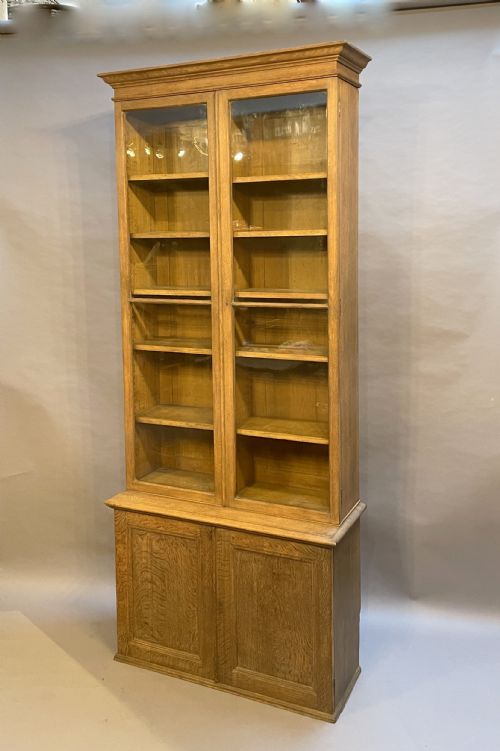
Glazing techniques incorporated standard glass alongside safety glass and occasionally stained glass for specialised institutional or domestic settings. Interior configurations typically featured adjustable wooden shelves housed within breakfront or multi-door carcass frames.
Materials documented across the collection include solid oak, pollard oak, brass, iron, lead, mirror plate, and stained glass.
What varies in quality
The distinction between ordinary utility storage and exceptional cabinet work rests in the depth of the timber carving and the selection of figured pollard oak veneers. Monumental library bookcases commissioned for specific country houses display superior proportion, heavier architectural moulding, and refined joinery compared to standard commercial workshop output.
Hardware selection and internal detailing further separate the tiers, with high-end examples featuring robust brass fittings, panelled cabinet bases, and meticulously fitted adjustable shelving systems designed for heavy institutional or residential use.
Howard and Sons·Aitchison
The Large Oak Glazed Cabinet Glossary
- Breakfront
- A large cabinet design where the central section projects forward from the flanking wings. This architectural arrangement creates depth and visual interest in substantial library bookcases.
- Pollard oak
- Timber taken from trees that have been pollarded, producing a heavily figured and mottled grain pattern. Cabinet makers prized this decorative wood for prominent panels and revival furniture.
- Gothic Revival
- An architectural and decorative style popular during the nineteenth century that reinterpreted medieval motifs. Pieces in this manner often incorporate pointed arches, heavy linenfold carving, and tracery.
- Housekeepers cupboard
- A large storage piece traditionally used in manor houses for linens, dry goods, and household provisions. These utilitarian forms usually combine upper shelving with a deep cupboard base.
Large Oak Glazed Cabinet: Frequently Asked Questions
How do I style a large oak glazed cabinet?
Position the piece against a substantial wall in a library, dining room, or wide hallway where its scale can anchor the room. Balance heavy leather-bound books and ceramics on the adjustable shelves to prevent the internal display from feeling cluttered.
Keep the surrounding decor relatively simple to let the carved oak woodwork and glass panes remain the focal point. Ensure adequate clearance for doors that swing open or slide depending on the specific bookcase configuration.
Are these cabinets suitable for modern homes?
These large storage pieces adapt well to contemporary interiors when paired with neutral walls and good lighting. Their deep timber tones add warmth and gravity to minimalist or industrial spaces.
Verify your ceiling height and floor strength before purchase, as monumental nineteenth-century bookcases require significant vertical clearance and stable foundations. Professional delivery and installation are essential for heavier multi-door configurations.
How do I date an antique oak cabinet?
Examine the construction methods, secondary timbers, and surface patination to determine the manufacturing period. Victorian and Edwardian pieces often display machine-sawn backing boards alongside hand-finished exterior mouldings.
Stylistic clues such as heavy Gothic revival tracery or Edwardian restraint point directly to specific decades between eighteen-sixty and nineteen-thirty. Hardware styles and keyhole escutcheons also provide reliable chronological markers.
What is the difference between a bookcase and a display cabinet?
Bookcases generally feature open or glazed shelving specifically dimensioned to hold vertical rows of books and library volumes. Display cabinets often incorporate mirrored backs, glass side panels, and finer shelving tailored for porcelain and collectibles.
Many large nineteenth-century examples combine both functions by uniting tall glazed upper bookcases with solid or carved cupboard bases.