

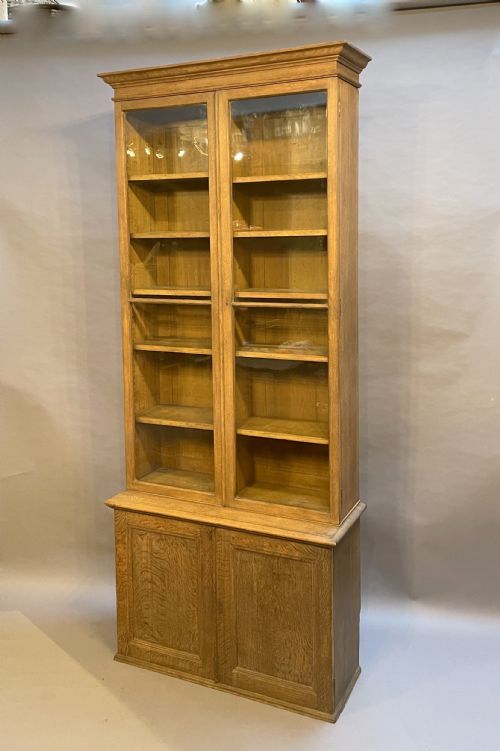
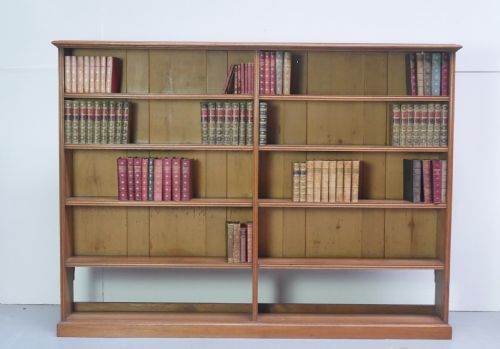


Large Oak Display Cabinet
A large oak display cabinet brings substance and presence to any room, housing books or collections behind clear glass.
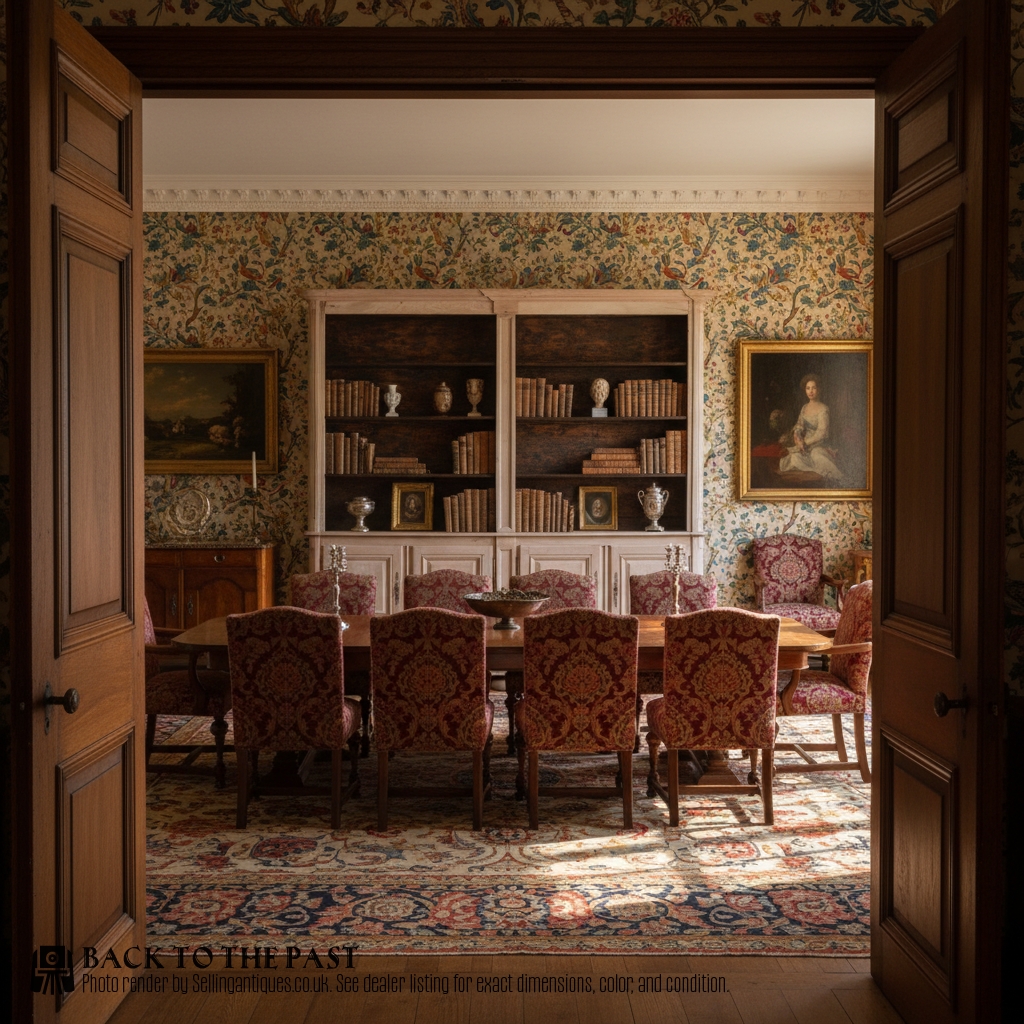
Large Oak Display Cabinet
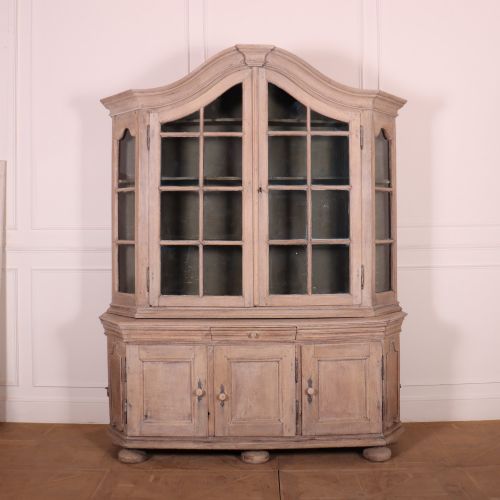
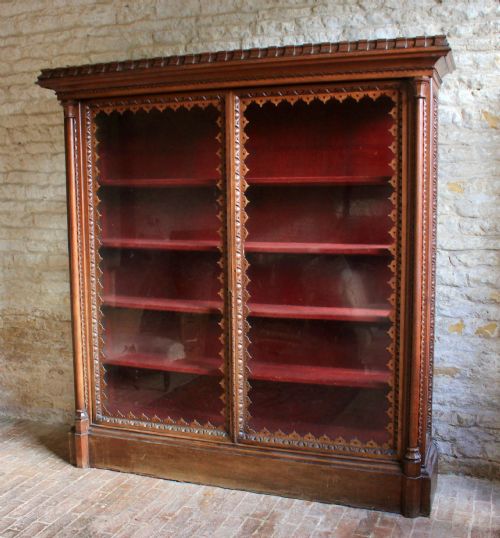
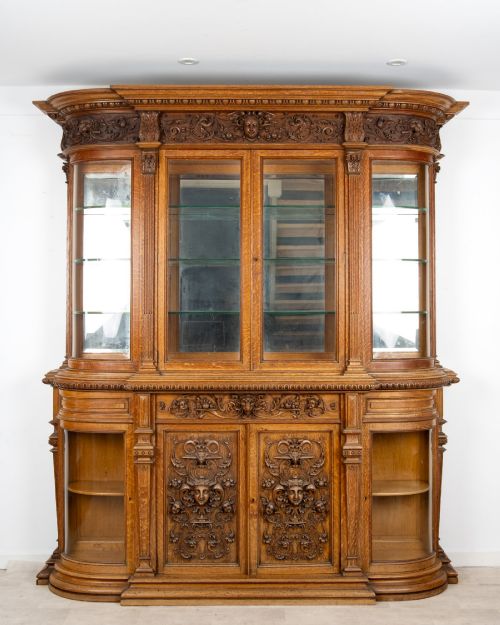
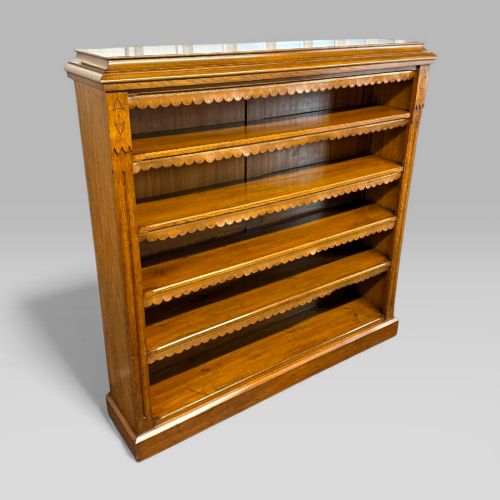
A large oak display cabinet combines generous proportions with sturdy timber framing to protect and exhibit valued possessions. These items serve multiple functions across domestic and commercial settings, appearing as library bookcases, shop display units, and corner cupboards. Buyers encounter forms ranging from monumental carved library pieces to restrained Edwardian shop cabinets.
The pieces documented here span from the eighteenth century through the Georgian, Victorian, and Edwardian eras into the twentieth century. Styles encompass Dutch Rococo Revival, Arts and Crafts, and French Provincial alongside simpler utilitarian designs. Oak provides a dependable, heavy framework that supports extensive shelving and large glass panels without twisting.
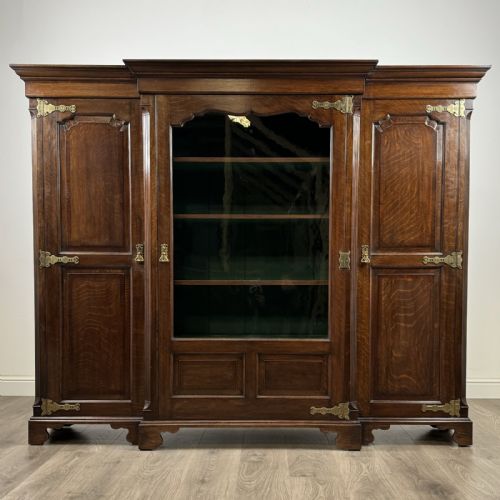
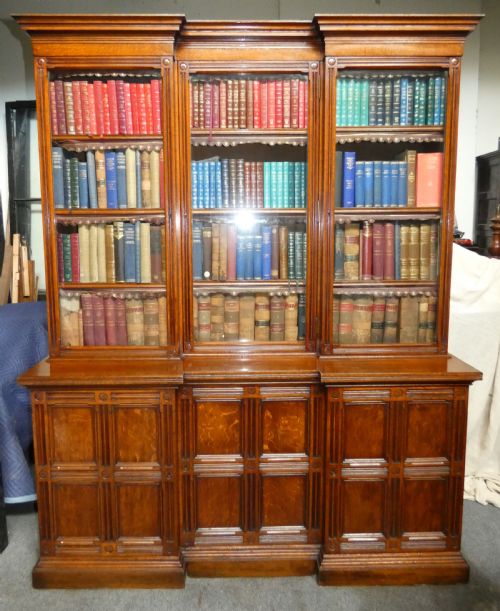
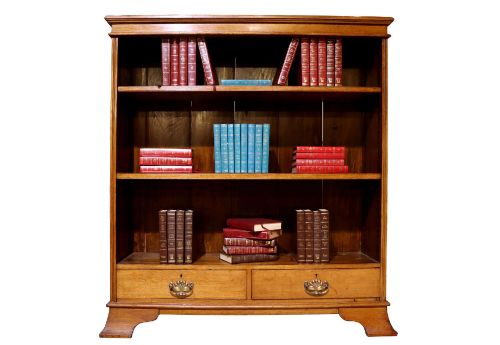
Many examples integrate glazed doors with lower wooden cupboards or drawers, balancing visible display space with concealed storage. Others take the form of tall corner cabinets or shop showcases designed for merchandise and museum artefacts. Each period brings distinct proportions and carving details to the basic architectural skeleton.
Materials and construction methods
Makers built these cabinets using solid oak timber, sometimes employing bleached finishes or rich dark waxes to alter the natural grain appearance. Structural joints relied on traditional woodworking techniques including mortise and tenon joinery to sustain the heavy weight of the wood and glass. Brass hinges, handles, and iron fittings provided robust operational hardware for large doors.
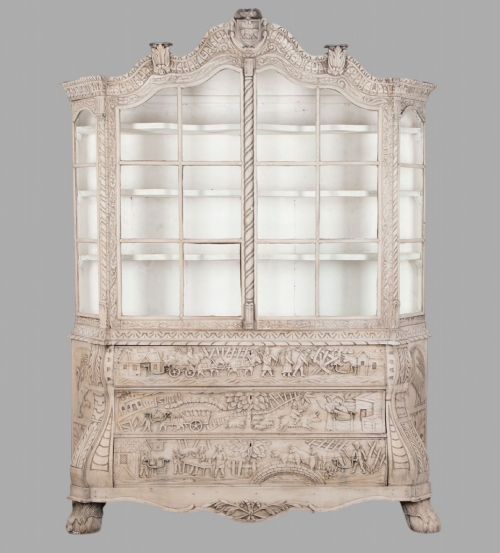
Glazing required substantial framing to hold large panes of glass securely within heavy wooden doors or bronze surrounds. Carved ornamentation on Victorian and Georgian pieces involved deep hand chiselling into the solid oak body, creating elaborate crests, panels, and borders. Interior elements often featured mirrored backs in later museum and shop cases to amplify light.
Large Oak Display Cabinet Retail Price Guide 2026
Typical asking prices for large oak display cabinet among the pieces listed under this phrase on Sellingantiques today, from the lower quarter to the upper quarter. They describe what is for sale here now, not the wider market.
Museum showcases utilise bronze and mirrored glass so artefacts appear suspended in mid-air.
Distinctions in construction and design
Superior examples demonstrate meticulous hand carving and thoughtful timber selection where the grain matches across large expanses of wood. The thickness of the oak and the integrity of the joinery determine whether a tall cabinet maintains its alignment over decades of use. High-grade hardware, original glass panels, and well-fitted doors distinguish bespoke commissions from standard production pieces.
The refinement of the proportions and the complexity of the architectural styling separate standard utility furniture from exceptional showroom or library pieces. Finer cabinets exhibit harmonious integration between the display section above and the base storage below, executed without secondary timber shortcuts. Preserved surface patination and authentic period brassware further elevate the standing of an individual piece.
The Large Oak Display Cabinet Glossary
- Bombé
- A swelling, outward-curving frontage typical of certain continental furniture styles like Dutch Rococo Revival. This silhouette requires advanced joinery to shape the timber accurately.
- Glazed
- Fitted with transparent glass panels to allow visibility of the interior contents while protecting them from dust. This feature defines the primary purpose of display furniture.
- Bleached oak
- Timber treated to lighten its natural warm tone, creating a softer, paler surface finish often associated with eighteenth-century French pieces. This treatment highlights the grain texture while subduing the dark coloration.
- Library bookcase
- A tall, substantial storage unit designed for heavy volumes, frequently featuring extensive shelving and carved decorative elements. These pieces often incorporate glazed upper doors to protect valuable books.
- Shop display cabinet
- Commercial vitrine furniture engineered for retail or museum environments, sometimes combining oak and bronze framing with safety glass. Such units prioritise maximum visibility for artefacts or merchandise.
Large Oak Display Cabinet: Frequently Asked Questions
What periods do these cabinets represent?
The available inventory covers pieces from the eighteenth century, the Georgian era, the Victorian period, and the early twentieth century including Edwardian designs.
Craftsmanship evolves across these eras from heavy hand-carved architectural statements to cleaner twentieth-century commercial display units.
How do library bookcases differ from display cabinets?
Library bookcases typically focus on sturdy shelving for heavy book collections, though many incorporate glazed doors for viewing.
Display cabinets place greater emphasis on glass panels and internal visibility for collections, porcelain, or retail merchandise.
What woods and metals are used?
Solid oak forms the primary structural timber, sometimes finished in a bleached state or maintained in its natural grain.
Hardware and secondary framing frequently incorporate brass, iron, or bronze components to support heavy doors and glass.
Where were these cabinets used originally?
Earlier examples served domestic roles in grand libraries, drawing rooms, and dining spaces to store books and valuables.
Twentieth-century variations often originated in shops, museums, and showrooms as commercial showcases for merchandise.
Are corner cabinets available?
Certain pieces are built specifically to fit room corners, making efficient use of awkward spaces while providing glazed display storage.
These corner units appear in Georgian and later configurations with matching wooden bases.