

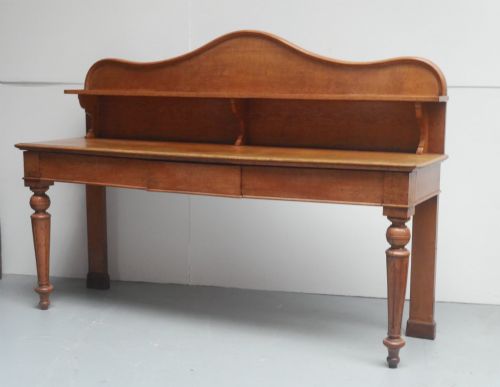


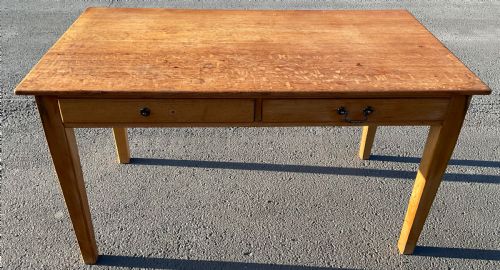


Large Oak Console Table
A large oak console table anchors a hallway or living space with substantial presence, built from durable timber to serve heavy daily use over centuries.
Large Oak Console Table
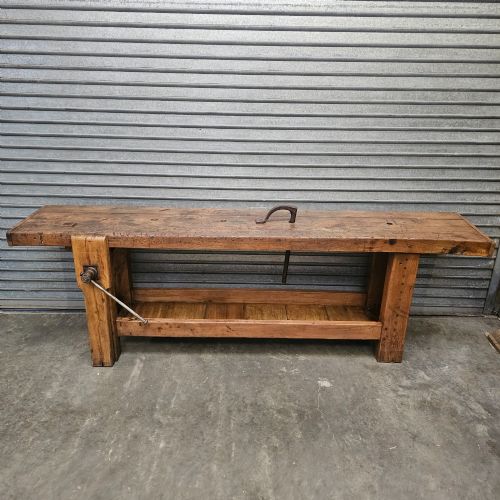
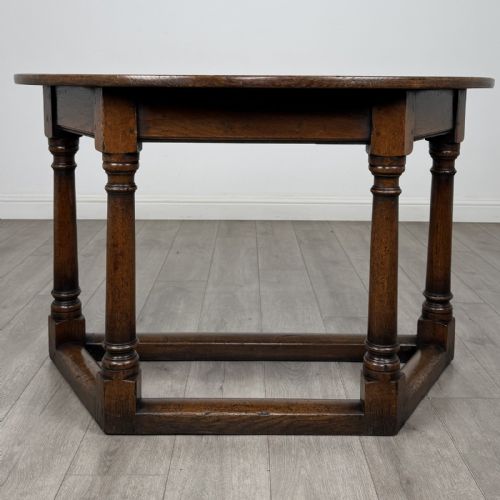
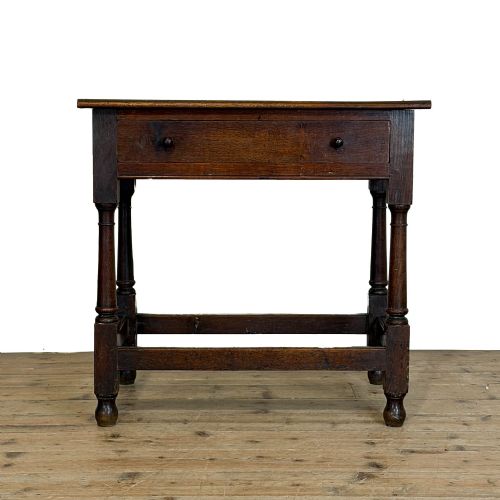
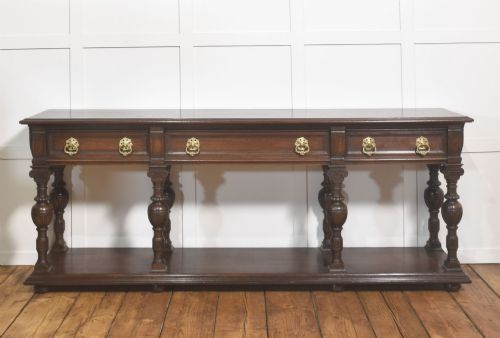
A large oak console table encompasses heavy serving surfaces, work tables, and dresser bases designed for substantial domestic or commercial spaces. These pieces emerge primarily from the eighteenth and nineteenth centuries, spanning Georgian, Victorian, and French country traditions.
Buyers seeking this phrase encounter versatile furniture that functions equally as a hall table, a serving surface in a dining room, or a statement piece in a large hallway. The proportions remain generous, often accommodating length and depth suited to wide walls.
How they were made
Construction relies heavily on solid oak and associated timbers such as elm and hardwood, sometimes paired with iron or brass hardware. Joinery employs traditional framing and panel techniques suited to heavy daily wear.
Surfaces exhibit natural timber finishes alongside bleached oak treatments and traditional waxing that enhances the grain. Structural elements remain heavy and unyielding, designed to support significant weight across large spans.
Large Oak Console Table Retail Price Guide 2026
Typical asking prices for large oak console table among the pieces listed under this phrase on Sellingantiques today, from the lower quarter to the upper quarter. They describe what is for sale here now, not the wider market.
Listings feature oak, bleached oak, elm, and hardwood across eighteenth and nineteenth century periods.
What varies in quality
Quality rests in the integrity of the timber selection and the depth of the natural patina accumulated over generations of use. Superior examples display honest signs of age, such as historic working surfaces and well-maintained joinery.
Proportion and execution distinguish finer pieces, where structural mass meets balanced design rather than simple bulk. The refinement of surface treatment, whether an unvarnished bleached finish or a rich golden tone, dictates the visual impact.
The Large Oak Console Table Glossary
- Console table
- A table designed to stand against a wall, historically supported by brackets or legs at the front. These pieces provide surface space in hallways and reception rooms without obstructing walkways.
- Drapers table
- A long, wide utilitarian table originally used in textile shops for folding cloth. They typically feature deep proportions and sturdy timber construction suited to heavy use.
- Lowboy
- A small eighteenth century table with drawers, often standing on relatively tall legs. They function as dressing tables or side tables.
- Dresser base
- The lower section of a kitchen or dining room storage unit, featuring cupboards and drawers beneath a thick serving surface. They provide substantial storage capacity.
- Patina
- The surface sheen and colour developed through decades of handling, polishing, and exposure to light. It serves as an indicator of genuine age and continuous use.
Large Oak Console Table: Frequently Asked Questions
Where should I place a large oak console table?
These pieces suit wide hallways, large living rooms, and dining spaces where their substantial proportions command the room. They serve well against bare walls to display lamps, ceramics, or books.
Ensure you measure the available floor space and clearance carefully, as these tables often exceed standard depths and lengths found in modern furniture.
How do I care for a historic oak surface?
Maintain the timber by dusting regularly with a soft cloth and applying a traditional beeswax sparingly to nourish the wood. Avoid placing tables near direct heat sources or in strong sunlight to prevent splitting.
Using coasters and placemats protects the historic finish from moisture rings and heat damage during daily use.
What is the difference between an 18th century and a 19th century table?
Eighteenth century examples often reflect formal periods such as Georgian design, displaying refined proportions and hand-carved details. Nineteenth century pieces frequently lean towards utilitarian forms like drapers tables, work benches, and serving tables.
Earlier pieces generally show construction methods tied to manual saw work, whereas later nineteenth century pieces incorporate industrial developments in timber preparation.
Can I use a work table as a console?
Work tables and drapers tables make excellent console surfaces due to their long, narrow proportions and sturdy timber frames. Their utilitarian origins bring character and history into modern domestic settings.
Their robust construction means they easily support heavy decorative objects and daily items without structural strain.