



Large Metal Charger
When you handle a large metal charger, you hold centuries of hammered brass, copper, and cloisonné enamel shaped for display or service.
Large Metal Charger
A large metal charger is a broad display plate or tray spanning domestic and decorative traditions from the seventeenth century through to the Edwardian era. These substantial vessels appear in various forms, including plain-rimmed pewter service pieces, heavy brass platters, and intricate Japanese cloisonné enamel plaques.
The versions most commonly met on this page span the late Victorian period and the Meiji era, alongside earlier seventeenth-century pewter examples bearing broad rims and maker touchmarks. Makers fashioned these wide surfaces from copper, bronze, and mixed metal alloys, adapting them for wall hanging or table display.
How they were made
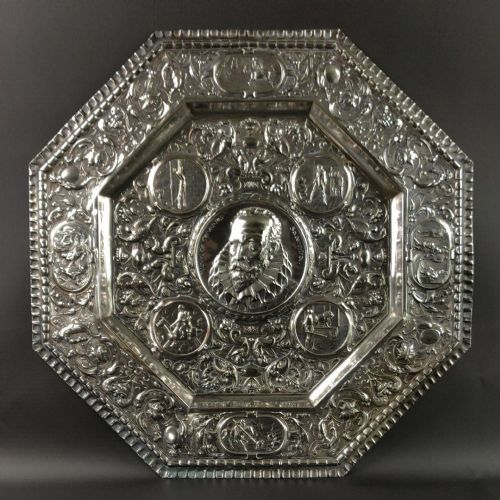
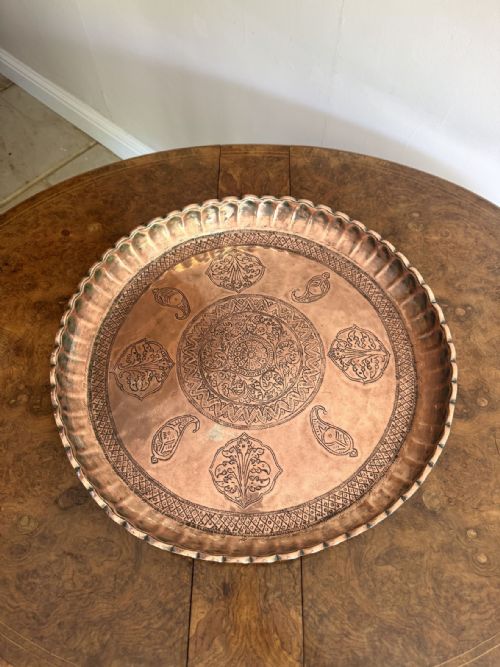
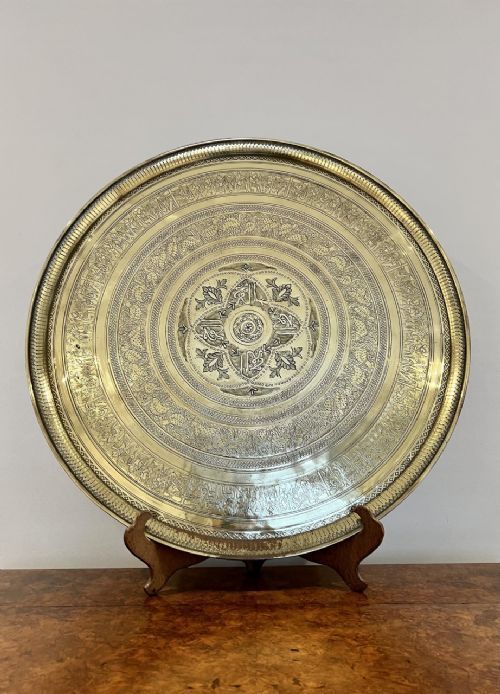
Artisans formed these vessels by hammering sheets of copper, brass, and pewter over wooden blocks or raising them by hand to create the broad base and sloping rim. Smiths and metalworkers enriched the surfaces using repoussé techniques, chasing, and deep engraving to render pictorial scenes and heraldic crests.
For enamel pieces, craftsmen soldered fine brass or copper wires onto a metal or ceramic body to form cellular compartments, which they packed with vitreous enamel pastes before firing in kilns. Pewterers cast their broad-rim chargers in multi-part moulds before planishing the alloy with heavy hammers to compact the metal and harden the surface.
Large Metal Charger Retail Price Guide 2026
Typical asking prices for large metal charger among the pieces listed under this phrase on Sellingantiques today, from the lower quarter to the upper quarter. They describe what is for sale here now, not the wider market.
Japanese artisans captured fierce dragons and leaping koi on heavy copper plates, turning solid metal into swirling water and scale.
What varies in quality
The standard of a large metal charger rests on the precision of its surface execution and the depth of its raised decoration. Hand-beaten pewter pieces rely on crisp hammering marks and intact touchmarks, while cloisonné examples demonstrate quality through the symmetry of wirework and the density of the fired enamel.
Makers who invested time in detailed chiselling and varied patination produced pieces with sharper contrasts and greater visual weight. Simpler trays show mechanical stamping or shallow engraving, whereas masterworks display complex iconography like dragons, phoenixes, and architectural scenes rendered with considerable technical control.
Hugh Wallis·Thomas Alderson·Thomas Templeman·Lawrence Dyer·Thomas Powell
The Large Metal Charger Glossary
- Charger
- A large broad-rimmed plate or dish used historically for ceremonial dining or standing as a decorative wall platter.
- Repoussé
- A metalworking technique where the artisan hammers the design from the reverse side to form a raised relief on the front.
- Cloisonné
- An enamelling method utilising thin metal wires soldered to a base to create cells filled with coloured glass paste.
- Totai Shippo
- Japanese cloisonné enamel applied over a ceramic or porcelain body rather than traditional metal foundations.
- Planishing
- The process of smoothing and hardening sheet metal by striking it lightly with a specialised polishing hammer.
- Touchmark
- An identifying stamp or hallmark impressed into pewter by the maker or guild to guarantee the alloy standard.
Large Metal Charger: Frequently Asked Questions
How were large metal chargers used?
These large vessels served multiple functions across different centuries, acting primarily as service platters for grand feasts in seventeenth-century households before evolving into purely decorative wall chargers during the Victorian and Meiji periods.
Heavier pewter and brass versions handled the weight of joints of meat or stood beneath smaller ewers, while Japanese cloisonné and Cairo Ware plaques were mounted directly onto walls to display intricate craftsmanship.
How do I hang a heavy charger?
Hanging a substantial metal or enamel platter requires adjustable brass or coated wire display springs that grip the rim firmly without putting undue stress on the body. It is essential to anchor the fixing directly into a wall stud or use heavy-duty wall plugs capable of supporting the dead weight of bronze, pewter, or thick copper.
Ensure the wall plate hangs at a slight downward angle against the plaster to distribute the load evenly and prevent the piece from tilting forward.
How do I clean antique pewter?
Antique pewter requires minimal intervention to preserve the dark, matte patina that centuries of oxidation have built across the surface. Washing the metal gently with warm soapy water and drying it immediately with a soft cloth removes dust and grease without stripping the historic skin.
Harsh metal polishes and abrasive compounds should be avoided entirely, as they strip away the soft alloy and remove the subtle tool marks left by the original maker.
How do I date a pewter charger?
Dating a pewter charger depends heavily on the width of the rim, the weight of the alloy, and any maker touchmarks stamped into the back or face. Seventeenth-century examples typically feature very broad rims and deep hammer texturing, whereas later Georgian and Victorian pieces shift toward thinner walls and simpler profiles.
Comparing touchmarks against historical pewterer registers provides the most reliable guide to the workshop and decade of origin.
What is Cairo Ware?
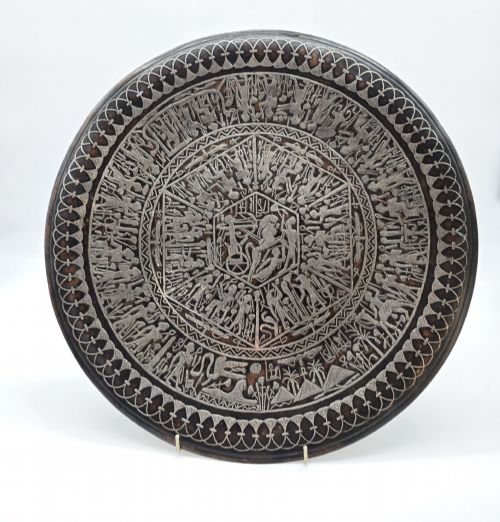
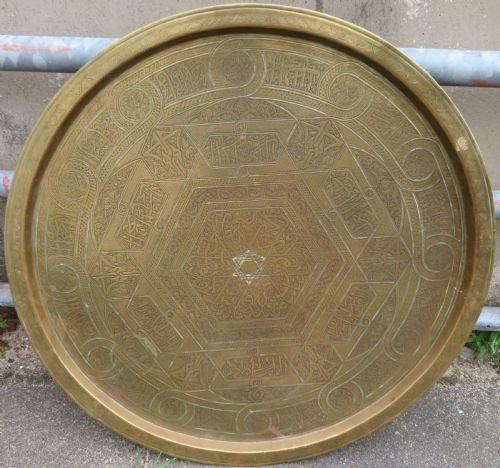
Cairo Ware refers to nineteenth- and early twentieth-century Islamic metalwork produced in Egypt, characterised by brass bases inlaid with intricate ribbons of silver and copper. These decorative trays and chargers combine geometric patterns with Arabic calligraphy to evoke the traditional metalworking aesthetics of the Mamluk revival.
Craftsmen created high-contrast surfaces by scoring the brass ground and hammering contrasting metal wires into the recessed channels.