
Large Mahogany Breakfront Bookcase
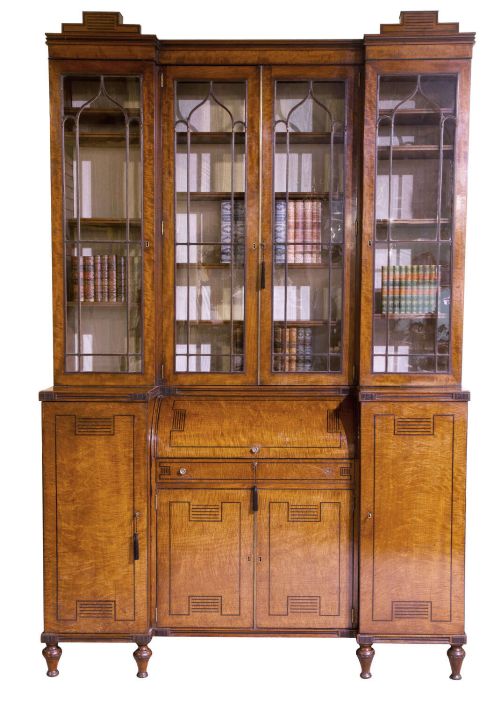
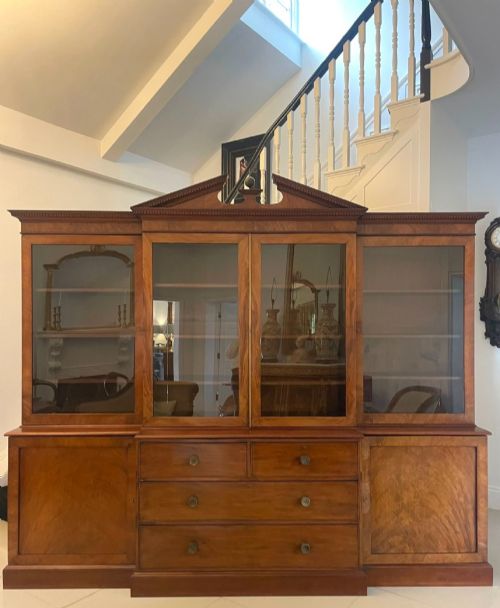
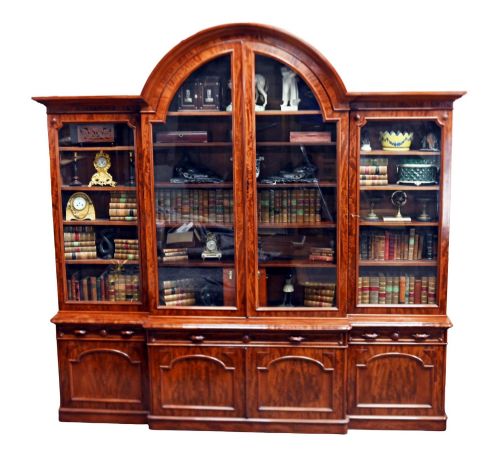
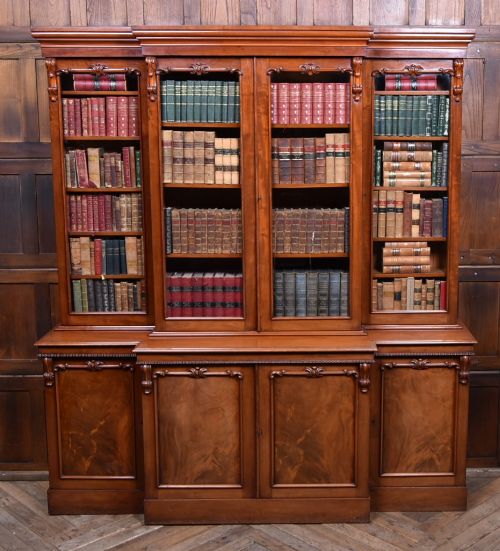
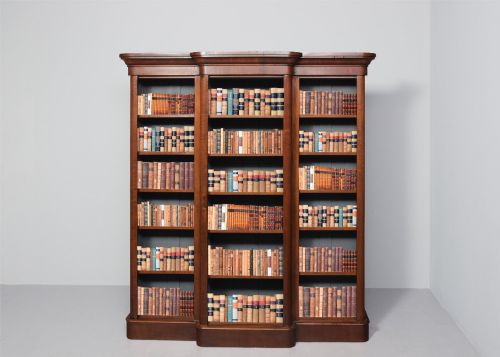
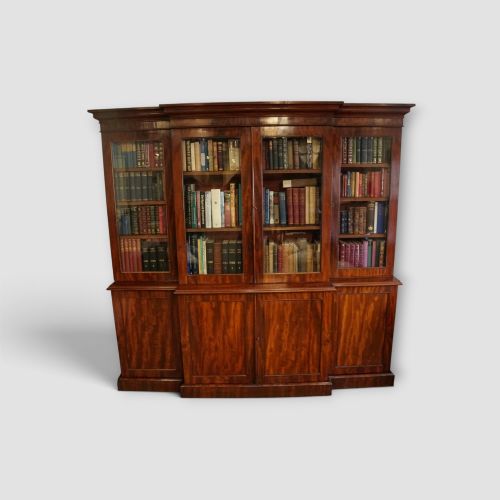
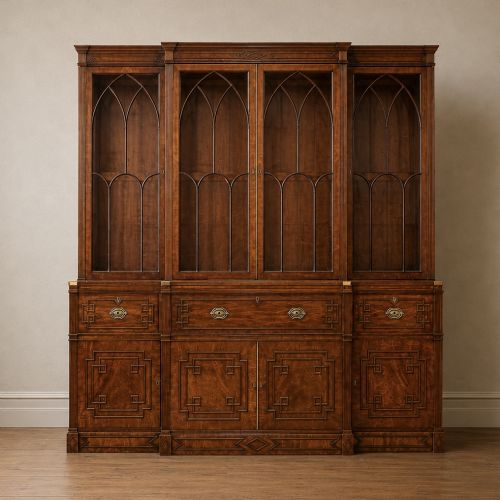
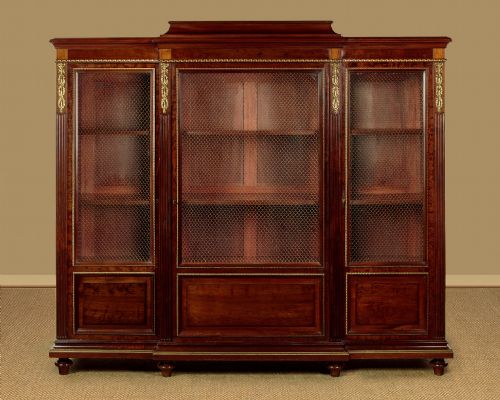
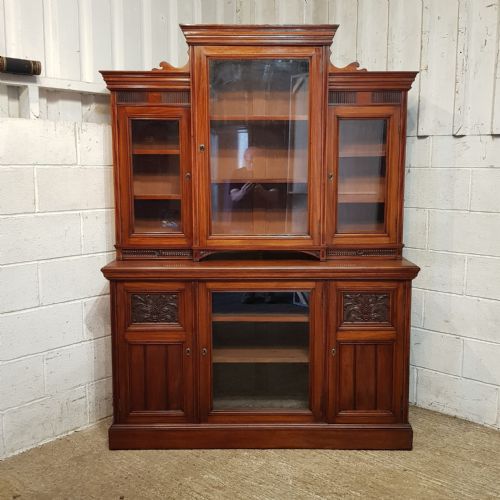
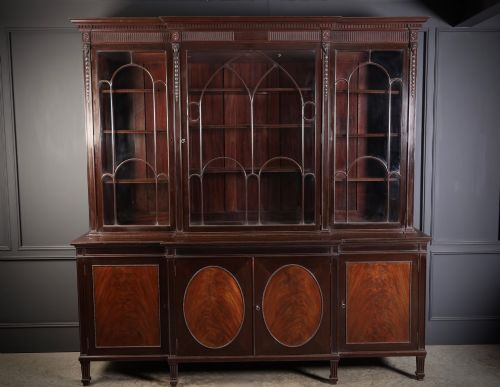
A large mahogany breakfront bookcase commands a room with its projecting central section and rich timber grain.
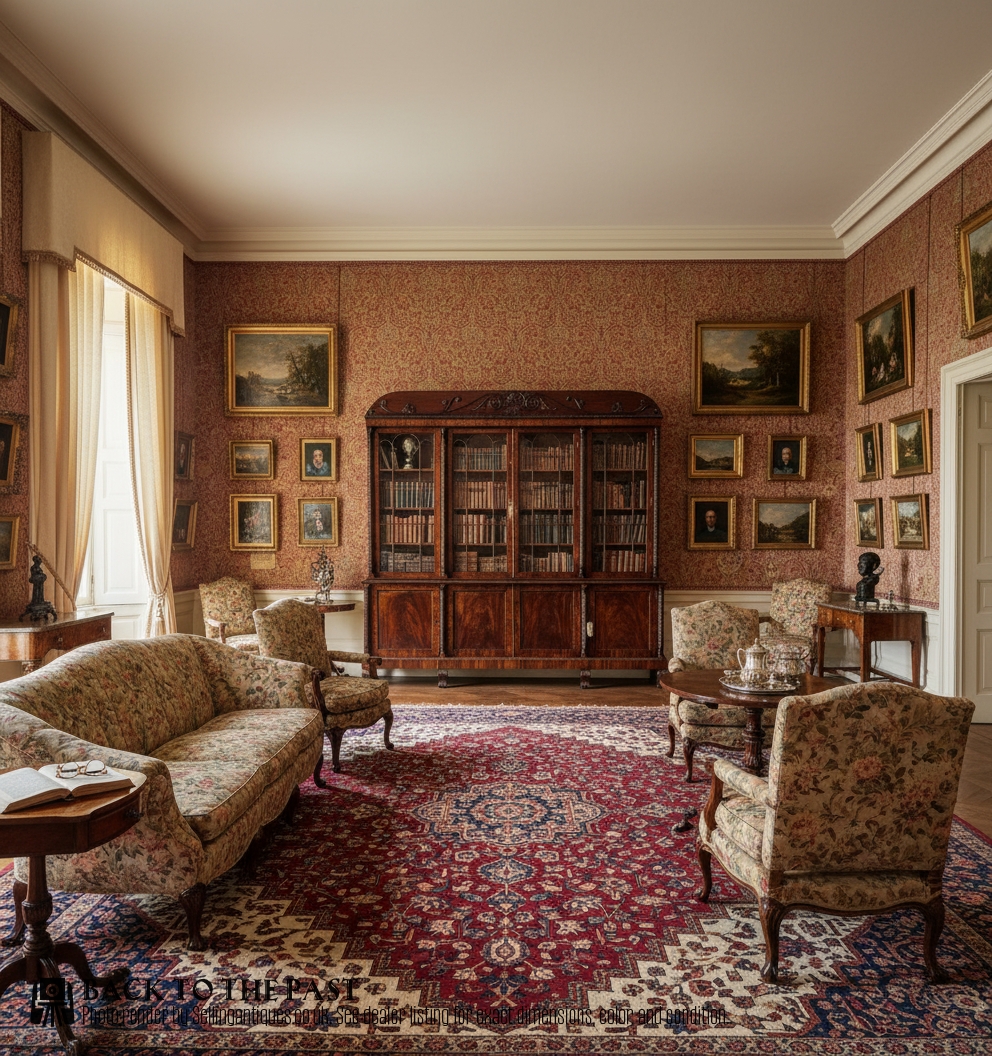
Large Mahogany Breakfront Bookcase
A large mahogany breakfront bookcase is a substantial piece of furniture designed to house extensive libraries and display collections in principal rooms.
Examples on this page span from the eighteenth century through the Georgian, Regency, Victorian, and Edwardian periods.
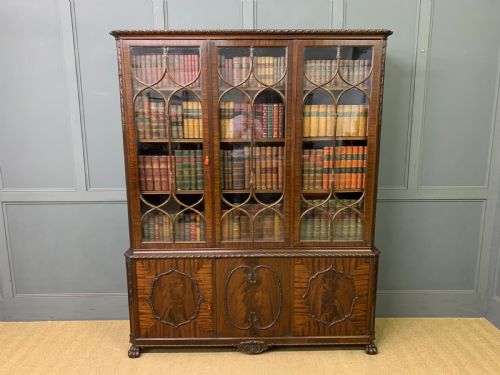
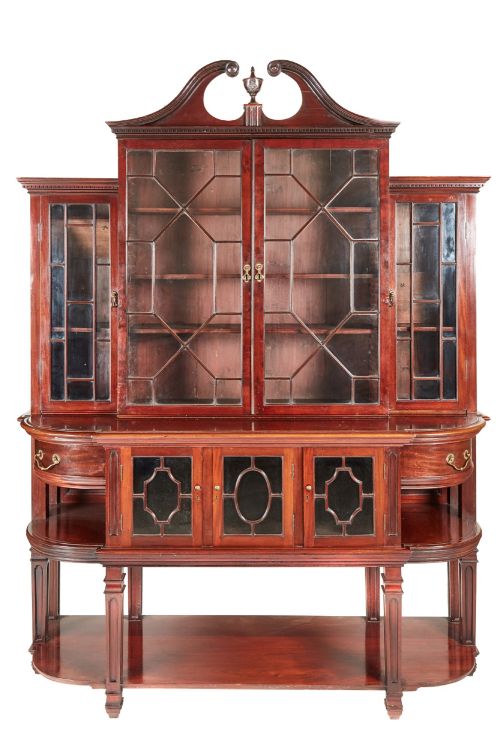
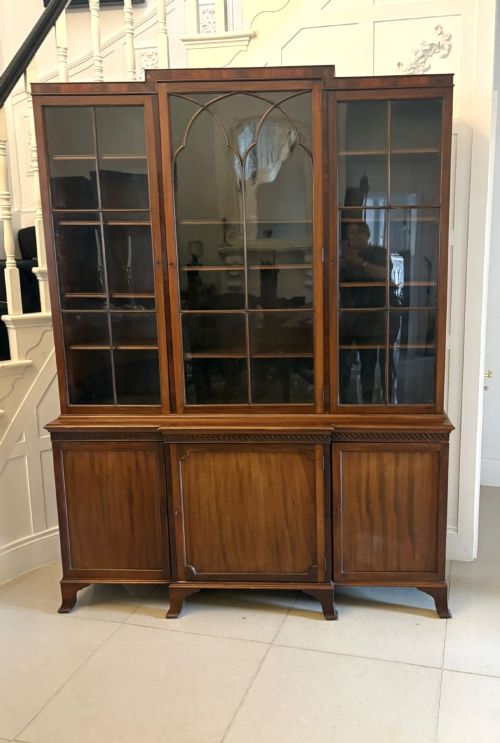
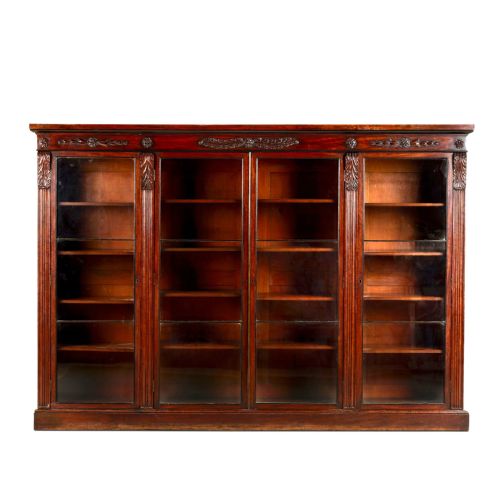
The format typically combines glazed upper display doors with lower wooden cupboards or open shelving configurations.
How they were made
Cabinetmakers utilised dense solid mahogany and applied figured mahogany veneer to achieve deep, lustrous surfaces across the wide carcass sections.
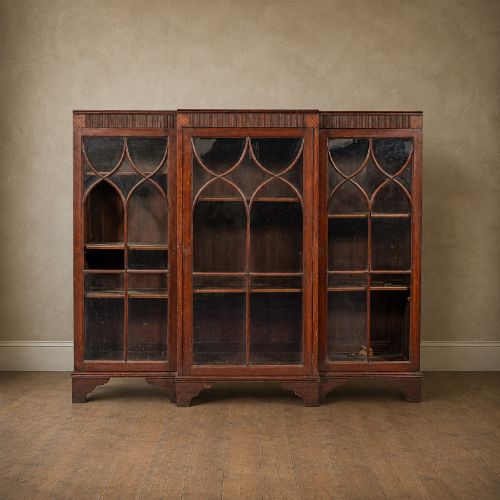
Glazing bars divided the glass doors into geometric panes, while brass hardware and occasional satinwood or marquetry inlays provided linear contrast.
Carpenters constructed these large modules in sections to allow assembly within domestic libraries and grand country houses.
Many a library bookcase still hides an ink-stained secretaire drawer waiting to be pulled.
What varies in quality
The selection of timber grain dictates visual depth, ranging from plain boards to highly figured flame mahogany veneers chosen for prominent cabinet doors.
Carved ornament depth and the precision of astragal glazing bars distinguish standard production from exceptional commission work.
Proportion and architectural balance between the projecting breakfront centre and the recessed wings define the overall elegance of the piece.
Gillows·Richardson of Leeds·Edwards and Roberts
The Large Mahogany Breakfront Bookcase Glossary
- Breakfront
- A cabinet design where the central section projects forward from the flanking side sections. This architectural arrangement creates shadow and depth across the front elevation.
- Astragal
- A small convex moulding used to divide panes of glass within a glazed door. These delicate wooden strips form geometric patterns across bookcase fronts.
- Flame mahogany
- A veneer cut from timber where the grain resembles flickering flames. Cabinetmakers reserved this decorative wood for principal display surfaces.
- Secretaire
- A desk drawer fitted with a drop-front writing surface and small interior compartments. It integrates a writing desk into the upper storage sections.
- Marquetry
- Inlaid patterns formed by fitting contrasting veneers into a prepared wooden ground. This decorative technique creates pictorial or geometric designs on cabinet doors.
Large Mahogany Breakfront Bookcase: Frequently Asked Questions
Where should a large bookcase sit?
These imposing cabinets suit principal reception rooms, studies, and libraries with high ceilings and ample wall space. Their architectural presence requires a room scaled to absorb their physical depth and width.
Position the cabinet away from direct sunlight to protect the timber and book bindings. Ensure floor surfaces are level to maintain the alignment of large doors and drawers.
How do I organise heavy books?
Store folio volumes and heavier reference books on the lower shelves behind solid wooden cupboards. Lighter octavos and display items sit comfortably on upper adjustable timber shelves.
Distribute weight evenly across the shelving tiers to prevent sagging over time. Leave small gaps at the sides of book rows to allow air circulation around the bindings.
How are eighteenth and Victorian styles told apart?
Eighteenth-century examples often exhibit restrained George III proportions with fine astragal glazing bars and understated bracket feet. Victorian interpretations tend to display heavier architectural cornices, Gothic Revival influences, and larger plate glass panels.
Examine the interior secondary woods and backboards for period-specific sawing marks. Drawer construction details also reveal the manufacturing era.
Can shelves be adjusted inside?
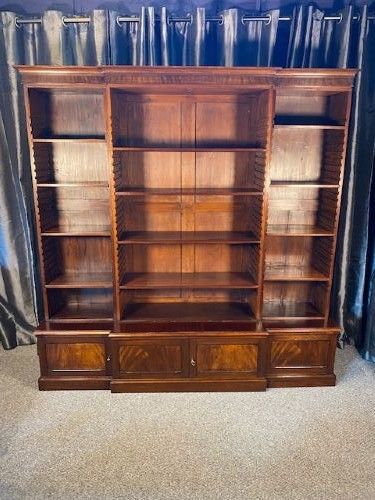
Most large library bookcases feature pegged or notched wooden supports that allow shelf height adjustment. This modular interior layout accommodates varied book sizes from small novels to tall folios.
Inspect the interior vertical pilasters for rows of traditional adjustment holes. Some nineteenth-century cabinets utilise brass rack strips to secure the shelf brackets.