



Large Low Table
A large low table anchors a room with broad proportions, offering substantial surface area and low elevation for comfortable daily use.
Large Low Table
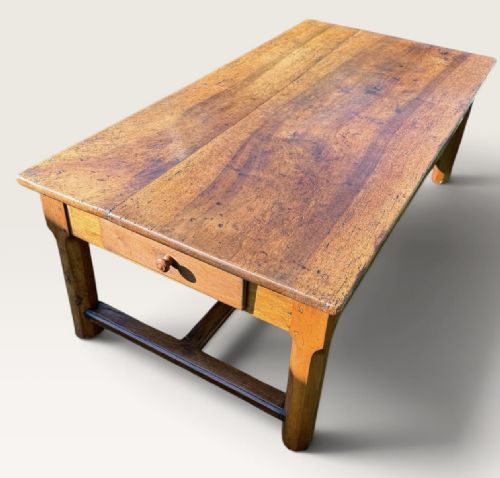
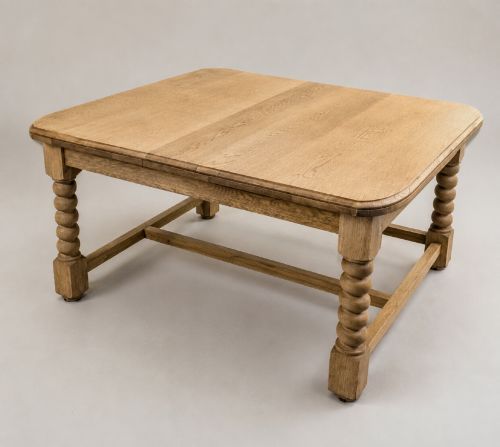
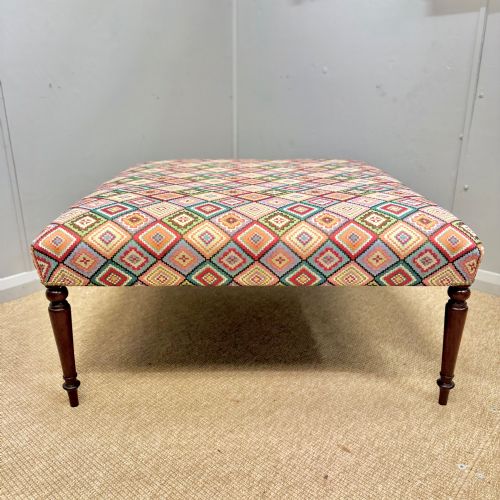
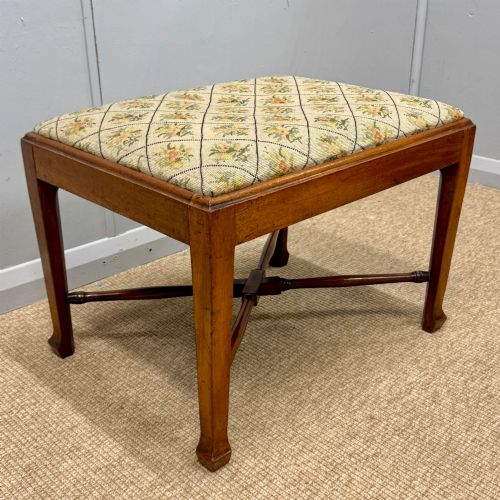
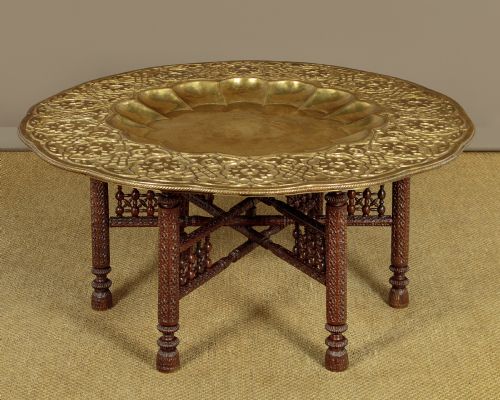
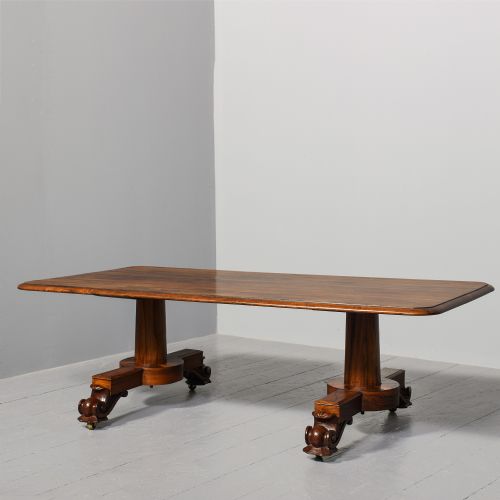
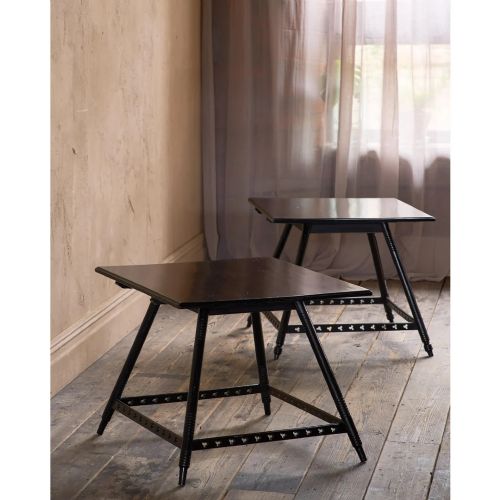
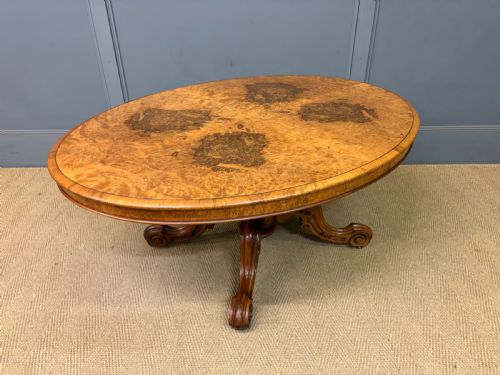
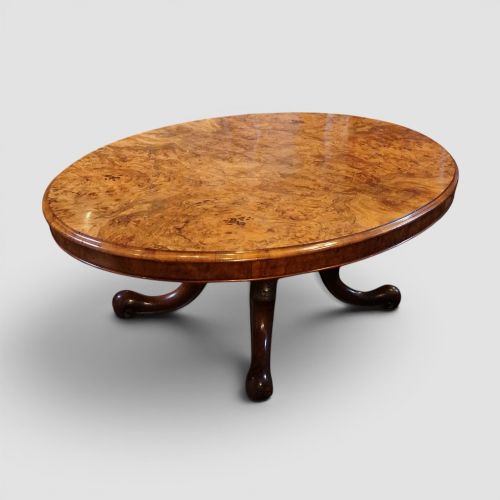
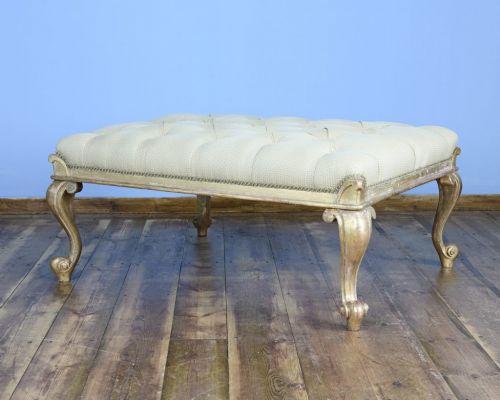
When you search for a large low table, you encounter diverse utilitarian forms adapted for contemporary living, including coffee tables, low centre tables, ottomans, and repurposed industrial benches from the eighteenth, nineteenth, and early twentieth centuries.
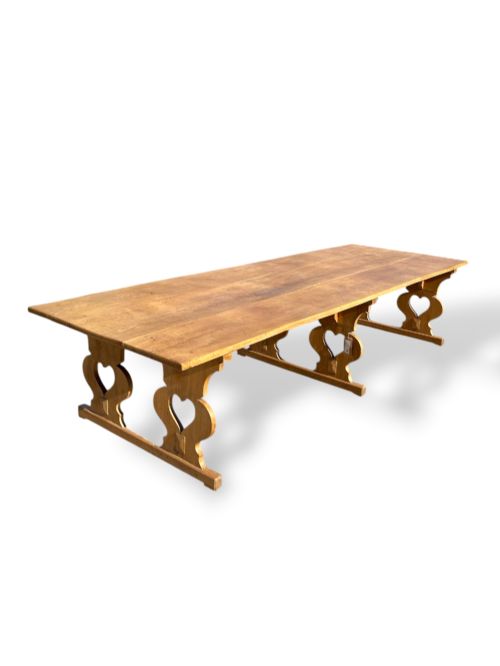
Many items originate from domestic contexts like country houses and provincial farmhouses, while others derive from civic or institutional furniture such as cheese press tables and refectory bases.
Materials and Construction
Cabinet makers utilised dense native timbers like oak, mahogany, walnut, and elm, selecting figured grains for prominent surfaces while employing secondary softwoods for internal framing and drawer construction.
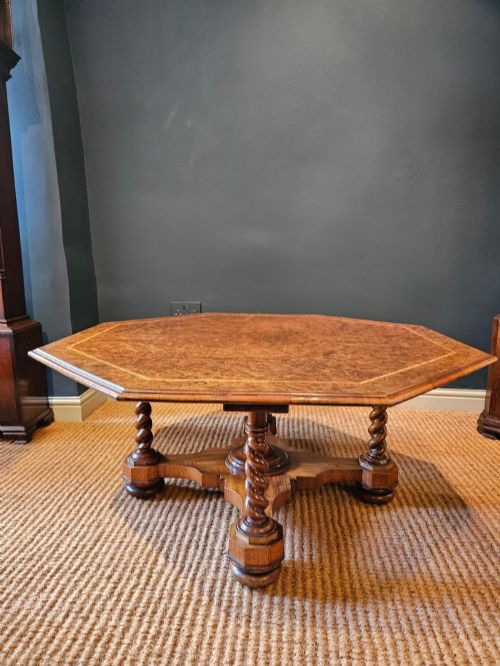
Joinery techniques ranged from robust pegged mortise and tenon joints in rustic work to precise dovetailing in drawers and sophisticated turned pillars or cross stretchers on formal centre tables.
Listings span the eighteenth, nineteenth, and early twentieth centuries, featuring woods such as oak, mahogany, walnut, pine, and rosewood.
Assessing Quality
Quality rests in the selection of timber, visible in the depth of flame mahogany, the intricacy of burr walnut figures, or the density and grain of aged oak.
Construction integrity separates masterwork furniture from vernacular items, evident in the crispness of hand-carved details, the seamless integration of added lower tiers, and the retention of original surface patination.
Gillows·Waring and Gillow·Arthur Reynolds of Ludlow·Charles Rennie Mackintosh
The Large Low Table Glossary
- Centre table
- A freestanding table finished on all sides, designed to sit in the middle of a room rather than against a wall.
- Cross stretcher
- An intersecting timber brace connecting the legs beneath a table to provide structural stability and visual balance.
- Burr walnut
- A highly prized wood veneer taken from the knotted growth of a walnut tree, displaying swirling, organic patterns.
- Refectory table
- A long, narrow dining table traditionally used in monastic refectories, characterised by sturdy legs linked by stretchers.
Large Low Table: Frequently Asked Questions
What rooms suit a large low table?
These generous proportions fit spacious drawing rooms, open-plan living areas, and libraries where they anchor seating arrangements without obstructing eye lines.
Their broad surfaces accommodate books, lamps, and serving trays while maintaining an accessible height for everyday lounging.
How do I care for antique wood surfaces?
Regular dusting with a dry, soft cloth preserves the historic wax polish and prevents abrasive particles from dulling the grain.
Avoid placing timber near direct heat sources or moisture, using coasters and mats to protect the original finish from rings and stains.
Can I use an ottoman as a table?
Upholstered stools and ottomans function well as soft tables when paired with a stable tray to hold drinks and smaller decorative objects.
This dual purpose introduces textural fabric into the room while retaining the surface utility of a standard wooden coffee table.
How do I identify a Victorian piece?
Nineteenth-century items often display denser timbers like mahogany and burr walnut, frequently featuring turned legs, octagonal tops, or heavy carved details.
Construction methods transition during this era from hand joinery toward mechanised production while retaining traditional timber framing.