

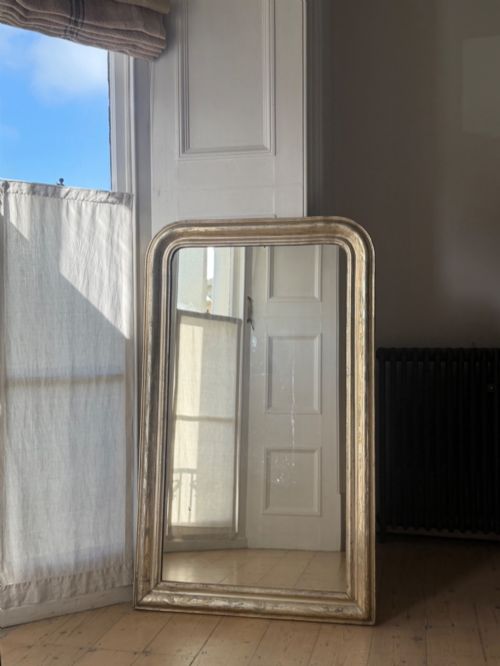
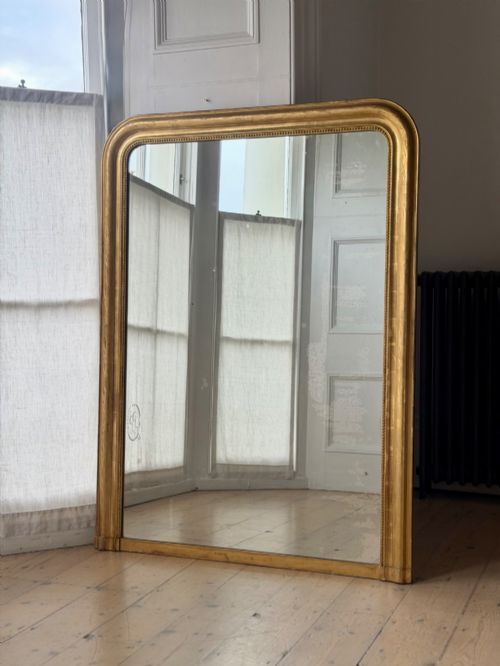
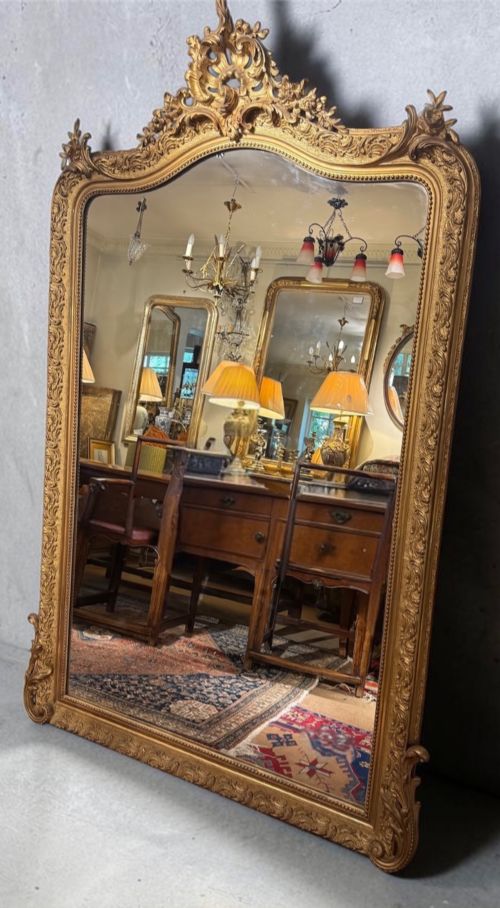
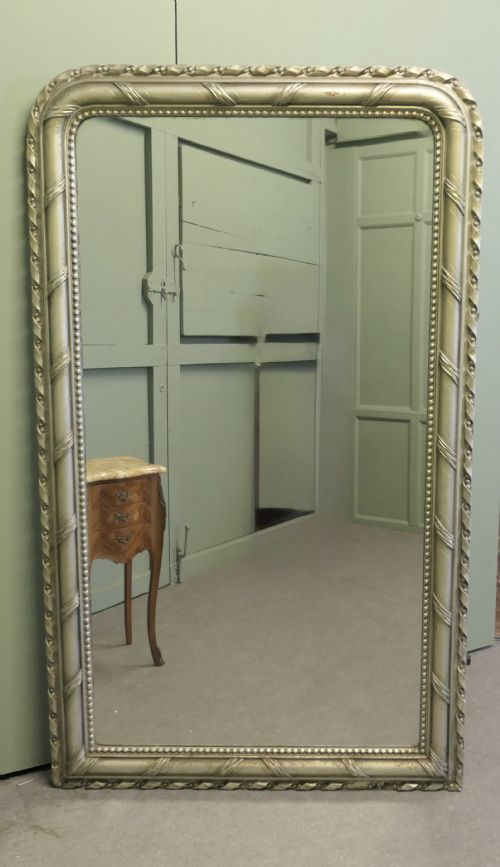


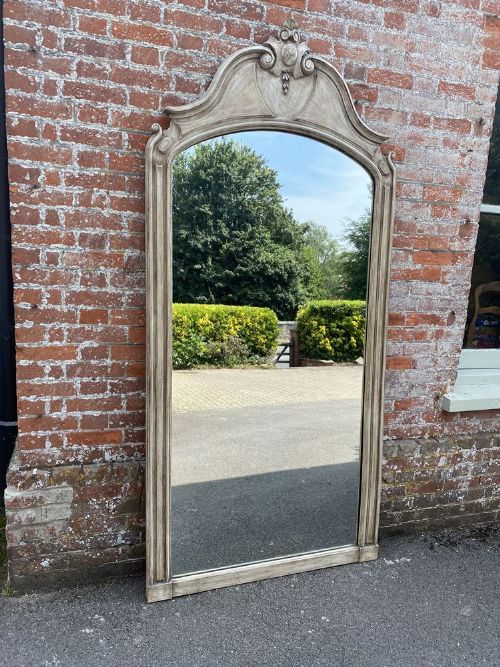


Large Leaning Floor Mirror
A large leaning floor mirror opens a room with light and height, bringing nineteenth-century French and English presence straight to your wall.
Large Leaning Floor Mirror
When you search for a large leaning floor mirror, you find tall nineteenth-century looking glasses designed to stand directly against a room's perimeter. The selection here brings together grand wall mirrors, overmantles, and full-height dressing mirrors intended to reflect substantial interior space.
Most examples hail from French and English workshops spanning the 1860s through the Edwardian era. You meet pieces defined by generous proportions, often standing six feet tall or more with arched, shaped, or plain rectangular tops.
Materials and construction
Craftsmen built these large frames using sturdy pine or carved wood foundations, applying layers of gesso to build up intricate surface ornamentation. Gilding with gold or silver leaf brings a reflective metallic sheen, while other variants receive simple paint finishes.
The heavy glass plates sit securely within substantial wooden rabbets, supported by structural joinery designed to bear the considerable weight of tall vertical hanging or floor-standing formats.
Large Leaning Floor Mirror Retail Price Guide 2026
Typical asking prices for large leaning floor mirror among the pieces listed under this phrase on Sellingantiques today, from the lower quarter to the upper quarter. They describe what is for sale here now, not the wider market.
Listings feature items from the 1860s through 1910, incorporating materials such as gesso, carved wood, pine, paint, and silver leaf.
Distinctions in quality
Superior examples reveal themselves in the depth of hand-carved woodwork and the crisp application of gesso relief rather than cast composite substitutes. The integrity of the original silvering and gilding also separates a masterwork from a later or lesser-finished surface.
Proportion and frame weight indicate structural ambition, with finer pieces maintaining rigidity across six-foot spans while exhibiting sophisticated stylistic motifs like Vitruvian scrolls or Louis Philippe curves.
The Large Leaning Floor Mirror Glossary
- Gesso
- A plaster mixture applied to wood frames to create a smooth base for gilding or painting. This material allows artisans to carve intricate relief details before finishing.
- Giltwood
- Timber coated with gold leaf or metallic powder to achieve a rich golden appearance. It defines the opulent finish seen on many nineteenth-century frames.
- Louis Philippe
- A French decorative style from the mid-nineteenth century characterised by restrained curves and simple, elegant proportions. These frames avoid excessive rococo clutter.
- Overmantle
- A large mirror specifically proportioned to hang on the wall directly above a fireplace mantel. They often feature arched tops to fit architectural chimney breasts.
- Vitruvian scroll
- A classical repeating ornamental band composed of wave-like scrolls. It appears carved into the wooden mouldings of select frames.
Large Leaning Floor Mirror: Frequently Asked Questions
How do I secure a floor mirror safely?
Tall mirrors require robust wall anchoring near the top to prevent tipping, even when leaning back at a slight angle against the skirting board. Using heavy-duty brackets ensures the massive weight stays stable.
Positioning the base on firm flooring rather than thick carpet prevents unexpected shifting over time.
What is the difference between an overmantle and a floor mirror?
Overmantles are typically built to sit horizontally or vertically above fireplace surrounds, matching nineteenth-century domestic hearth proportions. Floor mirrors reach down to full height to reflect the entire room.
Both share substantial carved wooden frames and heavy glass plates from the same eras.
How do I identify a French nineteenth-century mirror?
Look for characteristic construction methods, such as pine carcases covered in gesso with arched or shaped tops. Stylistic cues like Louis Philippe shaping or original silver-gilt leaf point directly to French workshops.
English variants often display distinct proportions and heavier painted finishes.
Can these mirrors stand unsupported?
While designed to lean against a vertical surface, their heavy wooden frames require proper footing and wall support to remain stable. Relying solely on gravity against a wall is discouraged for pieces of this size.
Securing them protects both the historic frame and the surrounding interior.