

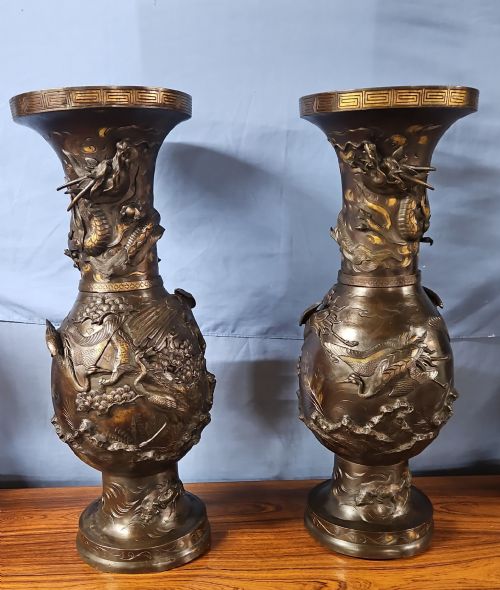


Large Japanese Bronze Urns
Large Japanese bronze urns bring monumental presence and meticulous metalwork into a room, drawing the eye with their sculptural weight.
Large Japanese Bronze Urns
When you search for large japanese bronze urns, you encounter substantial vessels created primarily during the Meiji period and the nineteenth century. These objects include towering garden planters, heavy temple vases, and decorative urns designed to command attention in a grand interior.
You are most likely to meet pairs of heavy bronze vases or jardinières bearing rich patination and classical forms. Many pieces reflect the intense artistic output of late nineteenth-century workshops intended for both domestic display and international export.
How they were made
Craftsmen utilised traditional lost-wax casting techniques to shape heavy bronze, copper, and brass into imposing forms. The metal surfaces received meticulous patination treatments to produce deep, tonal finishes ranging from warm browns to dark charcoals.
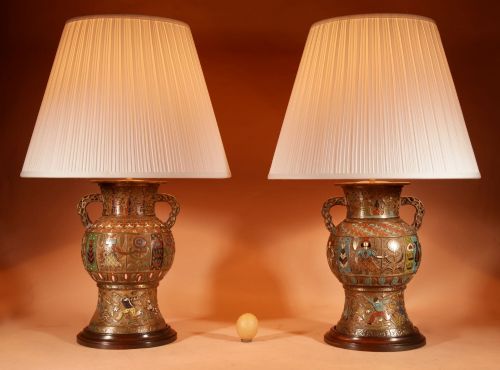
Many examples incorporate mixed metals, gilt bronze mounts, or applied enamel details such as champlevé and cloisonné. These decorative elements demand steady hands and precise firing to fuse coloured glass pastes into engraved metal cells.
What varies in quality
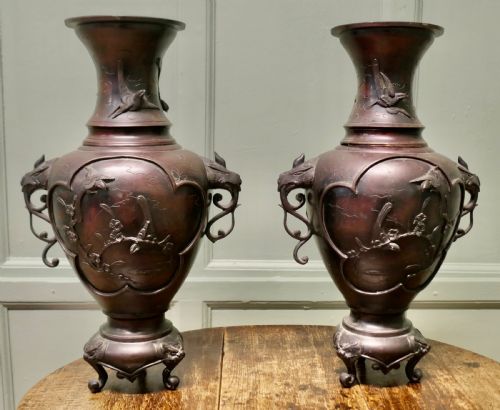
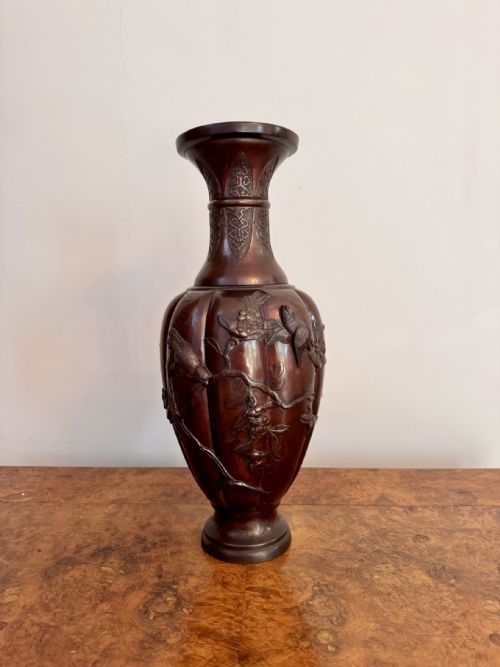
The distinction between ordinary production and superior craftsmanship lies in the crispness of the surface relief and the depth of the metal patination. Master metalworkers achieved startlingly sharp definition in birds, floral motifs, and geometric borders without relying on excessive post-casting channelling.
Subtle differences in the handling of mixed metals and enamel work distinguish standard decorative wares from exceptional exhibition pieces. Weight distribution, stability, and the integrity of applied handles or base mounts also separate ambitious studio pieces from routine workshop output.
Genryusai Seiya
The Large Japanese Bronze Urns Glossary
- Meiji Period
- The era in Japanese history spanning from 1868 to 1912, known for a surge in decorative metalwork destined for Western collectors. Pieces from this period frequently display ambitious scale and technical mastery.
- Champlevé
- An enamelling technique where troughs are gouged into the bronze surface and filled with coloured vitreous paste before firing. This method creates bold colour blocks bordered by thin metal lines.
- Cloisonné
- A method of decorating metalwork where fine wire is soldered to the bronze body to form compartments that receive enamel paste. The entire vessel is then fired and polished to a smooth finish.
- Usubata
- A specific form of bronze vessel traditionally used for Japanese flower arrangement, featuring a broad flanged rim and a columnar body. These objects often serve as garden or floor urns in Western settings.
- Jardiniere
- A large decorative pot or stand designed to hold growing plants or floral displays. In bronze, these heavy vessels often feature deep basins and robust handles.
Large Japanese Bronze Urns: Frequently Asked Questions
How were large bronze urns used originally?
These large vessels served both practical and ceremonial functions in Japanese architecture, acting as flower holders for formal arrangements or as monumental temple ornaments.
In domestic settings, garden urns and heavy jardinières held substantial plants while interior vases displayed floral branches during important gatherings.
How do I clean a bronze urn?
Dust the surface regularly with a soft, dry cloth to prevent the accumulation of grit in recessed areas and intricate relief work.
Avoid commercial metal polishes or water, as harsh chemicals will strip the historic patination that gives these antique bronzes their character.
How can I tell the Meiji period pieces apart?
Meiji period metalwork generally exhibits exceptional ambition in scale, complex mixed metal applications, and deep, uneven patination.
Earlier nineteenth-century examples often lean toward simpler archaic forms, while pieces marked by specific workshops display sharper relief casting.
Where should I place a heavy bronze urn?
Position these heavy vessels on sturdy wooden pedestals, stone flagstones, or strong floor surfaces capable of supporting considerable weight.
Keep them out of direct, prolonged moisture if used indoors, and allow adequate clearance so the sculptural form can be viewed from multiple angles.