



Asian Bronze Table Lights
Asian bronze table lights bring sculptural weight and historical depth to a room, cast in heavy metal and often adapted from earlier vases or lanterns.
Asian Bronze Table Lights
Asian bronze table lights encompass table lamps and converted vases or lanterns originating from Chinese and Japanese traditions. You will most frequently meet pieces from the nineteenth century, including the Meiji period and Victorian eras, alongside Edwardian and later twentieth-century examples up to the nineteen-thirties.
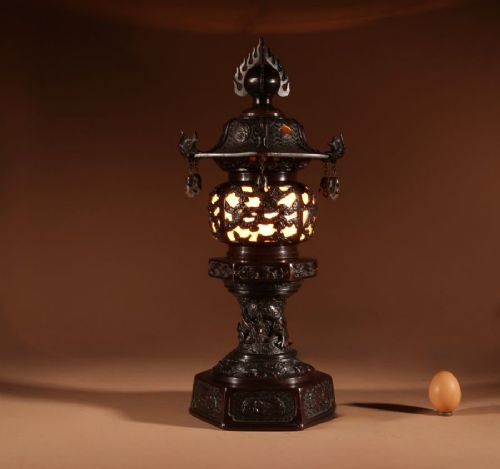
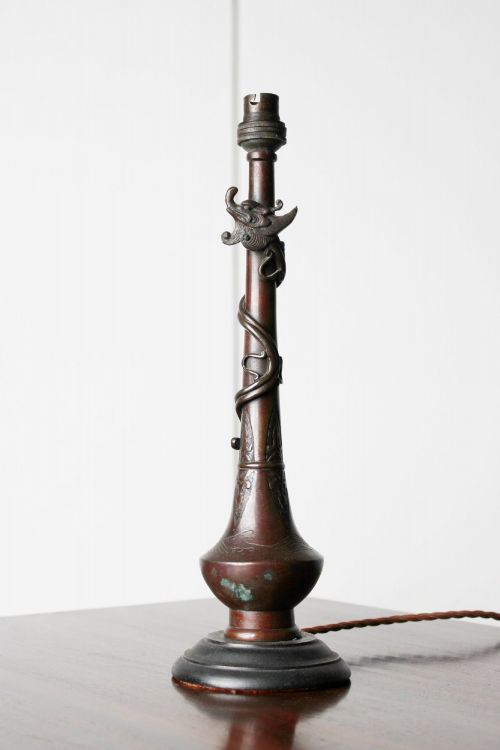
The forms vary considerably, ranging from dragon figures and elephant motifs to architectural lantern structures and classical vase shapes. Many examples begin life as ceremonial vessels or decorative containers before later conversion into domestic table lights.
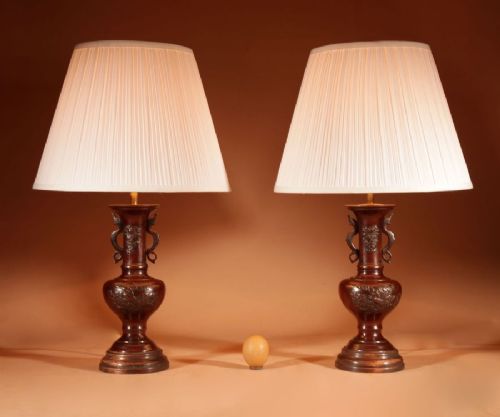
Japanese Meiji period workmanship and Chinese Qing dynasty or archaistic styles dominate the selection. Pairs frequently appear alongside substantial single statement pieces intended for prominent placement in a reception room.
Materials and construction
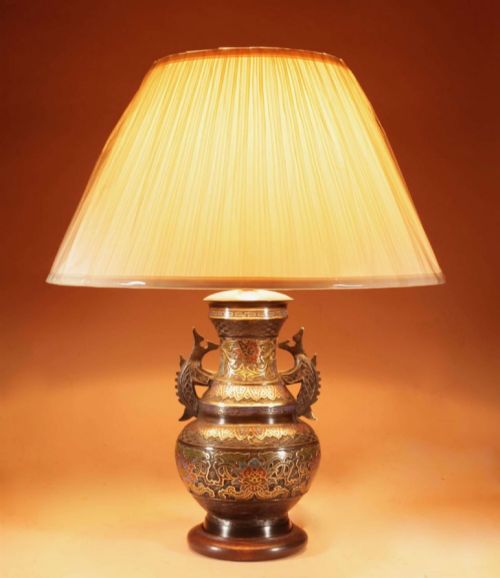
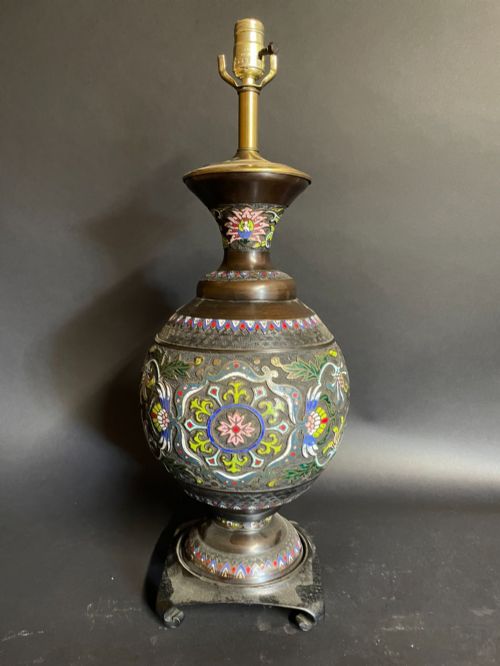
Makers utilised cast bronze, often paired with brass elements and decorative champlevé or cloisonné enamel work. Surface decoration frequently incorporates applied patination, gilding, or intricate incised details native to traditional metalworking centres.
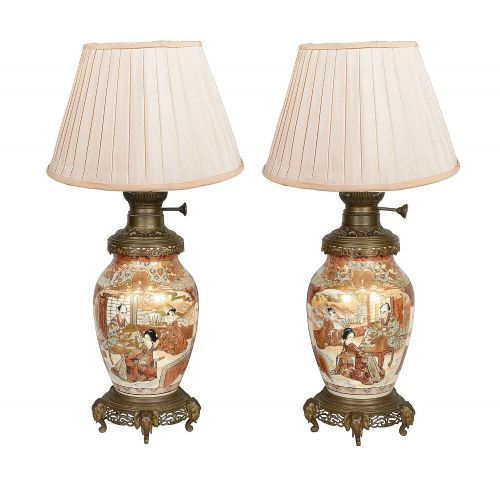
Many structural bodies originate from earlier porcelain, such as Satsuma and celadon wares, or carved wood components combined with the primary bronze frame. Shades constructed from silk, fabric, or matching materials complete the composition of the finished table light.
Elephants and dragons serve as domestic illumination, standing guard on side tables with unwavering metal loyalty.
Judging quality
The distinction between standard production and superior examples lies in the crispness of the casting and the depth of the chasing. Finer specimens display sharply rendered anatomical details on figures like dragons or elephants, whereas lesser pieces show softer, more generalised contours.
Quality also rests on the integrity of the original vessel where a conversion has taken place. Well-executed transformations preserve the balance and proportion of the antique base without compromising its decorative surface or enamel work.
The Asian Bronze Table Lights Glossary
- Meiji Period
- The period in Japanese history spanning from eighteen sixty-eight to nineteen twelve, known for exceptional metalwork and decorative arts. Pieces from this era often feature highly detailed casting and dynamic natural motifs.
- Cloisonné
- An enamelwork technique where thin metal wires are soldered to a metal base to create compartments filled with coloured paste and fired. This method produces intricate, multi-coloured patterns across the body of the light.
- Champlevé
- An enamelling technique where troughs or cells are carved directly into the bronze surface and filled with enamel before firing. It yields bold geometric or floral designs integrated firmly into the metal ground.
- Celadon
- A type of transparent green-glazed ceramic originating in China, frequently mounted with bronze hardware to form table lights. The glaze mimics the appearance of jade.
- Archaistic
- A stylistic approach where makers deliberately emulate the forms, motifs, and patination of ancient ritual bronzes from earlier dynasties. These pieces draw upon historical Chinese vessel shapes.
Asian Bronze Table Lights: Frequently Asked Questions
Are these lamps converted from old vases?
Many examples begin as traditional vases, temple lanterns, or decorative vessels before receiving electrical fittings at a later date. This method of adaptation preserves historical bodies while rendering them functional for modern interiors.
Conversion methods vary from period wiring to contemporary components. Examining the base and collar reveals how the electrical fittings integrate with the original antique structure.
How do I date an Asian bronze light?
Dating relies on stylistic markers such as Meiji period characteristics, Victorian manufacturing traits, or specific stylistic references to Chinese dynasties. Comparing the casting style and enamel techniques provides a reliable chronological frame.
Surface patination and the construction methods of internal hardware also offer clues to age. Pieces spanning the nineteenth and early twentieth centuries display distinct manufacturing signatures.
What styles are most common?
Japanese Meiji bronzes featuring dragons, elephants, or lantern structures appear frequently alongside Chinese cloisonné and celadon conversions. Edwardian and later interpretations also contribute to the variety of available forms.
Chinoiserie designs and archaistic vessel shapes represent another prominent stylistic category. These variations reflect both Eastern manufacturing traditions and Western interior tastes of the period.
How do I place them in a room?
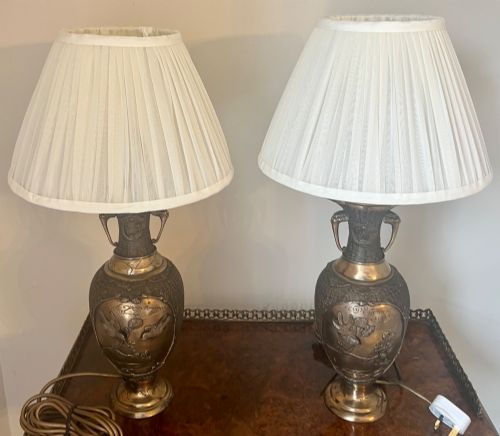
These substantial lights suit prominent locations such as sideboards, large consoles, or heavy desk surfaces where their sculptural weight commands attention. Paired items work particularly well on matching surfaces to create symmetrical balance.
Consider the surrounding colour palette and furniture scale when positioning bronzes with intricate enamel or patinated surfaces. Their dark metal tones anchor lighter interior schemes effectively.