


Large Indian Rug
A large indian rug brings monumental scale and intricate traditional design to a floor, grounding a room with deep history and rich wool texture.
Large Indian Rug
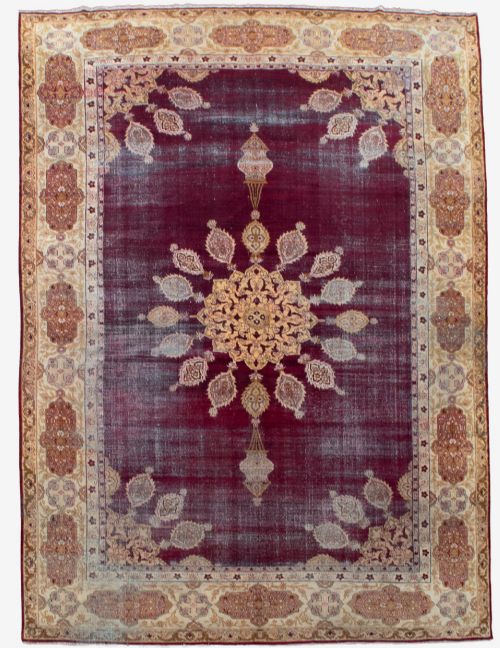
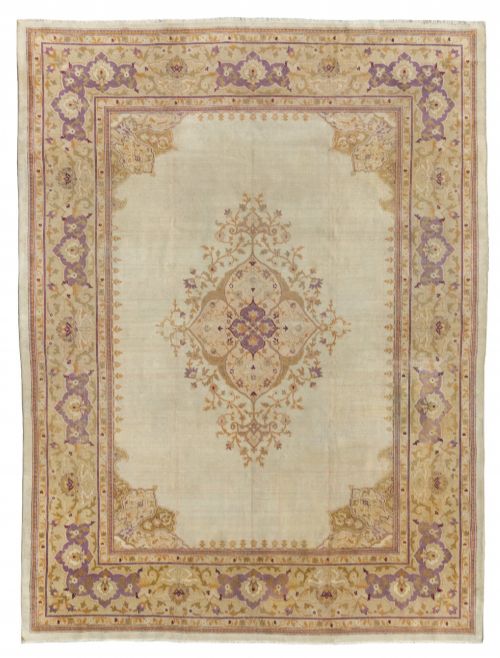
A large indian rug encompasses generous floor coverings woven across northern weaving centres during the eighteenth, nineteenth, and early twentieth centuries. These substantial textiles include grand country house carpets from Amritsar and majestic room-sized floor coverings from Agra.
Buyers encountering this group will most frequently find late nineteenth-century pieces from Amritsar or Agra alongside early twentieth-century examples. Forms range from massive room-scale carpets down to fragments and wall-hung textiles sharing identical regional origins.
Mughal design influences and traditional motifs dominate the aesthetic of these carpets, connecting them directly to historical Indian weaving traditions. Every piece reflects the expansive scale required for substantial country houses and grand reception rooms.
How they were made
These carpets rely upon natural wool pile knotted firmly onto sturdy cotton foundations. This pairing provides the structural strength necessary to support massive room-sized dimensions without losing flexibility.
Weavers employed traditional techniques rooted in Mughal and North Indian heritage, utilising hand-knotted pile construction. The resulting textiles achieve remarkable durability alongside the intricate floral and geometric detailing visible across the surface.
One unexpected wall hanging bridges the gap between grand reception room carpets and decorative textile art.
What varies in quality
Knot density and structural integrity distinguish the finest examples from standard domestic work. Finer knotting allows intricate design curves to render with sharp clarity rather than blocky approximation.
Depth of pile retention and the preservation of original borders determine the visual impact of each carpet. Original scale preservation without heavy structural intervention represents the highest tier of surviving examples.
The Large Indian Rug Glossary
- Amritsar
- A major weaving centre in northern India known for large nineteenth-century carpets with soft palettes and grand floral designs. These floor coverings were frequently commissioned for large British country houses.
- Agra
- A northern Indian city renowned for historic carpet production, often associated with nineteenth-century institutional or commercial weaving workshops. Agra carpets frequently display monumental scale and dense botanical motifs.
- Mughal
- An imperial design style originating from the Mughal Empire, characterised by intricate floral vines, scrolling palmettes, and balanced symmetry. This aesthetic heavily influenced later nineteenth-century North Indian rug production.
- Pile
- The upright yarn loops or knots forming the usable surface of a carpet. In these rugs, wool pile provides both warmth and tactile depth above the cotton foundation.
- Foundation
- The underlying grid of warp and weft threads supporting the knotted pile. Cotton serves as the primary structural material in these regional rugs.
Large Indian Rug: Frequently Asked Questions
How do I clean a large indian rug?
Professional specialist cleaning is essential for antique wool carpets to protect natural fibres and historical dyes. Regular gentle vacuuming without a rotating power brush helps remove embedded dust safely.
Avoid using domestic wet cleaning machines or harsh chemical detergents on nineteenth-century textiles. Specialist rug conservators can assess structural stability before undertaking any deep maintenance.
Can I use an antique carpet in a hallway?
High-traffic hallways require careful placement to distribute wear evenly across the wool pile. Using a high-quality breathable underlay prevents slipping and cushions the cotton foundation against hard floors.
Rotating the carpet periodically ensures that foot traffic and sunlight exposure affect the surface evenly over the years.
How do I identify an Amritsar carpet?
Amritsar carpets typically date from the late nineteenth or early twentieth century and display expansive floral compositions. They often feature muted or earthy colour palettes tailored for large European interiors.
Examining the knot structure and cotton foundation helps separate Amritsar production from other North Indian weaving centres of the period.
What is a jail carpet?
Jail carpets refer to large nineteenth-century Indian rugs produced within institutional or penal workshops established during the British colonial period. These workshops manufactured durable floor coverings featuring traditional regional designs.
They are distinguished by their robust construction and standardised weaving quality intended for official buildings and grand residences.