
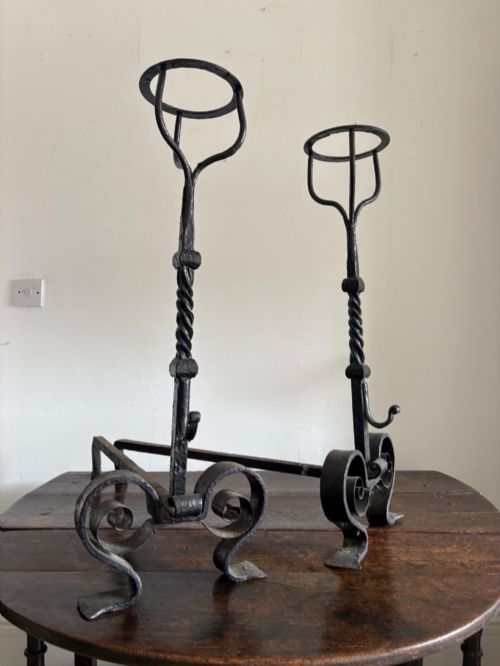
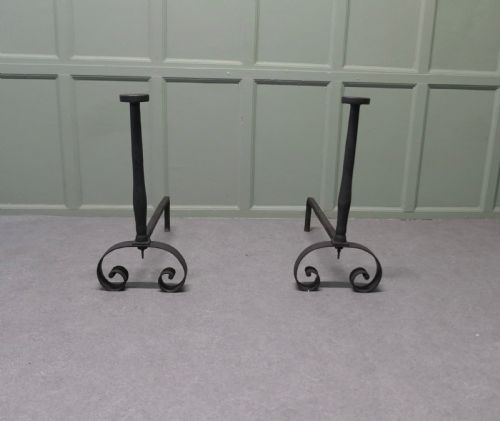


Large Hearth Andirons
Large hearth andirons are heavy metal supports built to hold logs in an open hearth, bringing substance and historical character to a fireplace.
Large Hearth Andirons
Large hearth andirons form the structural backbone of an open fireplace, designed to hold heavy logs above the hearth floor for proper airflow and burning. When searching for large hearth andirons, buyers encounter robust examples ranging from domestic Victorian pairs to monumental Continental pairs.
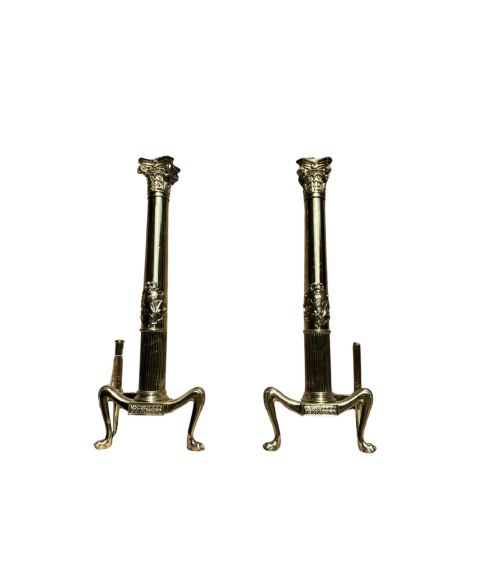
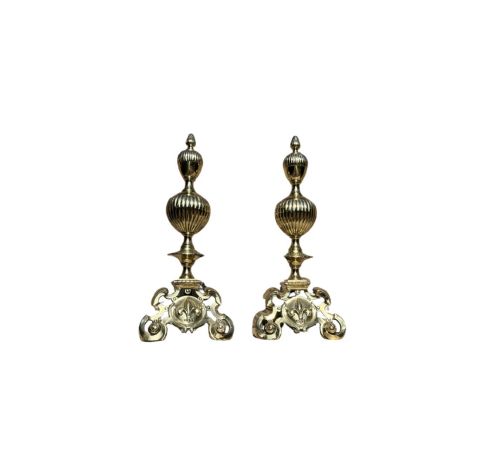
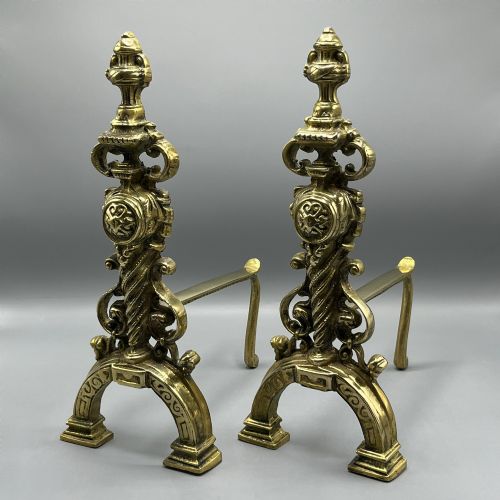
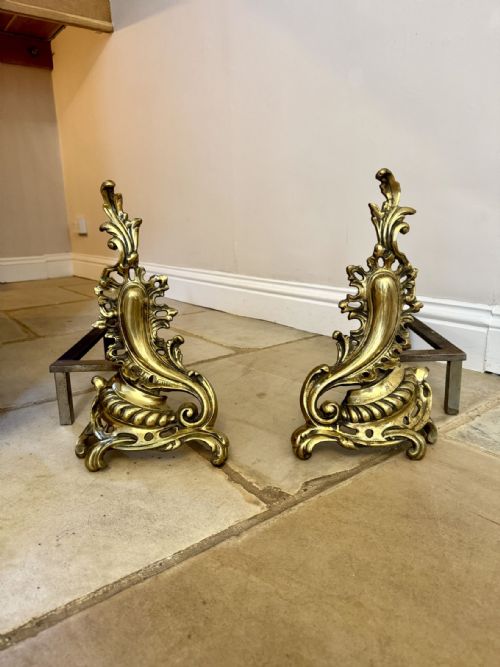
The pieces listed on this page encompass various origins, including English, French, Italian, and Dutch items spanning the nineteenth century through the early twentieth century. Forms include traditional fire dogs, complete fire grates with integrated andirons, and occasional repurposed items functioning as planters.
Most items appear as substantial pairs designed for large inglenook openings and deep hearths. The selection reflects styles such as Victorian, Gothic Revival, Neoclassical, French Baroque, French Rococo, and Dutch Baroque.
How they were made
Makers utilised durable metals suited to intense hearth heat, predominantly casting and forging iron, wrought iron, and cast iron. Many examples employ solid brass or gilt brass for decorative front elements, adding bright metallic contrast against dark hearth bricks.
Surface ornamentation relies on traditional metalworking techniques such as casting intricate rococo scrolls, baroque foliage, and gothic motifs. Some robust nineteenth-century English pieces rely on heavy wrought iron construction built for sheer utility and weight.
Period styles represented on this page span the Victorian era, Gothic Revival, Neoclassical, French Baroque, French Rococo, and Dutch Baroque.
What varies in quality
Quality in large hearth andirons rests upon the integrity of the metal casting and the thickness of the material used. Heavier irons and solid brass components indicate superior substance, ensuring the supports withstand intense heat and heavy logs without warping.
Artistic execution of the decorative fronts distinguishes simpler utility items from finer decorative pairs. Crisp detailing in cast brass foliage, sculptural figural elements, and balanced proportions mark the upper end of the range.
The Large Hearth Andirons Glossary
- Andiron
- A metal support placed in a fireplace to hold burning logs. They usually consist of a horizontal bar with an upright decorative front.
- Fire dog
- An alternative term for an andiron, originating from the historical use of dog-like shapes on early hearth supports.
- Fire grate
- A metal basket or framework designed to hold coal or wood within a fireplace. Some sets combine andirons directly with a grate.
- Inglenook
- A large recessed corner by a fireplace, often featuring deep hearths that require substantial andirons. These spaces form the traditional focal point of period rooms.
- Gilt brass
- Brass coated with a thin layer of gold or gold-coloured finish for enhanced decorative brilliance. This material catches the ambient light of the hearth fire.
Large Hearth Andirons: Frequently Asked Questions
What is the main purpose of large hearth andirons?
Large hearth andirons elevate logs above the hearth floor to allow adequate airflow beneath the fire. This positioning helps wood burn more efficiently and protects the base of the fireplace from direct heat.
Beyond utility, these heavy metal pairs serve as a strong decorative centrepiece for the room. Their substantial upright fronts define the character of an open fireplace even when unlit.
How do I know if an andiron fits my fireplace?
Measure the depth and width of your hearth opening before selecting a pair. Large andirons require considerable depth to sit safely inside the hearth without protruding past the surround.
Check the height of the upright front against your fireplace opening to ensure proper visual balance. Monumental pairs require exceptionally deep hearths and tall openings to look correct.
What materials are common in these fireplace accessories?
Iron, wrought iron, and cast iron provide the heavy structural strength needed for holding burning logs. These materials handle intense heat and support considerable weight safely.
Brass, solid brass, and gilt brass appear frequently on the decorative front standards. These brighter metals provide a striking visual contrast to the darker iron body.
How do I care for antique metal andirons?
Remove ash and soot regularly using a soft brush to prevent corrosive buildup on the metal surface. Avoid harsh chemical cleaners that strip the natural patina accumulated over decades.
Polishing brass components depends on personal taste regarding bright finishes versus aged patinas. Iron elements benefit from a light application of protective oil to prevent rust.