
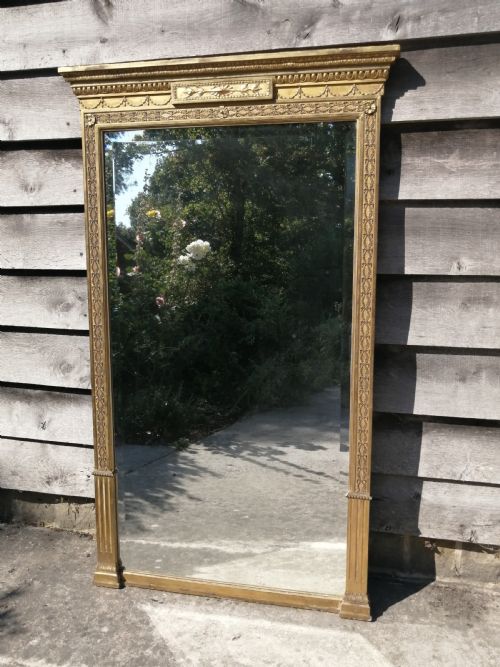
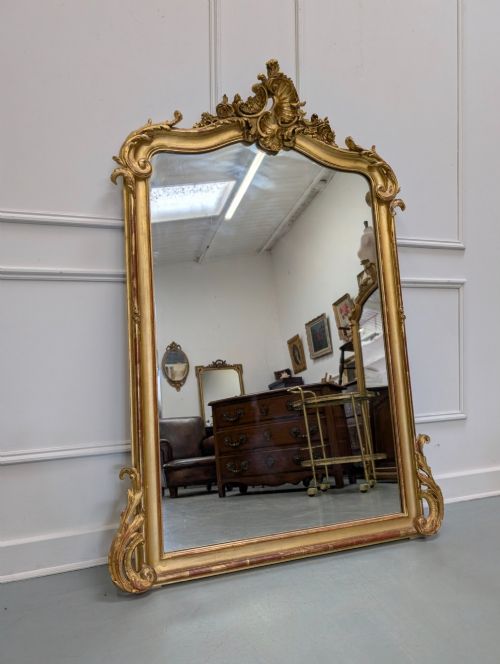
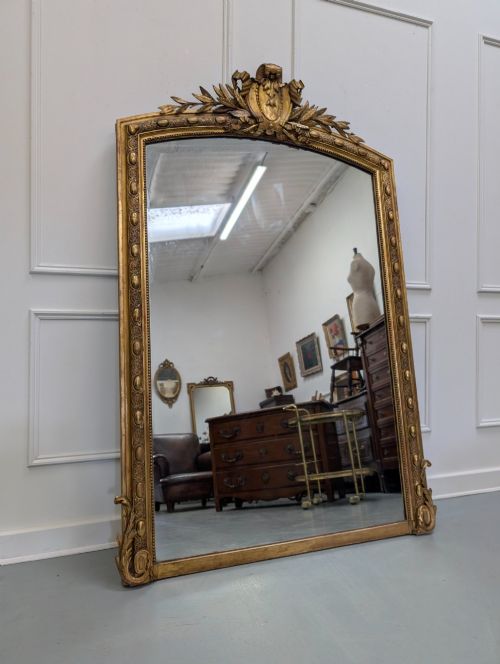
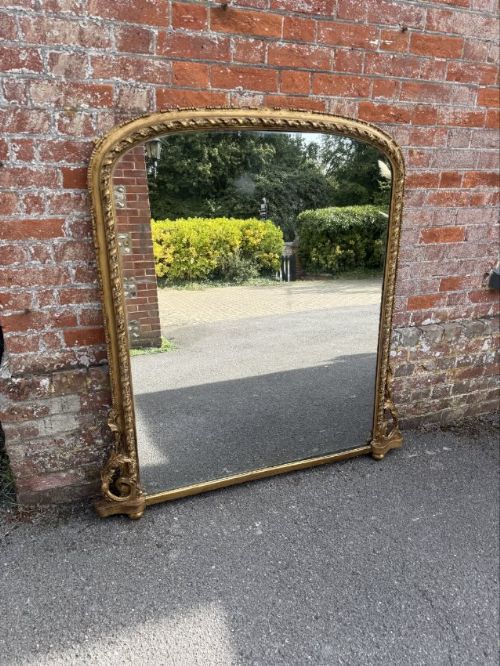

Large Gilded Overmantel Mirror
A large gilded overmantel mirror brings proportion and reflected light to a high-ceilinged room, drawing the eye naturally to the fireplace below.
Large Gilded Overmantel Mirror
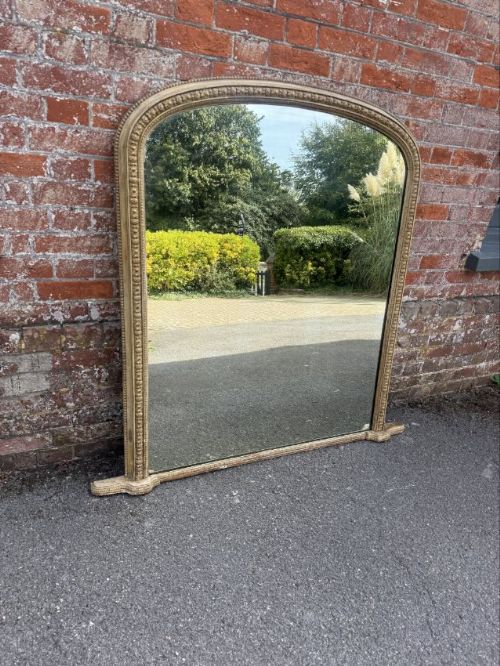
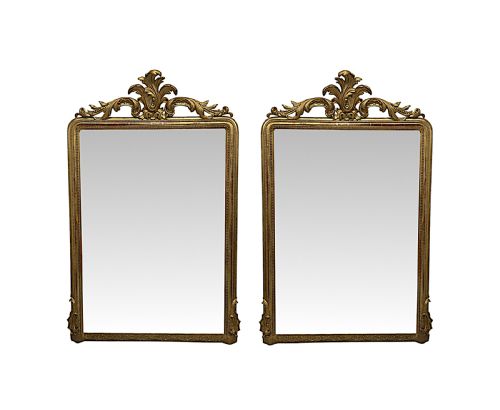
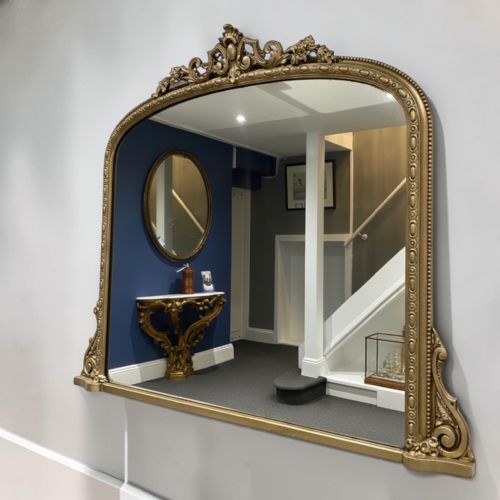
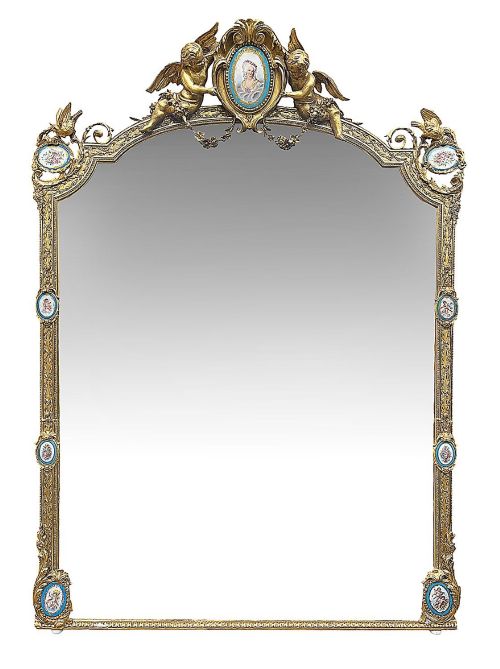
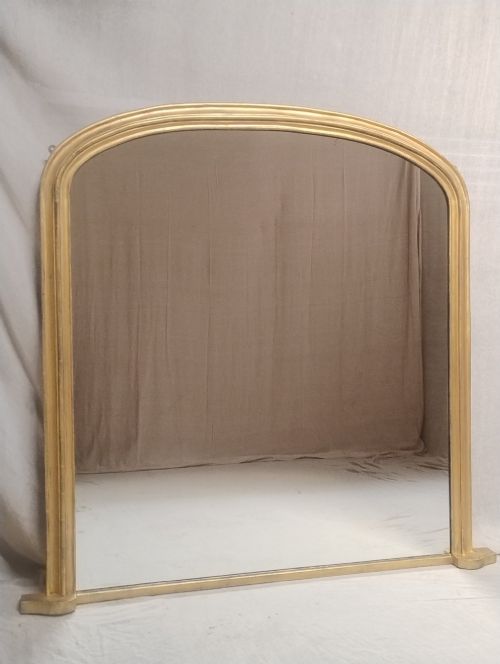
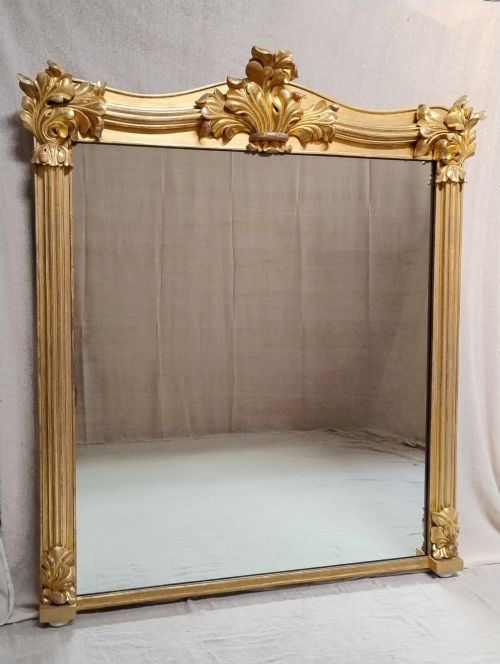
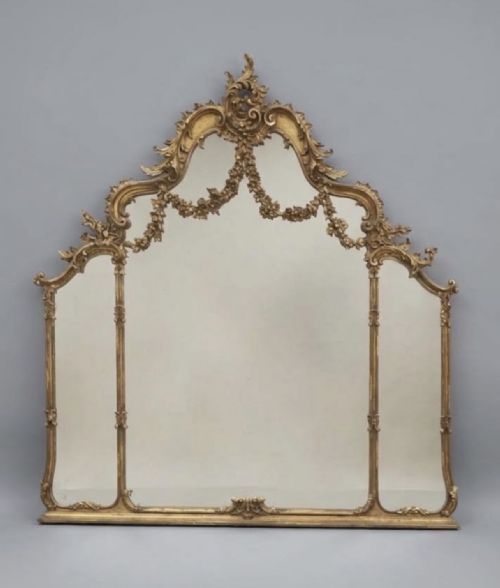
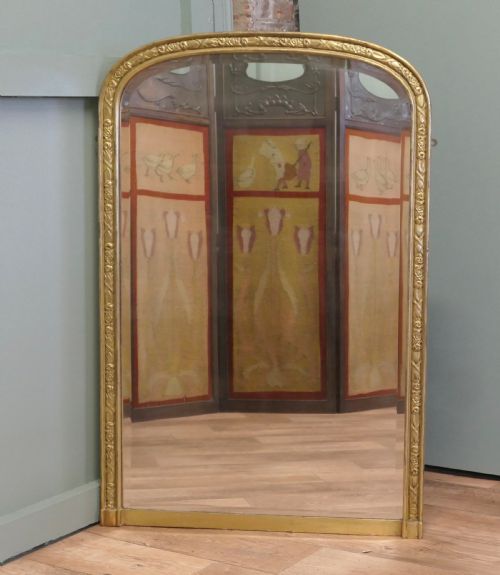
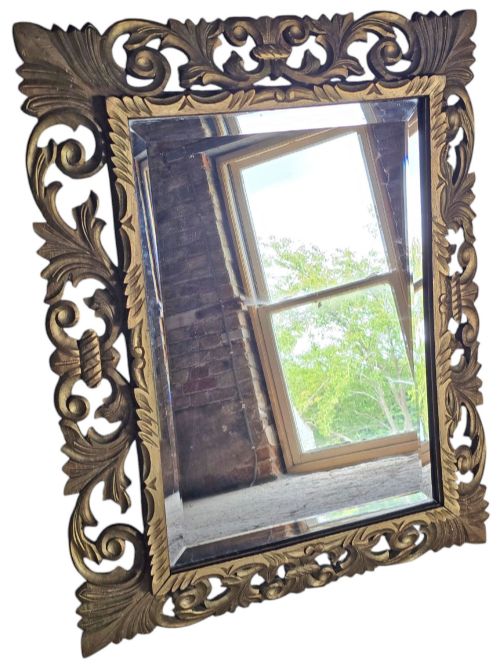
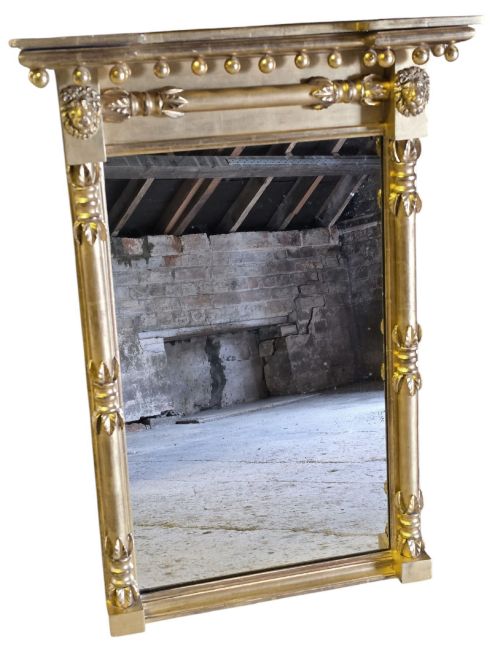
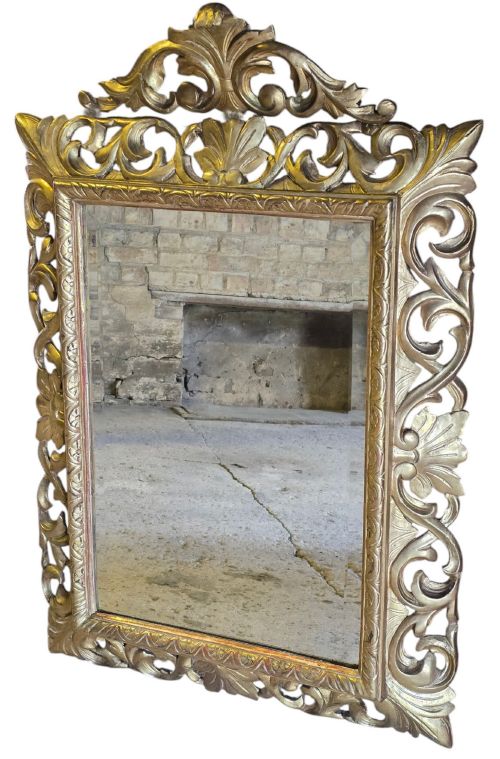
A large gilded overmantel mirror is a substantial wall glass designed specifically to hang above a domestic fireplace. The pieces encountered here span the eighteenth, nineteenth, and early twentieth centuries, with a strong representation of nineteenth-century English and French examples.
Makers shaped these frames in various regional idioms, from ornate French Louis Philippe and Rococo Revival forms to English Regency and Victorian designs. They frequently utilise arched, shaped, or rectangular tops intended to command a principal reception room.
How they were made
Artisans built the structural carcasses of these frames from carved wood, applying layers of gesso to smooth the surface before gilding with gold leaf or metallic paint. Composition ornament was often pressed into moulds and fixed to the wood to achieve intricate relief details.
The mirror plates themselves were historically silvered using traditional techniques, occasionally leaving behind natural foxing or age spots on the glass over decades of exposure.
The listings here feature woodwork finished with gesso, gold leaf, and traditional carved wood across the 18th, 19th, and early 20th centuries.
What varies in quality
Quality rests upon the depth of the wood carving and the crispness of the gesso mouldings rather than simple surface brightness. Better examples display hand-carved relief work where the underlying timber contributes definition to the gilt surface.
The weight and stability of the underlying frame construction also indicate standard, alongside the survival of original mercury or early sheet glass within the rebate.
Nosotti
The Large Gilded Overmantel Mirror Glossary
- Gesso
- A plaster-like mixture applied to wooden frames as a smooth base for subsequent gilding. This material allows artisans to carve or impress fine decorative details before the gold leaf is laid down.
- Giltwood
- Timber that has been covered with a thin layer of gold leaf or metallic powder. It provides the characteristic warm sheen seen across nineteenth-century frames.
- Overmantel
- A mirror or painting specifically proportioned to hang on the wall directly above a mantelpiece. These pieces often repeat the width of the fireplace opening to balance the chimney breast.
- Pier glass
- A tall mirror designed to hang on the narrow section of wall between two windows. They share many construction traits with overmantel mirrors but are scaled for vertical wall spaces.
- Mercury glass
- An early type of silvered glass created by pouring a mercury and tin amalgam between two glass sheets or onto the rear surface. It frequently develops dark patches known as foxing over time.
Large Gilded Overmantel Mirror: Frequently Asked Questions
Where should an overmantel mirror hang?
These mirrors traditionally mount directly onto the chimney breast above the fireplace mantel. The lower edge sits just above the mantel shelf to anchor the visual weight of the hearth below.
In rooms without a functioning fireplace, they mount at a similar height above a console table or sideboard to replicate the traditional domestic arrangement.
How do I identify a 19th-century mirror?
Nineteenth-century mirrors reveal their age through heavy timber carcasses, traditional gesso grounds, and the construction methods used on the reverse. Hand-cut wooden joints and old fixings point firmly to this period.
The glass itself often displays slight distortions, waviness, or age-related foxing that modern manufacturing processes do not replicate.
What is the difference between pier and overmantel mirrors?
Overmantel mirrors are wide and designed to span the horizontal space above a fireplace opening. Their proportions balance the width of the chimney breast and the hearth beneath.
Pier mirrors are narrower and taller, built to fit the solid wall space between two windows. They reflect natural light back into the centre of the room from orthogonal angles.
How do I care for antique giltwood?
Giltwood surfaces require gentle dusting with a soft, dry brush to prevent the accumulation of dirt within the carved recesses. Moisture and modern chemical cleaners damage the delicate gesso and gold leaf layers.
Glass panels clean safely with a cloth lightly dampened with water or mild glass cleaner, taking care to keep liquids away from the wooden frame edges.