
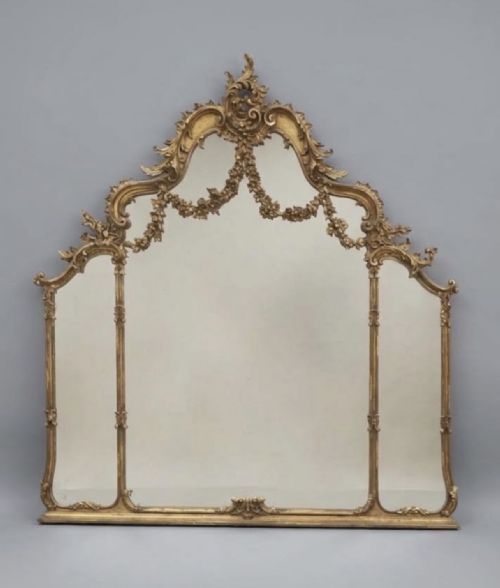

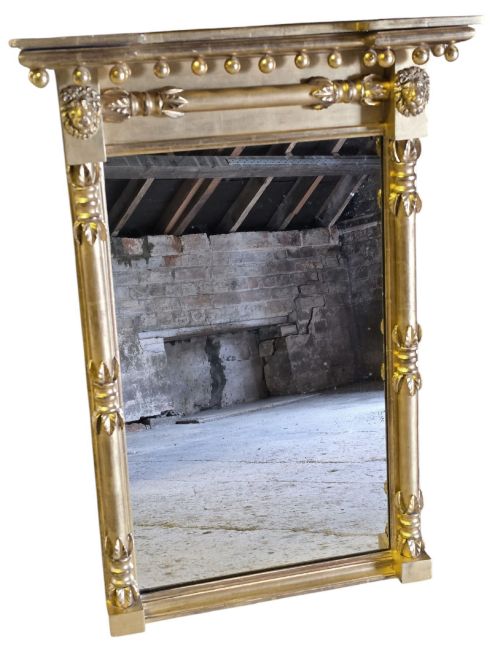
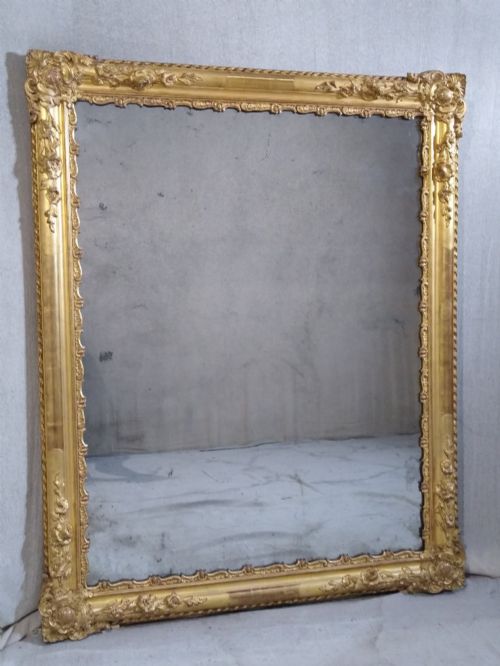
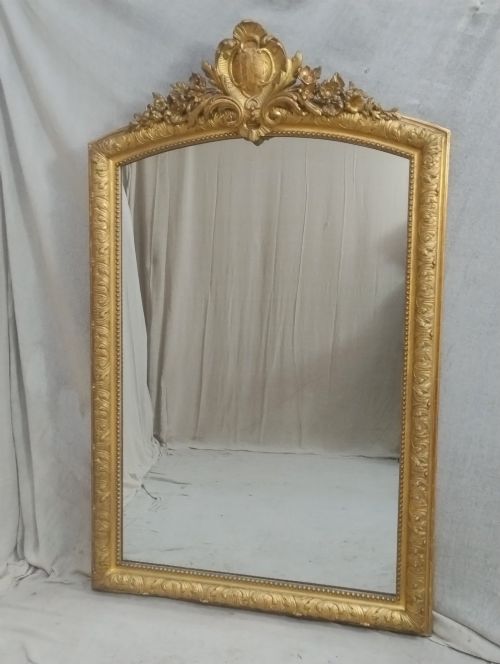


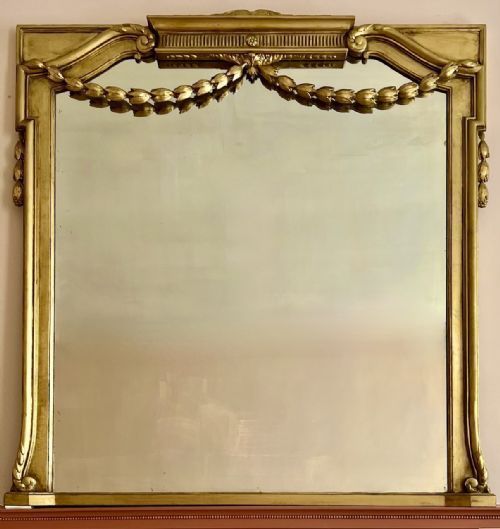
Large Gilded Mantel Mirror
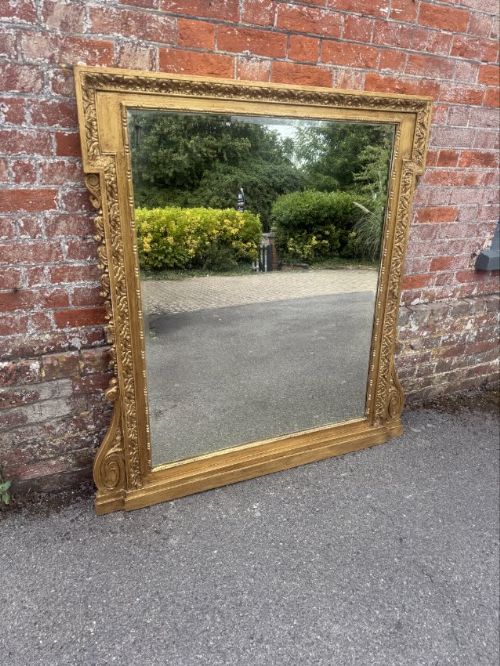
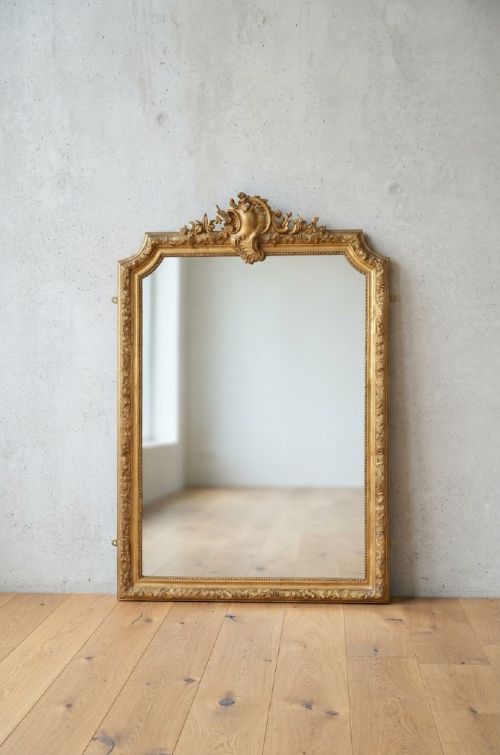
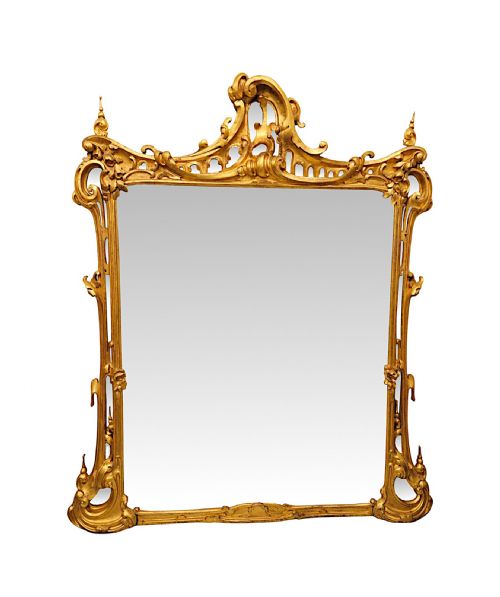
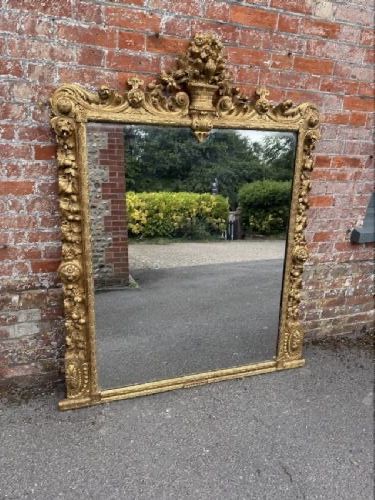
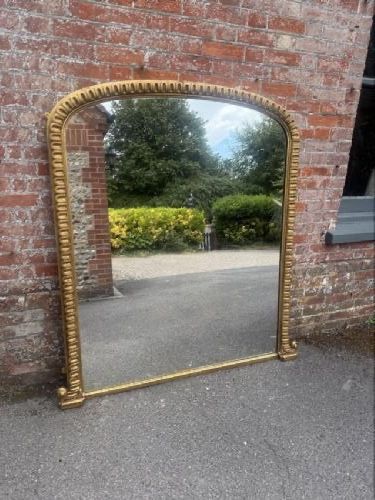
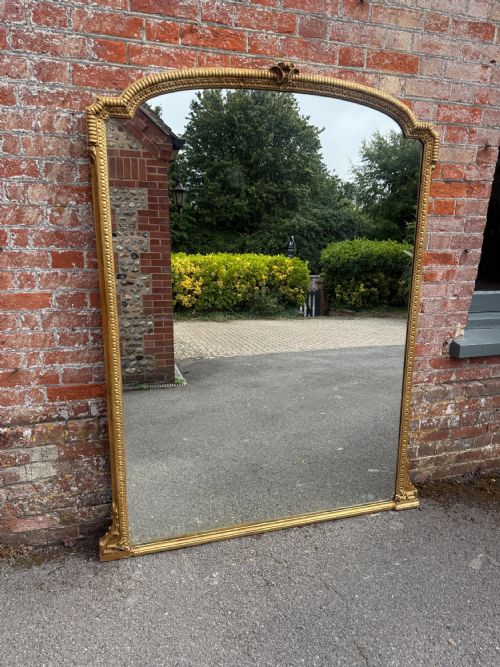
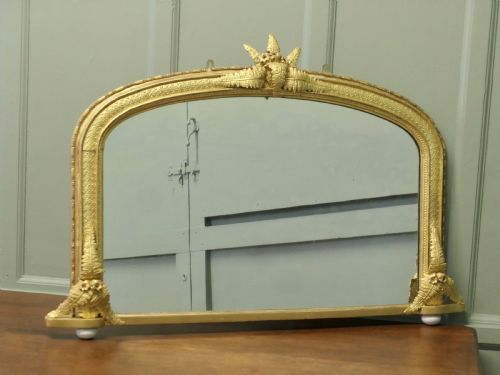
When you search for a large gilded mantel mirror, you are looking at substantial wall furniture designed to sit above a fireplace and bounce light around a room.
How they were made
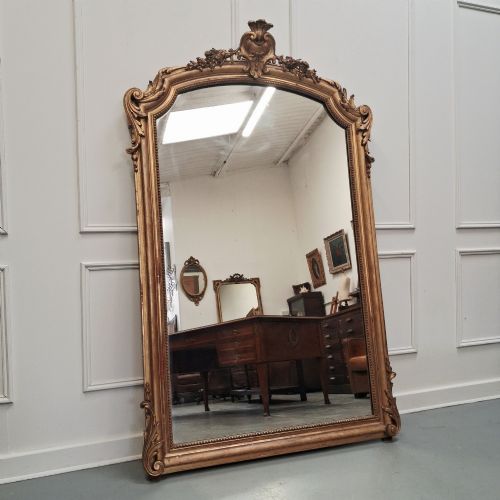
Carved wood and gesso form the foundational structure for the majority of frames, providing a stable base for intricate ornamentation. Artisans applied layers of composition moulding or carved wood directly, building up high-relief scrolls, floral motifs, and architectural lines.
Guilders finished these surfaces using gold leaf or applied gilt, sealing the wood and gesso beneath a brilliant metallic skin. Many frames utilise a combination of giltwood and painted details, while others rely on the deep texture of rope twists and ribbed mouldings.
What varies in quality
The depth and crispness of the carving separate standard production pieces from exceptional work. Hand-carved wooden details hold sharp edges and organic movement, whereas mass-produced composition ornament often appears softer and more uniform under close inspection.
The preservation of the original mirror plate and the integrity of the gilding dictate the overall character of the piece. Retaining the original mercury or silvered glass with light foxing indicates a surviving historical surface untouched by modern replacement.
Listings feature eighteenth-century Georgian designs alongside nineteenth-century Victorian, Regency, and French Napoleon III styles.
Nosotti
The Large Gilded Mantel Mirror Glossary
- Overmantel mirror
- A large mirror specifically proportioned to hang on the wall directly above a fireplace mantel. They often feature horizontal or arched formats designed to fit the chimney breast.
- Gesso
- A plaster-like mixture applied to wood frames to create a smooth surface for gilding or deep relief moulding. It accepts fine carving and detail work before the application of gold leaf.
- Giltwood
- Timber that has been coated with gold leaf or metallic powder applied over a prepared base. It provides the signature bright finish seen on formal nineteenth-century frames.
- Pier mirror
- A tall mirror designed to hang on the narrow section of wall between two windows. They often match the height and decoration of adjacent mantel mirrors in period reception rooms.
- Foxed glass
- Mirror glass that shows age through dark spots, clouding, or mottled oxidation behind the plate. Collectors value light foxing as evidence of original age.
- Composition
- A moulded material made from whiting, linseed oil, resin, and glue pressed into decorative shapes. It allowed makers to produce ornate frames more quickly than hand carving alone.
Large Gilded Mantel Mirror: Frequently Asked Questions
Are the mirror plates original?
Many nineteenth-century frames retain their original glass plates, which often display characteristic signs of age such as light foxing, minor ripples, or slight distortion. These traits confirm the glass has not been replaced in modern times.
Replacement glass usually appears completely clear and flat without the softening effect of historic silvering. Examining the back of the frame helps determine whether the original backing boards and fixings are intact.
How do I clean a gilded frame?
Dusting gently with a soft, dry brush or feather duster is the safest method for maintaining antique giltwood and gesso surfaces. Moisture and modern cleaning chemicals can strip the delicate gold leaf or damage the underlying composition ornament.
Avoid rubbing the raised decorative areas where the metallic finish is thinnest. Professional conservation is recommended if the gilding shows active flaking or structural instability.
What is the difference between an overmantel and a pier mirror?
Overmantel mirrors are traditionally wider and built to sit horizontally across the chimney breast above a fireplace. Their proportions match the span of the mantelpiece below them.
Pier mirrors are taller and narrower, designed specifically for the wall space between two windows or beside doors. Both share similar nineteenth-century construction methods but serve different architectural placements within a room.