


Large Gesso Mirror
A large gesso mirror anchors a room with reflective light and commanding scale, transforming interiors through period craftsmanship.
Large Gesso Mirror
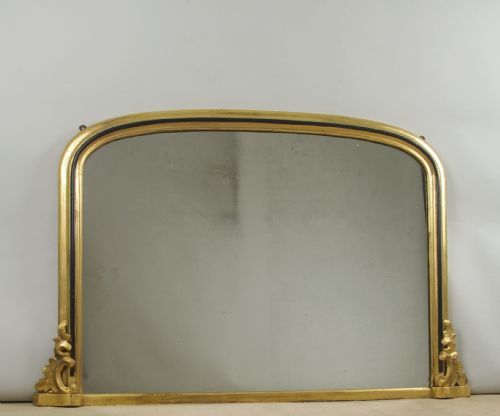
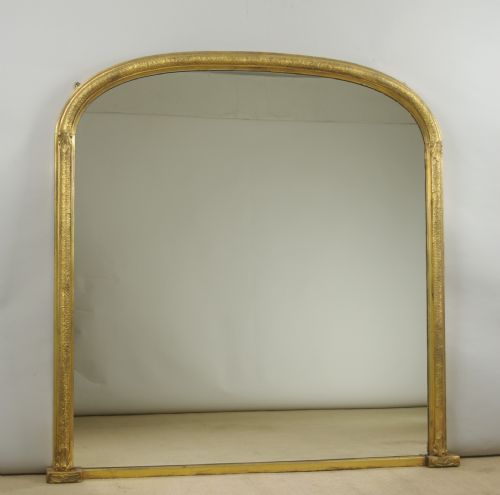
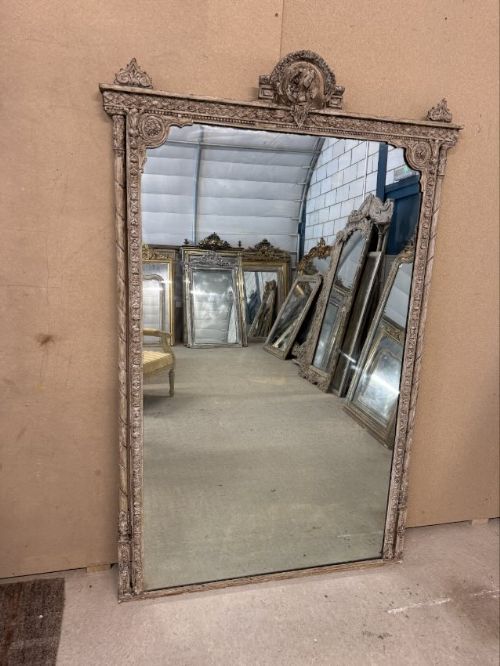
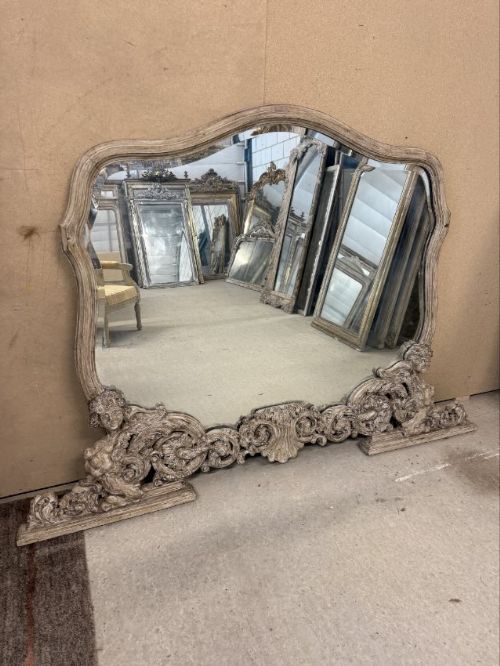
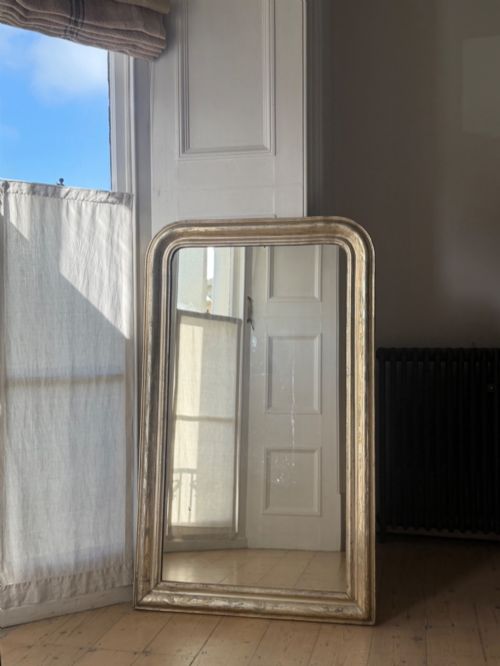
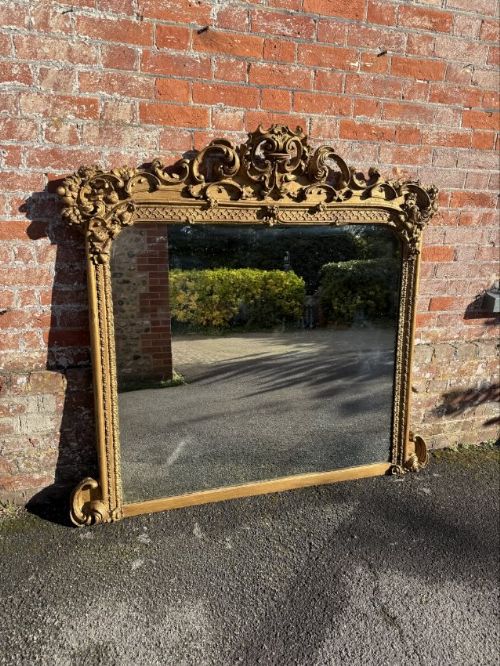
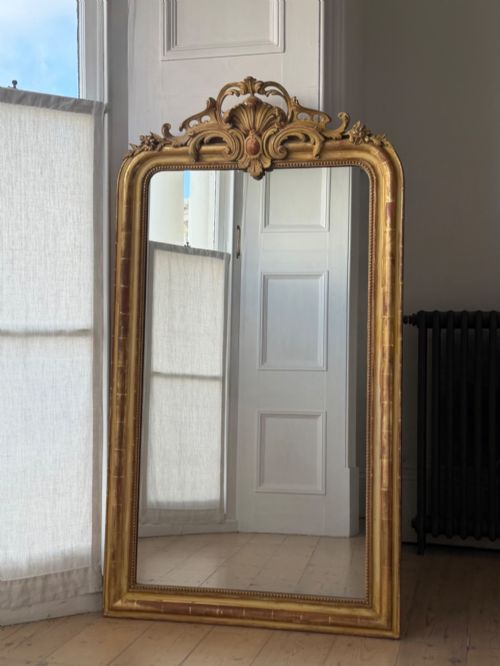
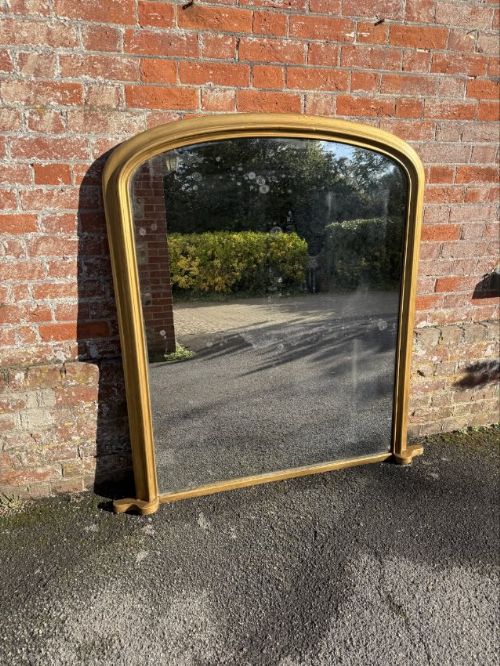
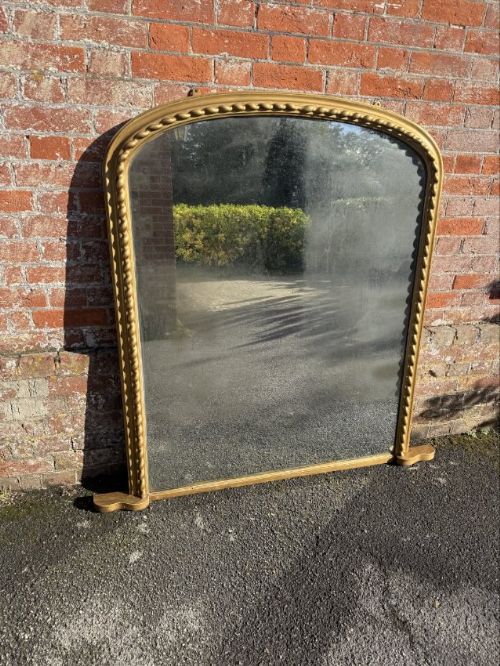
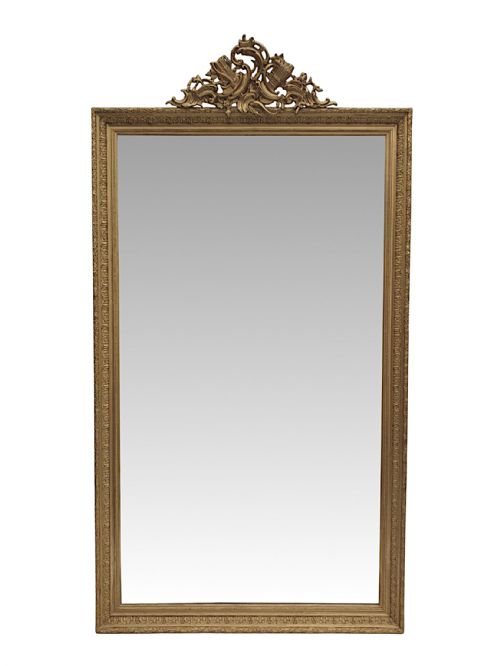
A large gesso mirror is a substantial decorative reflector designed to dominate a wall or sit above a fireplace mantel. Buyers searching for a large gesso mirror typically find nineteenth-century overmantel mirrors and wall mirrors originating from English and French workshops. These pieces appear in rectangular, arched top, oval, and shaped top formats spanning the Victorian era and the Napoleon III period.
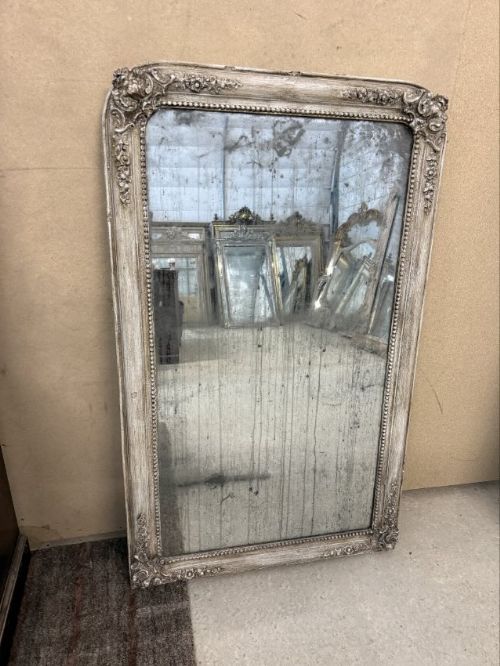
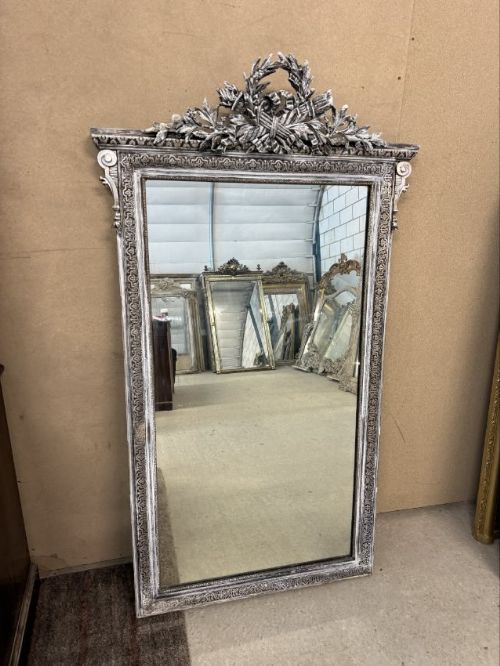
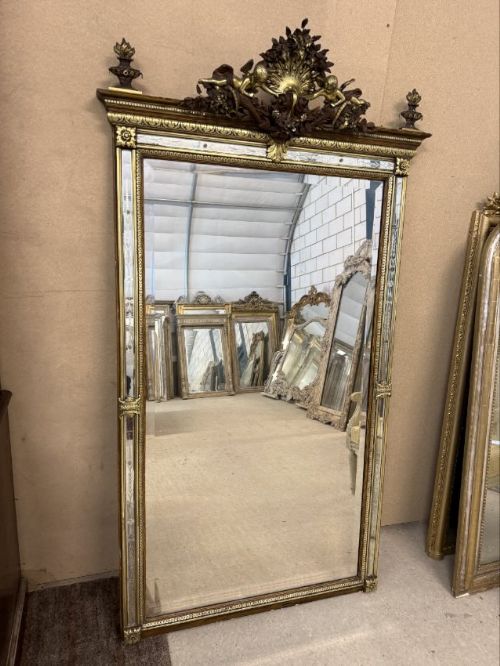
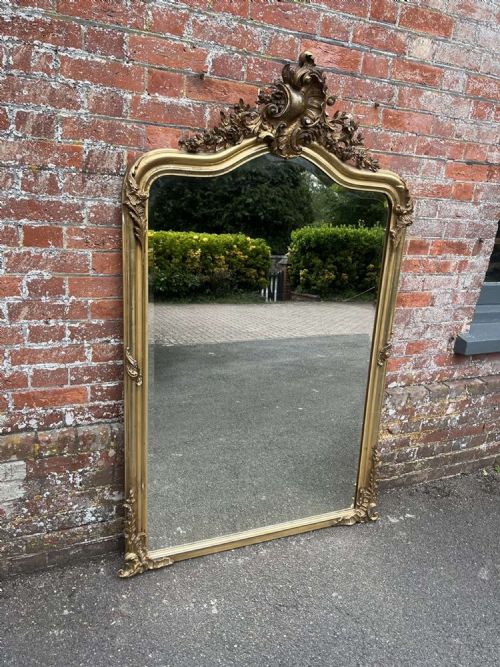
The dominant form on this page is the English nineteenth-century overmantel mirror, often dated between eighteen-fifty and eighteen-ninety. These frames integrate carved wood and gesso finished in gilt, gold leaf, or silvered treatments, frequently featuring architectural elements like columns, rope twists, and ribbed moulding. French variants lean towards Rococo revival styles and Louis Philippe designs, sometimes incorporating crests and mercury glass.
How they were made
Craftsmen built the core structure of each large gesso mirror using solid timber frames of carved wood. Over this wooden substrate, artisans applied successive layers of gesso, a dense mixture of chalk and binder that accepts fine detail and sharp relief. This built-up surface allowed carvers and modellers to achieve crisp architectural lines, floral motifs, and ornate scrollwork before gilding.
Finishing involved the application of gold leaf, silver leaf, or liquid gilt directly onto the prepared gesso ground. Many pieces utilised traditional water gilding techniques to achieve a bright metallic sheen, while others combined bare gesso with painted or silvered surfaces. Original mirror glass, including mercury glass variants, was then fitted into the rebate behind secure wooden backboards.
Large Gesso Mirror Retail Price Guide 2026
Typical asking prices for large gesso mirror among the pieces listed under this phrase on Sellingantiques today, from the lower quarter to the upper quarter. They describe what is for sale here now, not the wider market.
Materials recorded across the inventory include carved wood, gesso, gold leaf, giltwood, and original mirror glass, configured primarily as overmantels and wall mirrors.
What varies in quality
The depth and definition of the carved ornament dictate the primary tier of quality in these mirrors. Superior examples display crisp undercutting in the gesso and wood relief, whereas lesser pieces rely on shallow surface moulding that lacks dimension. The handling of the gilt surface also separates standard production from finer craftsmanship, with genuine gold leaf ageing into a warmer patina than cheaper metallic paints.
Structural integrity of the heavy wooden frame and the preservation of the original glass plate determine lasting value. Mirrors that retain their factory-original mercury glass or heavy silvered plates maintain historical coherence. The complexity of the frame profile, such as multi-tiered rope twists, fluted columns, or elaborate crests, denotes higher workshop ambition.
The Large Gesso Mirror Glossary
- Gesso
- A dense plaster-like preparation made from chalk and glue, applied to wood frames to create a smooth or sculpted surface for gilding. This material allows artisans to carve intricate decorative details directly onto the frame.
- Overmantel mirror
- A wide mirror specifically proportioned to hang on the wall directly above a fireplace mantelpiece. These pieces often feature arched tops to mirror architectural fireplace openings.
- Giltwood
- Timber that has been coated with gold leaf or metallic gilt over a prepared base. It provides a luminous reflective surface characteristic of formal nineteenth-century interiors.
- Mercury glass
- A type of double-walled silvered glass manufactured during the nineteenth century by pouring a liquid silvering mixture between two layers of blown glass. It creates a distinctive mottled and reflective appearance.
- Rope twist
- A carved decorative moulding resembling intertwined strands of rope. This motif frequently appears on Victorian overmantel mirror frames.
- Louis Philippe
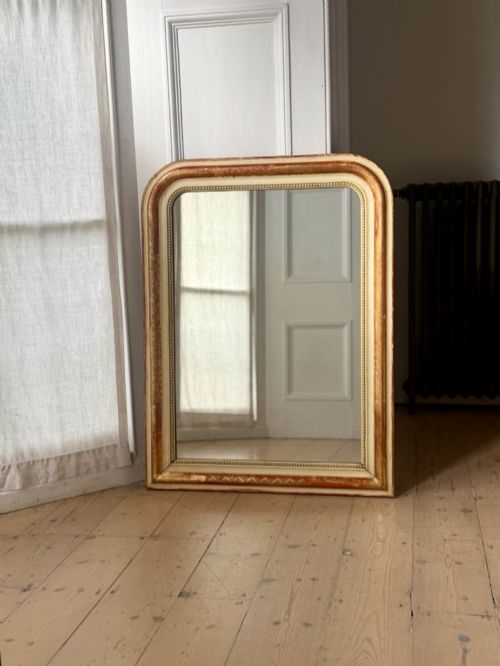
- A French decorative style from the mid-nineteenth century characterised by restrained curves, rounded upper corners, and understated elegance. It avoids the heavy extravagance of earlier Rococo revivals.
Large Gesso Mirror: Frequently Asked Questions
Where should I hang an overmantel mirror?
These mirrors are traditionally positioned centrally above a fireplace mantelpiece to reflect light and anchor the room's proportions. Their substantial weight requires secure fixing directly into masonry or heavy wall studs.
Alternatively, they function effectively as leaner mirrors placed directly on the floor against a drawing room or hallway wall. This placement creates a dramatic architectural presence without requiring permanent wall mounting.
What is the difference between Victorian and French styles?
Victorian frames tend to feature robust architectural elements like heavy columns, rope twists, and strict arched tops designed for substantial British interiors. They emphasise structural presence and formal symmetry.
French pieces from the same era often incorporate flowing Rococo curves, asymmetrical crests, and softer Louis Philippe outlines. They frequently employ lighter decorative motifs inspired by chateau interiors.
How can I identify original mercury glass?
Original mercury glass displays a characteristic deep, mottled reflection with dark spots and uneven clouding beneath the surface. This appearance results from the historical silvering technique utilised before modern vacuum-deposition methods.
Modern replacement glass appears uniformly bright, flat, and clear by comparison. Inspecting the edges of the glass plate often reveals historical beveling consistent with nineteenth-century manufacturing standards.