
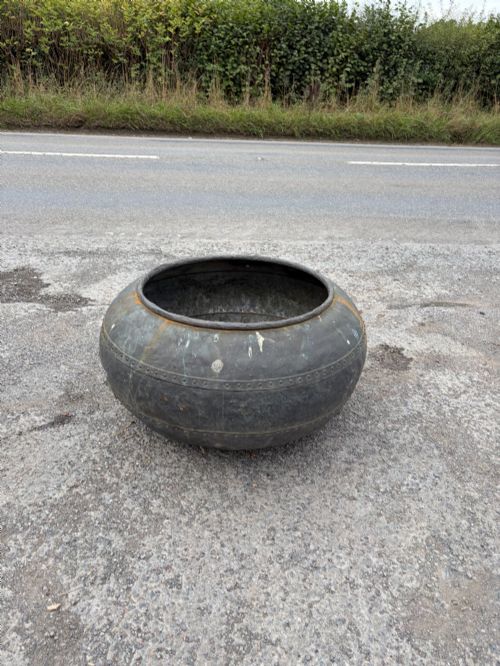
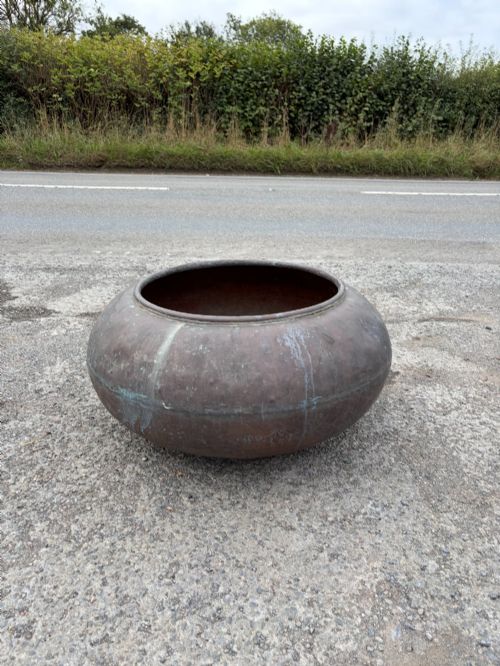
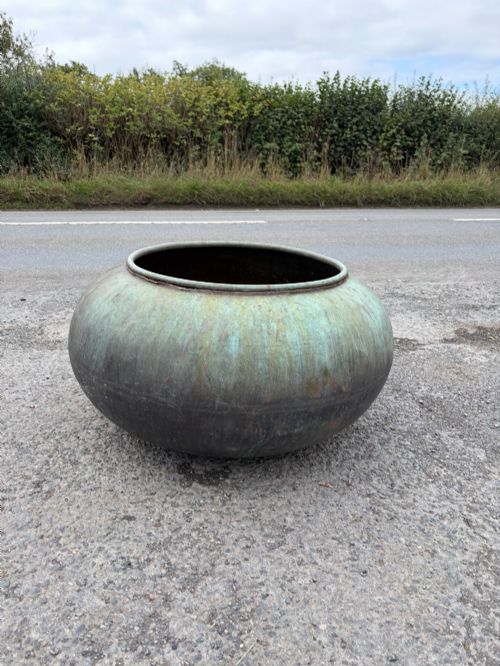
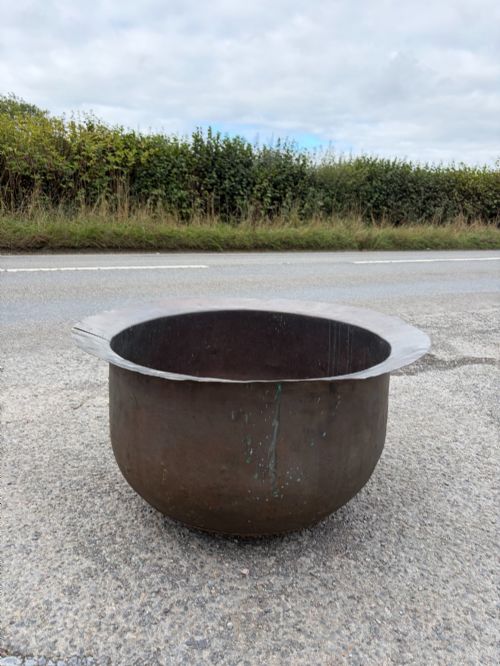

Large Garden Vessel
A large garden vessel anchors an outdoor space, offering practical planting capacity and sculptural presence through weathered metal and terracotta.
Large Garden Vessel
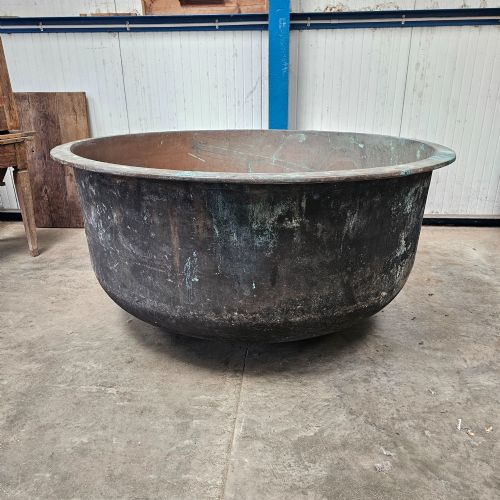
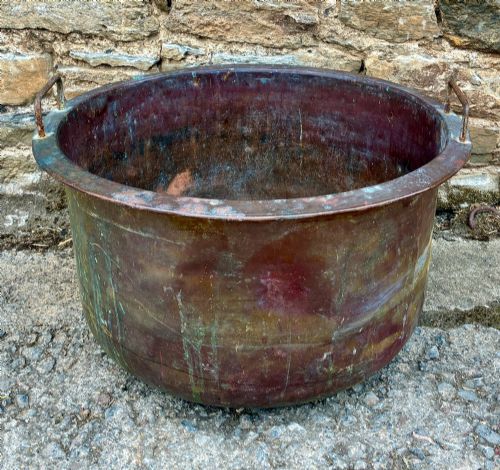
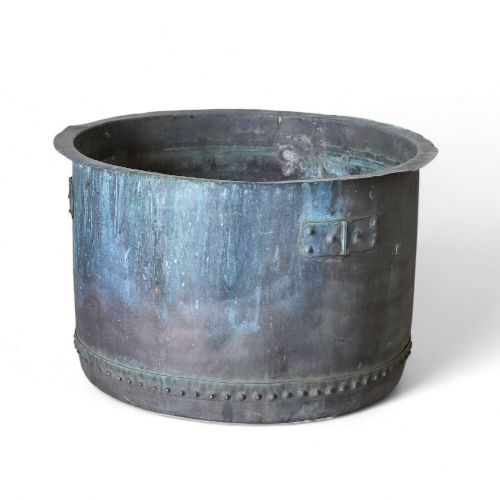
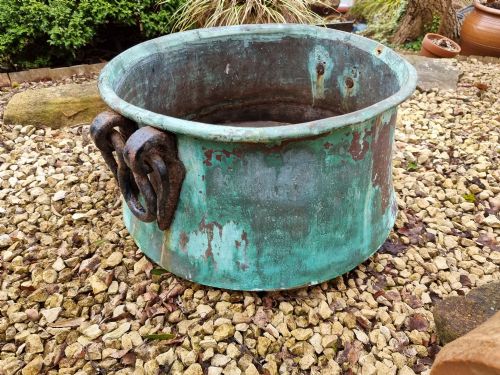
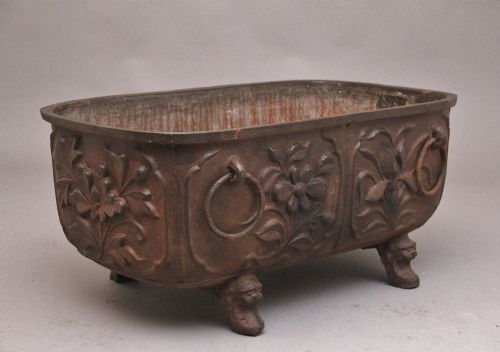
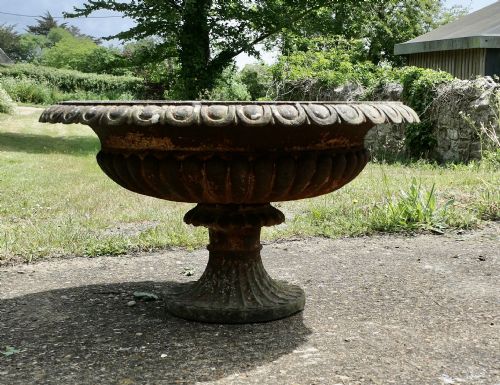
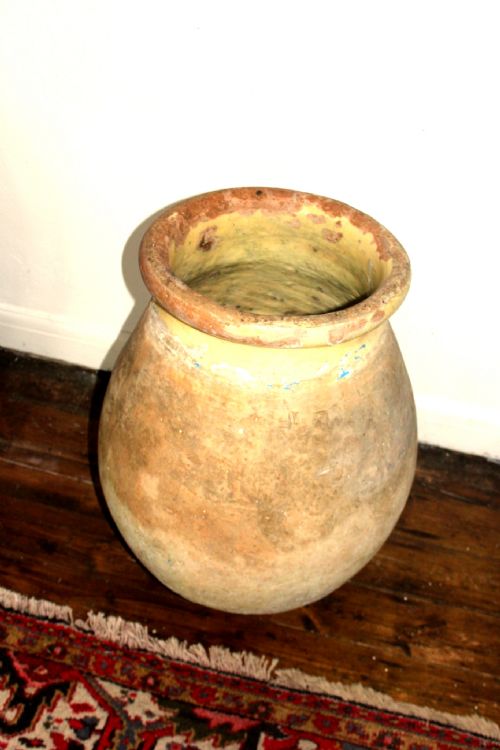
A large garden vessel serves primarily as a substantial container for plants, trees, or water in outdoor settings. The selections available here range from nineteenth century copper pots and wash tubs to terracotta olive jars and cast iron urns.
Buyers encounter heavy utilitarian objects repurposed for the garden, such as cheese vats, cauldrons, and dairy crocks alongside decorative urns and amphorae. These items originate from English, French, Chinese, Japanese, and Mediterranean sources across the nineteenth and early twentieth centuries.
How they were made
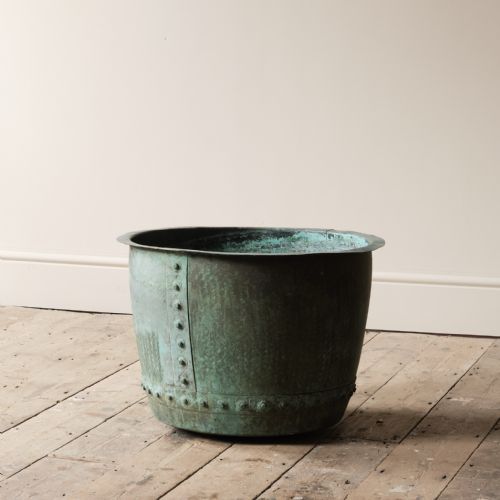
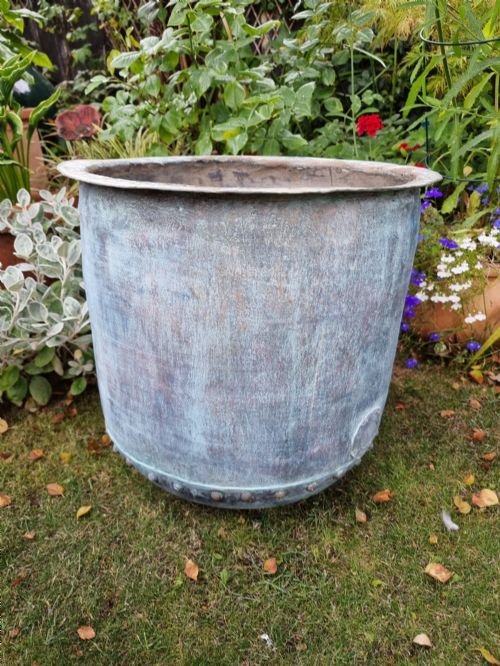
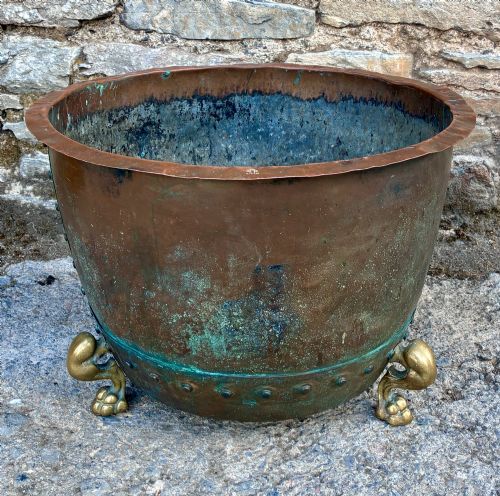
Metal vessels rely on hand-riveted copper plates, cast iron, and bronze, often featuring forged wrought iron handles or attachments. Copper items exhibit the hammer marks of their construction and develop natural verdigris patinas over decades of exposure.
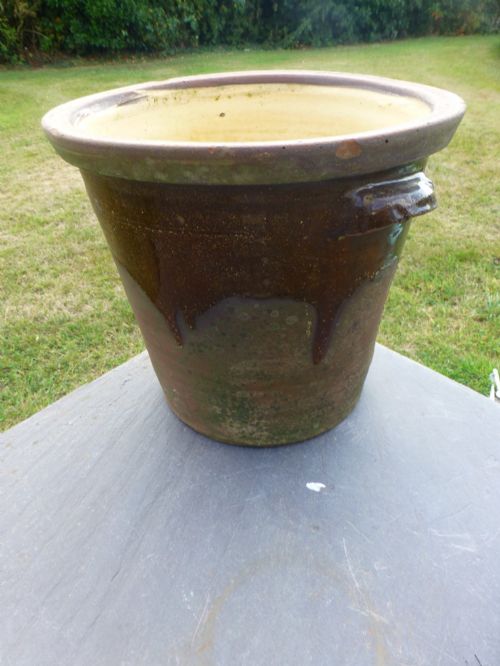
Earthenware and terracotta pieces are shaped from local clay and fired, sometimes featuring glazed surfaces or slip decoration. Storage jars and amphorae are built for utilitarian holding of oil, wine, or water before transitioning to garden use.
Listings feature vessels manufactured from copper, terracotta, cast iron, bronze, and earthenware spanning the nineteenth and early twentieth centuries.
What varies in quality
The integrity of construction separates standard utility items from superior examples, visible in the tightness of hand-riveting on copper bodies and the substantial weight of cast iron or bronze. Surface condition matters greatly, with stable, unpolished patinas and original weathered finishes holding more visual interest than cleaned or restored surfaces.
Proportion and scale dictate the visual impact of each piece, particularly in monumental temple vases, amphorae, and matched pairs. The presence of maker marks, cast script, or original iron hardware adds specific character to individual vessels.
The Large Garden Vessel Glossary
- Verdigris
- A green patina formed naturally on copper, brass, or bronze through atmospheric weathering. This chemical layer protects the underlying metal and indicates considerable age.
- Amphora
- A tall ancient storage jar with two handles and a narrowed neck, commonly used for oil or wine. Terracotta versions are frequently utilised as decorative garden focal points.
- Usubata
- A traditional Japanese bronze flower vase often utilised in formal arrangements. These vessels feature a broad top basin and substantial body suitable for garden display.
- Crock
- A heavy earthenware or stoneware pot built for food storage and preservation. Large surviving examples make durable garden planters.
- Patina
- The surface alteration and mellowing developed through age, use, and exposure to the elements. Collectors value undisturbed surfaces showing authentic wear.
Large Garden Vessel: Frequently Asked Questions
Can these vessels stay outside all winter?
Most metal and thick terracotta items tolerate outdoor conditions, though freezing water can crack porous earthenware if left saturated.
Moving heavy terracotta jars under shelter or emptying them during severe frosts prevents damage.
How do I clean an old copper pot?
Warm water and a soft brush remove surface dirt while preserving the aged verdigris surface that collectors prefer.
Avoid harsh chemical polishes that strip away the natural patina accumulated over decades.
What were copper vats originally used for?
Many copper vessels served utilitarian functions in dairies, laundries, and commercial kitchens for heating water or processing food.
Items like cheese vats and wash tubs were built from heavy gauge metal to withstand daily industrial heat.
How do I date a terracotta olive jar?
Form, clay colour, and potting marks indicate the region of origin and approximate period of manufacture.
Hand-thrown examples from the nineteenth century display individual throwing rings and surface variations distinct from modern reproductions.