





Industrial Garden Planter
These industrial garden planter pieces bring rugged utility into modern spaces, offering robust metal vessels ready to hold greenery.
Industrial Garden Planter
When you search for an industrial garden planter, you are looking at utilitarian metal vessels repurposed for horticulture. The pieces listed now originate from the nineteenth and twentieth centuries, spanning periods such as eighteen fifty, eighteen ninety, nineteen twenty, and nineteen thirty.
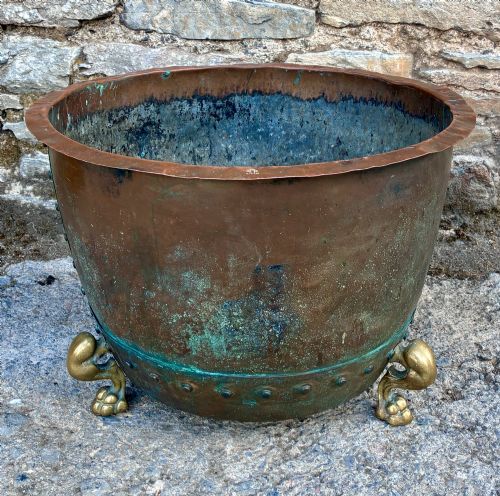
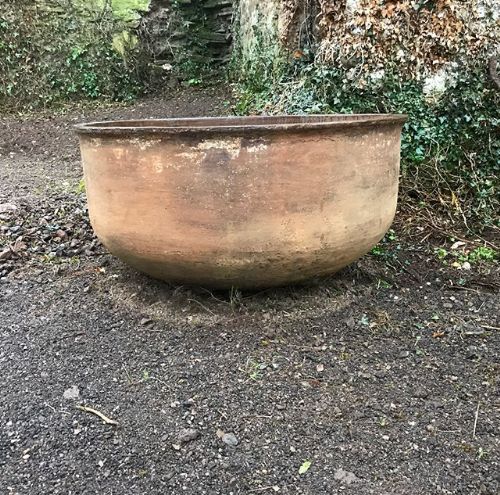
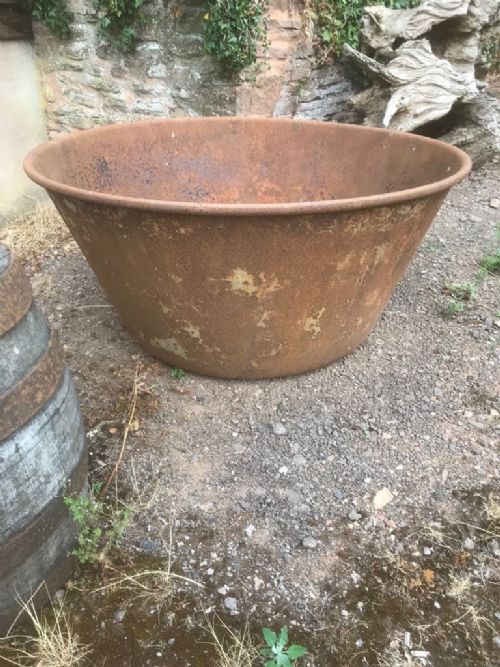
You are most likely to meet galvanised metal tubs, riveted copper buckets, and zinc planters on this page. These objects take the form of dolly tub planters, log baskets, storage bins, and tree planter pots, alongside architectural salvage items like iron hay racks.
The styles associated with these items include Victorian Industrial, Rustic Farmhouse, French Country, and Victorian Agricultural. Their origins reflect practical working environments repurposed for modern gardens.
Materials and construction methods
The construction of these items relies heavily on durable metals such as iron, wrought iron, cast iron, steel, zinc, copper, and brass. Makers utilised galvanised metal coatings to protect steel and iron surfaces from moisture in working environments.
Riveting forms a core technique across copper boilers, copper buckets, and steel containers, joining heavy sheet metal plates securely. This metalwork technique ensures structural integrity under heavy loads of soil and water.
Industrial Garden Planter Retail Price Guide 2026
Typical asking prices for industrial garden planter among the pieces listed under this phrase on Sellingantiques today, from the lower quarter to the upper quarter. They describe what is for sale here now, not the wider market.
The inventory spans the nineteenth century through to nineteen thirty, covering styles from Victorian Industrial to French Country.
Assessing quality and character
The quality of an industrial garden planter rests in the integrity of its metal construction and the honesty of its patina. Riveted seams show the precision of the original metalworker, while aged patination reflects decades of genuine functional use.
Heavier gauge metals and robust forms at the top of the range provide superior durability for outdoor planting. Lighter utilitarian vessels, whilst equally charming, display different levels of wear accumulated in agricultural or domestic service.
The Industrial Garden Planter Glossary
- Galvanised metal
- Steel or iron coated with a protective layer of zinc to prevent rust. This treatment was standard for utility items exposed to weather.
- Riveted
- Joined together using heavy metal pins hammered flat at the ends. This method secured thick plates on boilers and large storage vessels before modern welding.
- Dolly tub
- A cylindrical metal vessel originally used for laundering clothes. Today, these deep tubs serve well as robust containers for large shrubs and small trees.
- Hay rack
- An agricultural wall fixture designed to hold fodder for livestock. Salvaged examples provide deep, compartmentalised spaces suited to wall-mounted planting.
Industrial Garden Planter: Frequently Asked Questions
What metals are these planters made from?
The pieces utilise iron, wrought iron, cast iron, steel, zinc, copper, and brass. Many iron and steel items feature galvanised finishes to resist corrosion outdoors.
Copper and zinc components appear in vessels such as boilers, buckets, and dedicated French planters, each metal weathering uniquely over time.
How were these industrial items originally used?
These metal vessels served working functions in factories, farms, and homes. Dolly tubs held water for washing, while copper boilers heated water.
Agricultural hay racks fed livestock, and storage bins kept dry goods or fuel. Their sturdy construction made them ideal for heavy daily labour.
Can I use these planters outdoors year round?
Most of these metal containers handle outdoor conditions effectively due to their robust industrial heritage. Zinc, galvanised steel, and iron naturally endure exterior weather.
Ensure adequate drainage holes are present or added to protect the metal and plant roots from standing water during freezing periods.
How do I date an industrial metal planter?
Dating relies on manufacturing techniques, material types, and stylistic indicators. Nineteenth-century examples often feature hand-riveted copper or heavy cast iron.
Twentieth-century pieces, such as those from nineteen twenty or nineteen thirty, frequently utilise galvanised sheet steel and machine-formed components.