

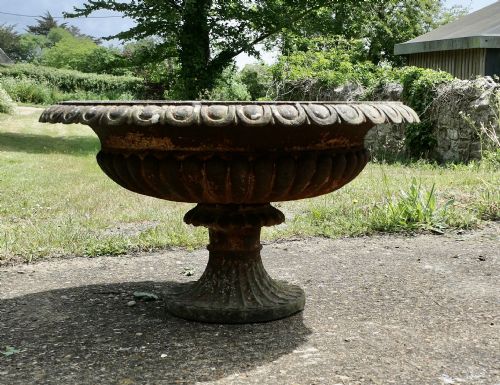


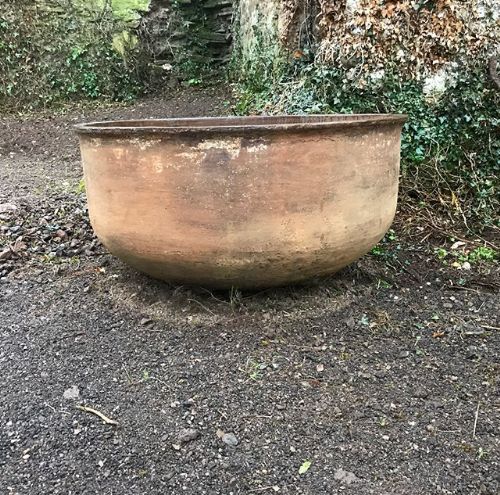


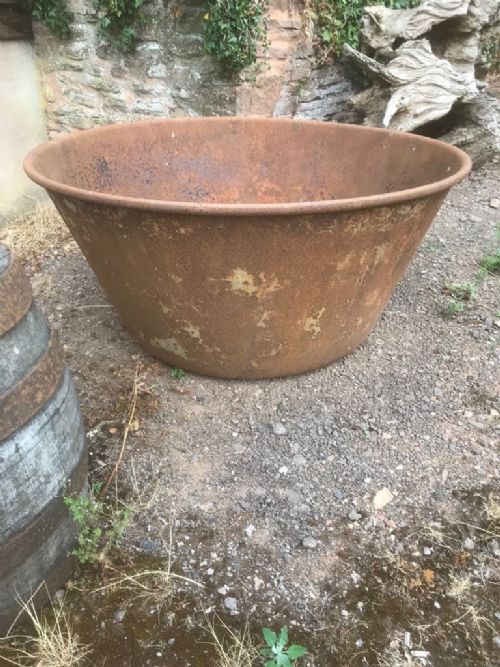
Large Outdoor Trough
A large outdoor trough is a substantial garden vessel meant for planting, built to hold weight and weather the seasons.
Large Outdoor Trough
A large outdoor trough serves as a robust container for greenery, anchoring garden spaces with enduring substance and utility. When you search for this phrase, you find heavy utilitarian vessels built for long outdoor residence.
The pieces on this page span several eras including the nineteenth century, Regency period, and early twentieth century. Common forms include garden planters, urns, and jardinieres designed for substantial plantings.
Makers and artisans across these periods shaped heavy vessels in styles ranging from Gothic Revival and Georgian Revival to Rustic Farmhouse and Industrial Country. These forms suit both formal terraces and informal garden settings.
How they were made
Craftsmen utilised durable metals such as cast iron, wrought iron, steel, and zinc to form sturdy planters capable of holding wet earth. Iron and steel components were cast or forged to create rigid structures that endure outdoor exposure.
Masonry and aggregate alternatives appear in composite stone, cast stone, reconstituted stone, and concrete. These stone-based materials were moulded into heavy troughs and planters with thick walls for frost resistance.
Large Outdoor Trough Retail Price Guide 2026
Typical asking prices for large outdoor trough among the pieces listed under this phrase on Sellingantiques today, from the lower quarter to the upper quarter. They describe what is for sale here now, not the wider market.
Pancheons originally served as wide earthenware milk-setting pans before finding a second life as heavy garden planters.
What varies in quality
Quality rests in the integrity of the casting or the density of the stone, which dictates how well the vessel resists frost and water pressure. Thicker walls and clean casting lines separate robust examples from simpler utility pieces.
Surface weathering and the natural patination of iron or stone contribute to visual depth. Well-handled metalwork shows clean joins and appropriate thickness, while stone vessels display even aggregate distribution.
The Large Outdoor Trough Glossary
- Cast iron
- An iron-carbon alloy poured into a mould to create rigid shapes. It provides heavy structural strength for garden urns and planters.
- Composite stone
- A manufactured material combining stone aggregates with a binding agent. It mimics natural stone while offering reliable frost resistance.
- Jardiniere
- An ornamental pot or stand for plants and flowers. These vessels often feature decorative surface detailing.
- Regency
- An architectural and decorative style period dating from the early nineteenth century. Pieces from this era often display classical restraint and proportion.
- Wrought iron
- Iron beaten into shape by hand tools or machinery. This material allows for sturdy, linear framework in conservatory and garden planters.
Large Outdoor Trough: Frequently Asked Questions
What are large outdoor troughs used for?
These vessels serve as heavy-duty containers for large shrubs, small trees, or abundant floral displays in gardens and courtyards. Their substantial weight keeps plants secure against strong winds.
They also function as architectural focal points on terraces, framing entrances or defining pathways within landscape designs.
How do I care for a stone trough?
Stone and concrete planters require minimal maintenance beyond occasional clearing of drainage holes to prevent water accumulation. Ensuring water can escape stops ice expansion from cracking the material during winter.
Positioning the vessel on small feet or bricks lifts it off damp ground, further protecting the base from frost damage.
How do I identify a nineteenth-century metal planter?
Nineteenth-century metal pieces often display heavier gauge iron or steel with distinct casting seams and hand-finished details. The metal exhibits deep oxidation and surface textures built up over generations.
Stylistic cues such as Victorian or Gothic Revival ornamentation help anchor the object to this period.
Can iron troughs stay outside all winter?
Cast iron and steel troughs withstand winter weather provided drainage is clear and standing water does not freeze inside. Their robust metal construction handles seasonal temperature drops effectively.
Lining very heavy iron vessels with protective material is rarely necessary, as the metal itself is resilient to frost.