

Victorian Metal Tub
A victorian metal tub brings robust utility and warmth to interiors, serving as a handsome planter, log bin, or fireside vessel.
Victorian Metal Tub
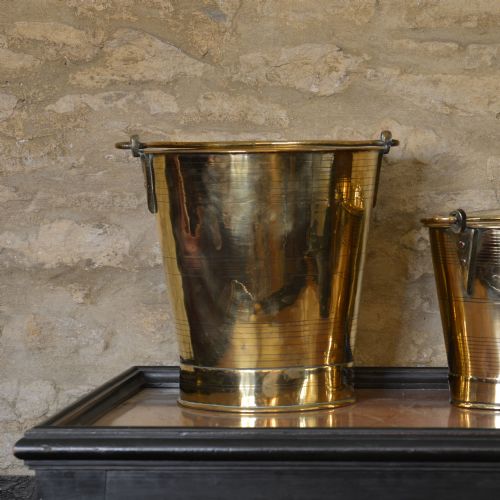
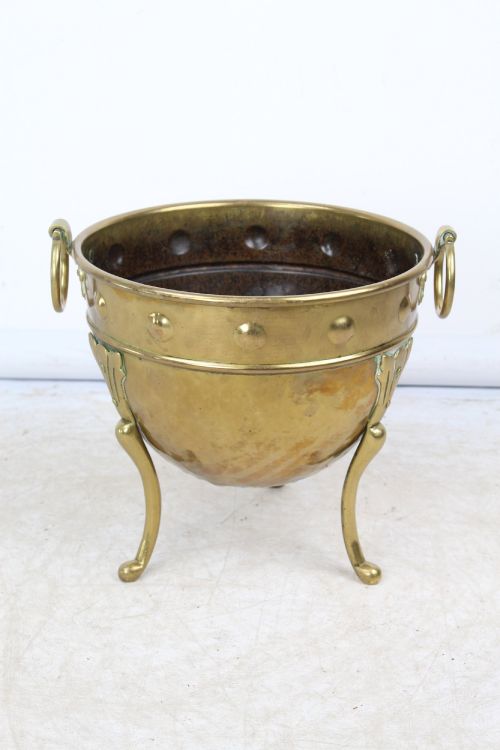
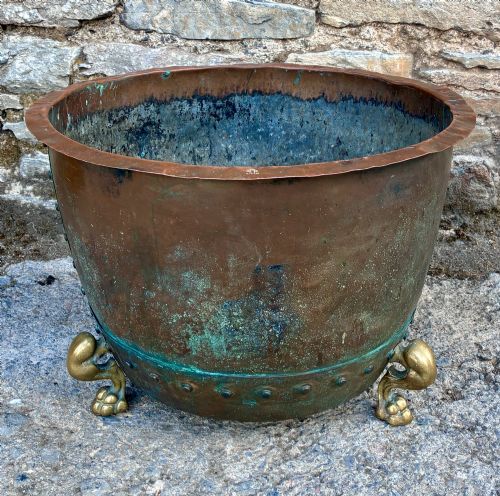
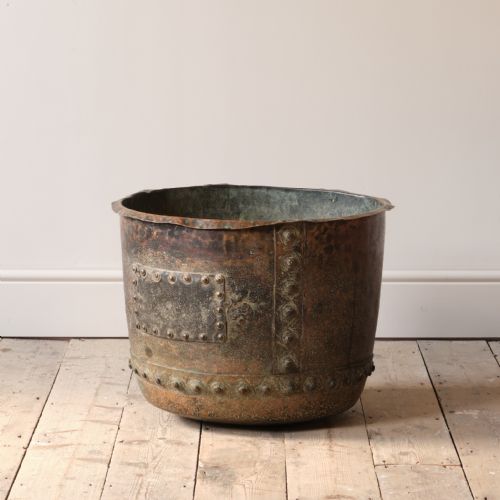
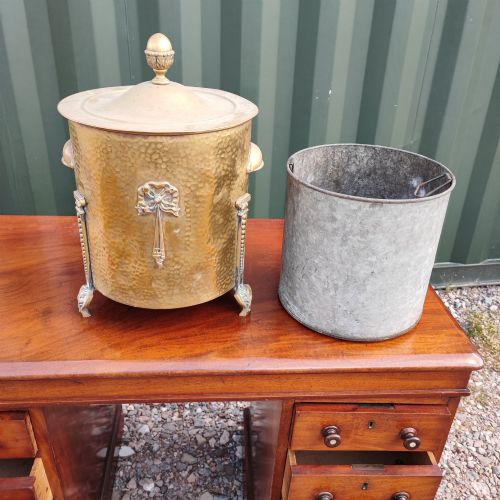
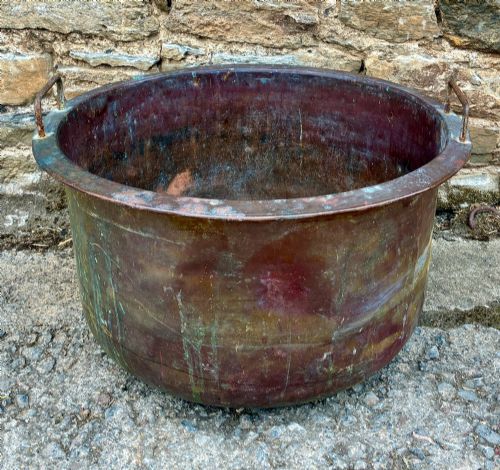
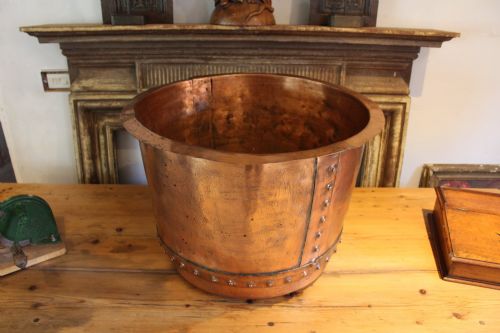
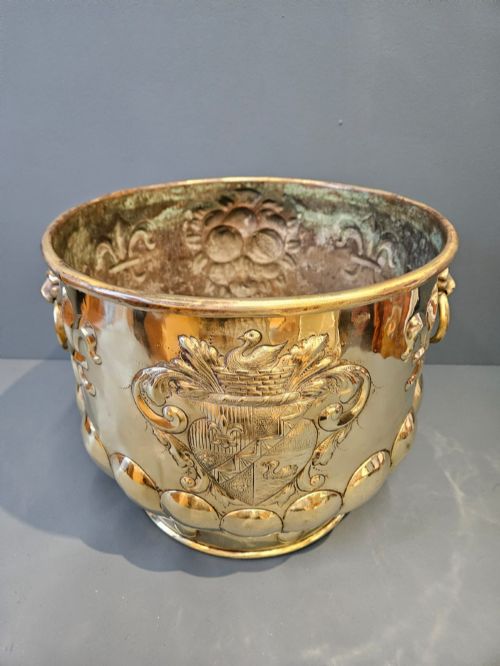
A victorian metal tub encompasses heavy domestic and utilitarian vessels fashioned from copper, brass, iron, and galvanized metal. The selection on this page leans heavily toward large copper pots, brass log bins, and metal planters originating across the nineteenth century.
Buyers encounter forms adapted for hearth and garden use, including coal buckets, cauldrons, wash tubs, and jardiniere vessels. These items transition easily from functional vessels to decorative statement pieces in contemporary rooms.
How they were made
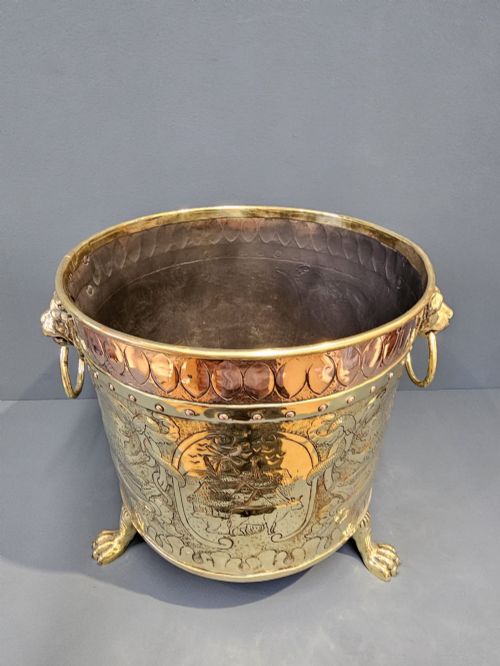
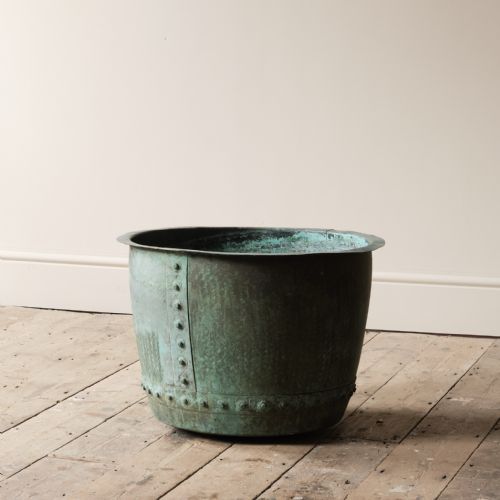
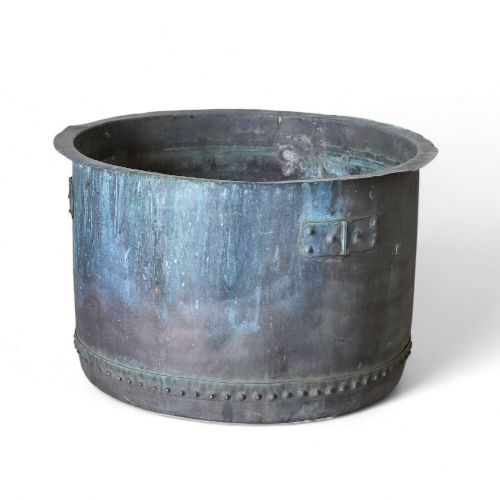
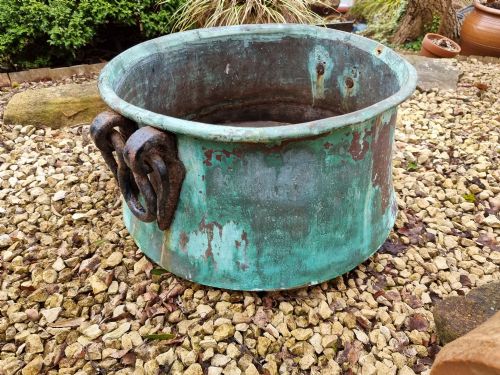
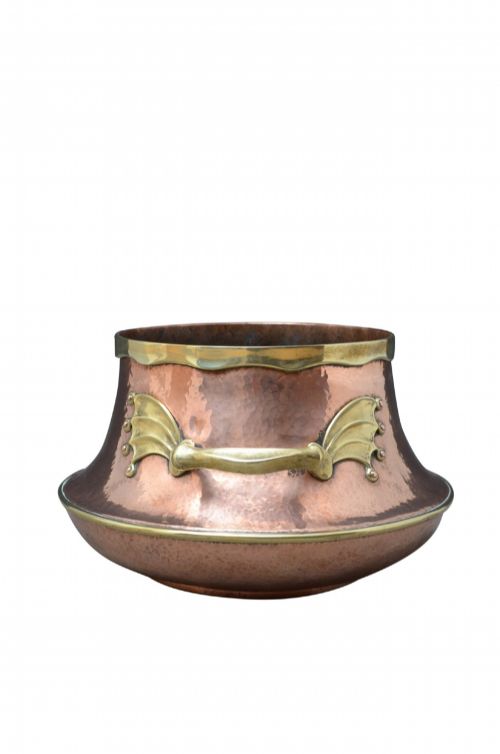
Metalworkers utilised hand-riveted sheet metal, hammered copper, and brass construction methods to build durable containers designed for heavy daily labour. Many vessels feature visible rivets, wrought iron swing handles, and applied brass bands that reinforced the body during heavy use.
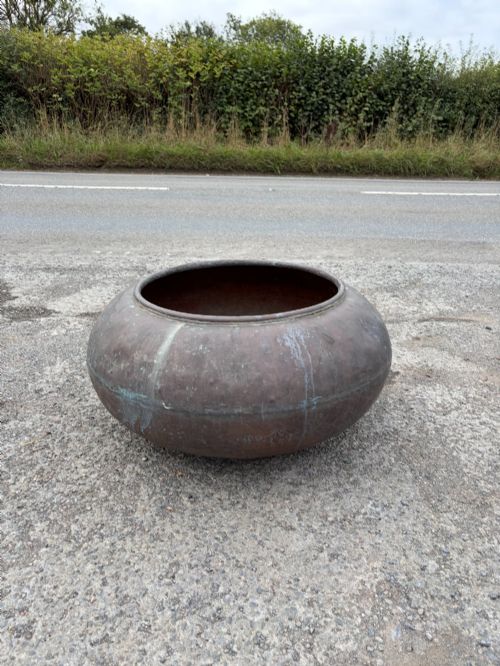
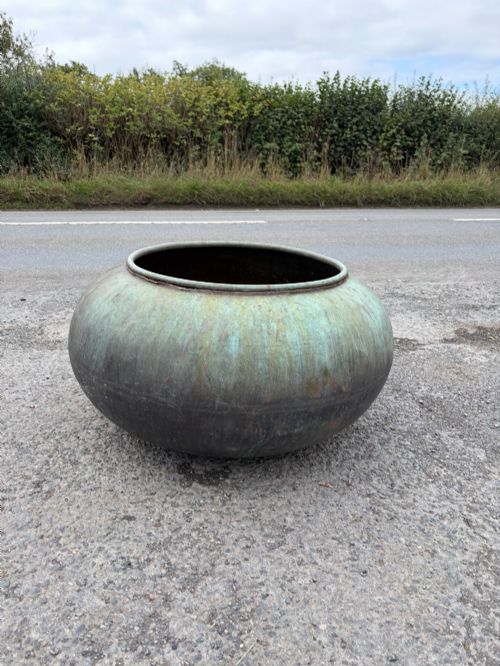
Surface treatments range from polished brass finishes to natural verdigris and weathered patinas developed through decades of exposure. Certain items incorporate embossed decoration, crests, or toleware painted finishes on iron bases.
Grain measures once tasked with counting dry corn now happily house oversized fiddle-leaf figs.
What varies in quality
Quality rests upon the integrity of construction, the thickness of the metal gauge, and the presence of original hand-finishing details like robust riveting and heavy swing handles. Thicker copper and brass retain their structural form better over generations of service.
The character of the aged surface also dictates desirability, with rich natural patinas and undisturbed verdigris commanding greater attention than heavily scoured or stripped metal surfaces.
Henry Loveridge·Petrus Ramus
The Victorian Metal Tub Glossary
- Verdigris
- A green patina formed naturally on copper, brass, or bronze through atmospheric weathering and oxidation. This chemical layer adds distinct colour variations highly prized by collectors.
- Toleware
- Metalware painted and japanned in imitation of Asian lacquerware. It frequently appears on nineteenth-century domestic tin or iron household items.
- Dinanderie
- Objects made of beaten brass or copper, typically originating from traditional European metalworking centres. The term describes decorative domestic vessels such as jardinieres and log bins.
- Cauldron
- A large metal pot with a wide opening and a swing handle, historically used over an open fire. These heavy vessels often feature hand-riveted seams and wrought iron fixings.
Victorian Metal Tub: Frequently Asked Questions
What were victorian metal tubs used for?
These vessels served demanding domestic roles such as washing laundry, boiling water, and storing coal or peat by the hearth. Their durable metal construction handled heavy daily water and fuel transport.
Today, those same rugged qualities make them practical for modern homes as indoor planters, firewood holders, or decorative umbrella stands.
How do I clean a copper tub?
Washing the surface with mild soapy water and a soft cloth removes everyday dust and preserves the underlying metal. Avoid abrasive scouring pads that strip away historical character.
Many collectors prefer to leave the aged verdigris and dark patination untouched rather than polishing the metal back to a bright shine.
Are these tubs waterproof?
Most copper, brass, and galvanized iron vessels were built to hold liquids like water or wash suds during nineteenth-century domestic chores. Riveted seams and soldered joints generally maintained watertight integrity.
Testing older vessels before indoor placement helps ensure that minor shifts over time have not created slow leaks.
How do I date a metal tub?
Nineteenth-century pieces often display hand-beaten hammering marks, irregular hand-cut rivets, and heavy wrought iron swing handles rather than modern machine welding. Stylistic clues like Arts and Crafts embossing or Victorian crests also point toward specific decades.
Comparing construction techniques with dated examples in historical archives provides the most reliable guide to an item's age.