


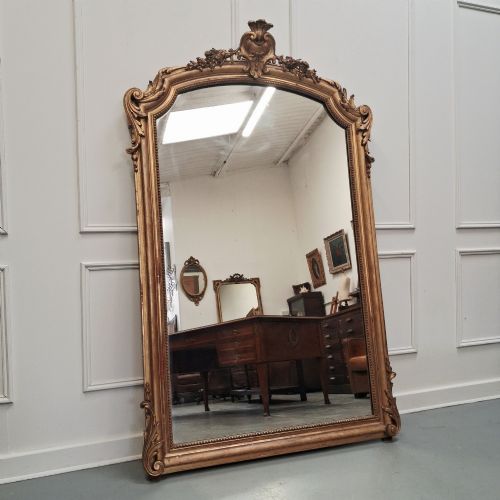
Large French Style Mirror
These large french style mirror examples bring nineteenth-century scale and carved detail into a room.
Large French Style Mirror
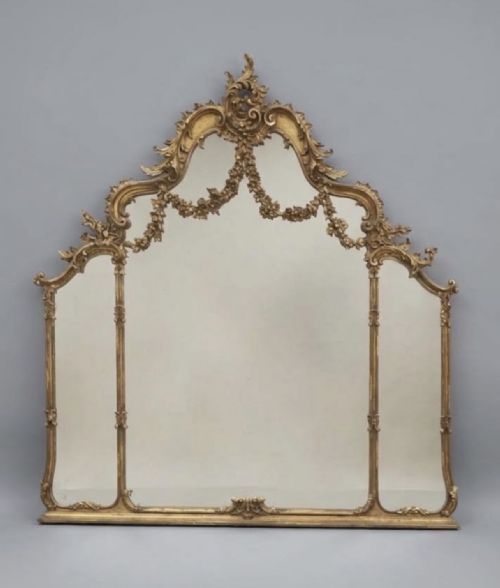
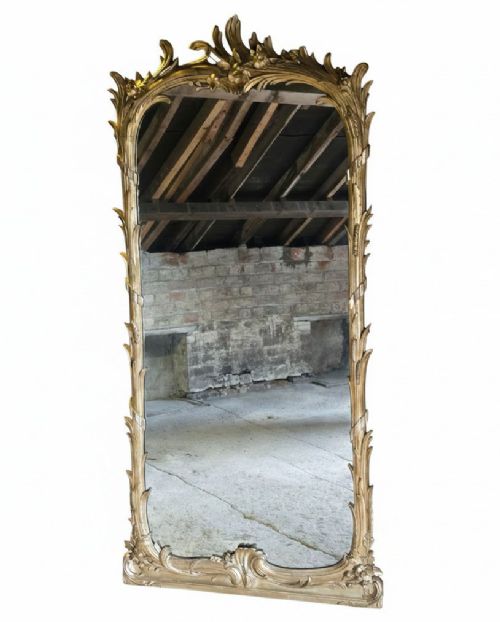
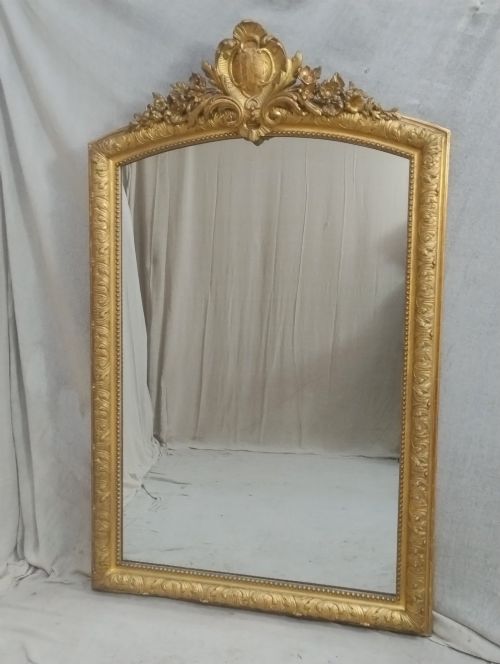
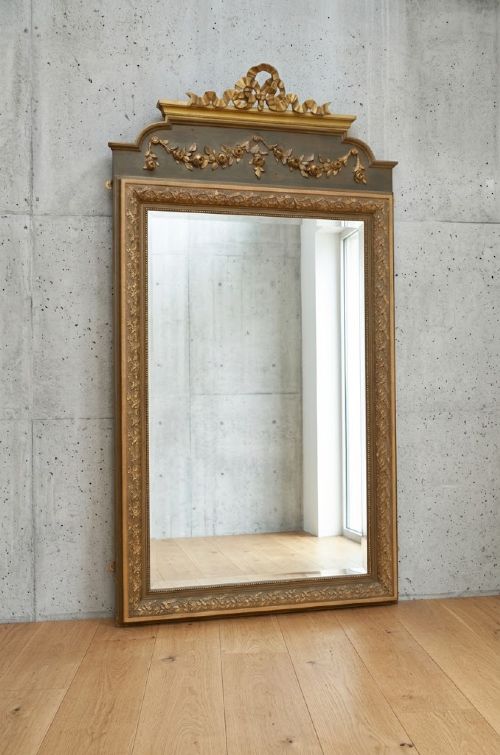
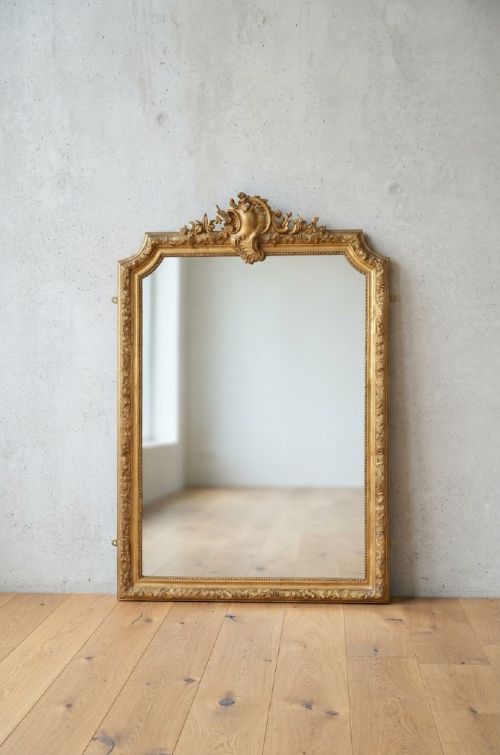
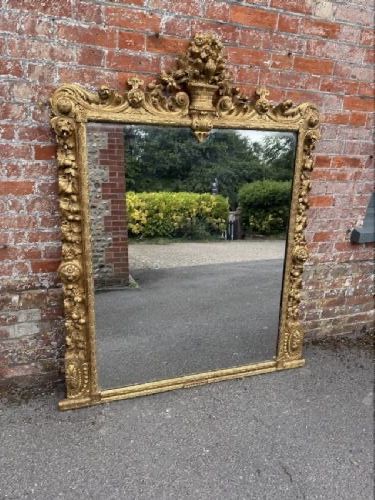
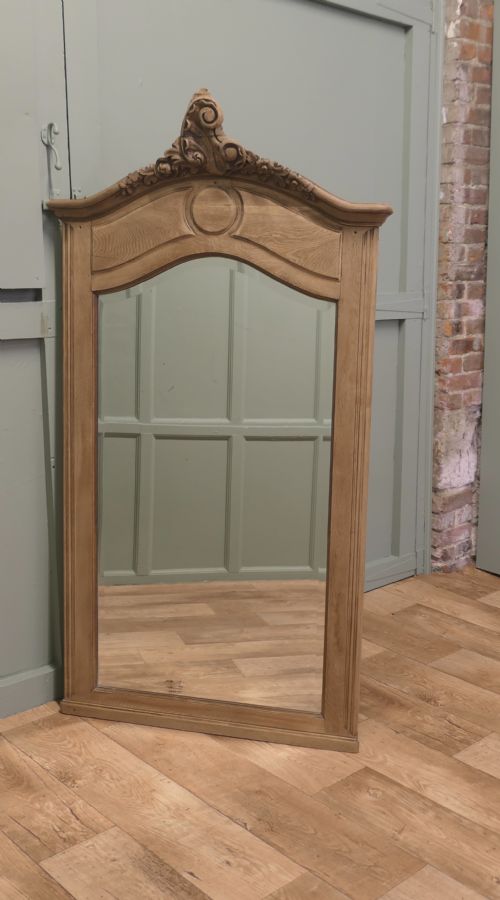
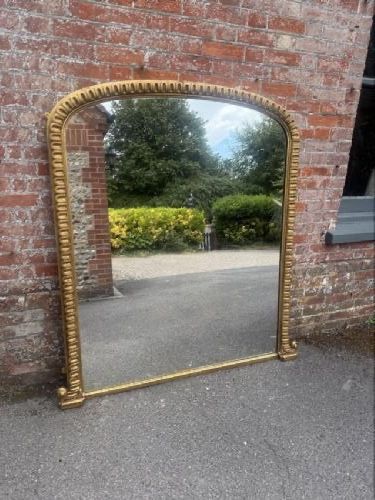
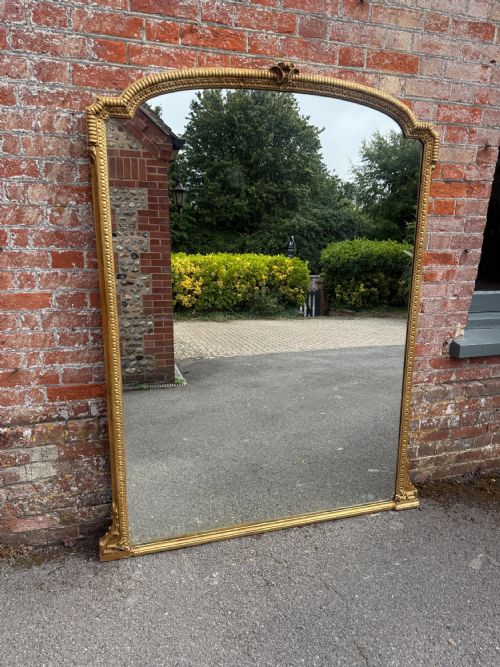
When you search for a large french style mirror, you encounter substantial nineteenth-century wall and overmantel pieces originating from French and English workshops. The forms span tall leaner mirrors, architectural trumeaus with painted panels, and sweeping arched or shaped top designs intended to dominate a chimney breast or empty wall. These reflect aesthetic movements such as Rococo Revival, Louis XVI, and French Chateau styles.
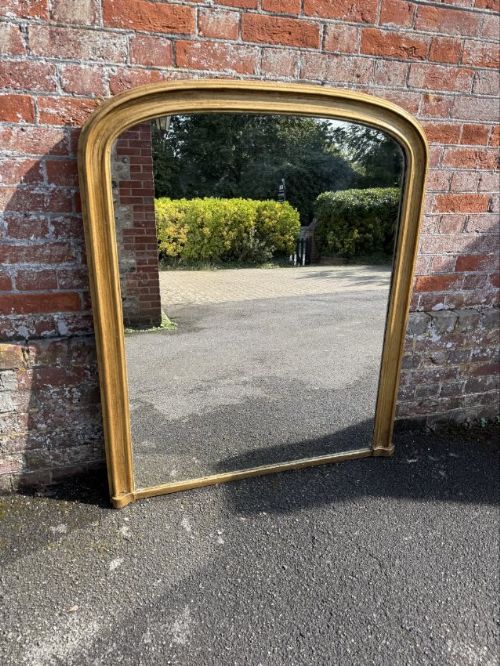
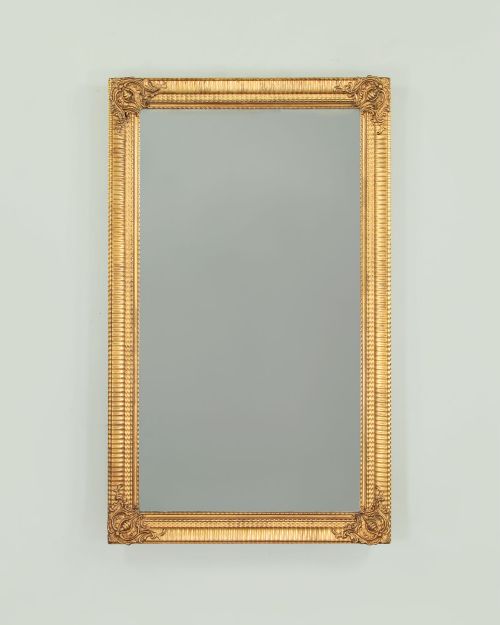
The most common version met on this page is the nineteenth-century giltwood overmantel or wall mirror, frequently combining carved wood with moulded gesso. Many examples date from the middle to late decades of that century, adopting classical crests, ribbon motifs, or rope twist details. Alongside gold leaf finishes, variations in bleached oak, walnut, and painted wood appear regularly.
The historical function of these objects involved bouncing light around dimly lit nineteenth-century drawing rooms and balancing the proportions of grand fireplaces. Today, buyers place them above mantelpieces or lean them full length against a bedroom or hallway wall to create an illusion of depth. Their survival in such dimensions relies on sturdy timber carcasses built to support heavy sheets of glass.
How they were made
Carvers built the structural framework from solid timbers such as oak, pine, or walnut, establishing the deep mouldings and curved profiles required for large formats. Artisans then applied layers of gesso - a mixture of plaster and glue - directly to the wooden base to build up relief ornamentation. This pliable surface allowed craftsmen to model intricate scrolls, floral garlands, and crests before the finishing stages.
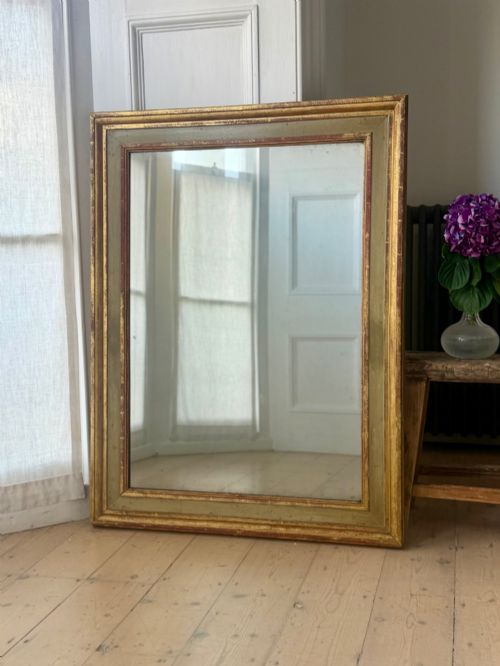
Makers applied gold leaf or metal gilt to the prepared gesso surfaces, often combining burnished and matte areas to catch the light from different angles. Some pieces received painted or parcel-gilt treatments, incorporating olive green, silver-gilt, or distressed finishes over the wood. Original examples utilised mercury glass or early mirror plates, which develop characteristic foxing and dark spots over time.
Large French Style Mirror Retail Price Guide 2026
Typical asking prices for large french style mirror among the pieces listed under this phrase on Sellingantiques today, from the lower quarter to the upper quarter. They describe what is for sale here now, not the wider market.
Several pieces combine formal giltwood with unexpected nautical rope twists, proving that nineteenth-century decorators enjoyed a maritime whim.
What varies in quality
The depth and crispness of the carving distinguish finer pieces from standard production, separating hand-modelled gesso work from repetitive cast ornament. Superior examples display sharply defined acanthus leaves, crisp rope twists, and securely anchored crests that remain stable despite the weight of the frame. The integrity of the original gilt surface also dictates standard, with well-preserved gold leaf showing subtle patination rather than flat modern paint.
Structural joinery at the corners and the thickness of the backing boards determine how well a heavy piece survives centuries of hanging or leaning. The condition of the glass itself matters greatly, whether an early mercury plate with natural foxing or a later bevelled replacement. Original backboards, undisturbed gilding layers, and authentic secondary woods elevate an individual piece within its period.
The Large French Style Mirror Glossary
- Gesso
- A plaster-based mixture applied to wooden mirror frames to create a smooth surface for carving and gilding. This material allowed artisans to achieve high relief and intricate decorative motifs.
- Giltwood
- Timber that has been coated with gold leaf or metallic powder over a prepared base. It provides the characteristic bright, reflective finish seen on traditional decorative frames.
- Overmantel mirror
- A large horizontal or arched glass designed specifically to hang above a fireplace mantel. These frames were proportioned to match the width of the hearth below.
- Trumeau mirror
- An architectural wall glass incorporating an oil painting or decorative panel within the upper section of the frame. They originated in classical interior design to fill wall spaces between windows.
- Mercury glass
- An early type of mirror plate produced by pouring a mercury and tin amalgam behind the glass sheet. Over decades, chemical breakdown creates characteristic dark spots known as foxing.
- Parcel-gilt
- A decorative treatment where only specific carved highlights or raised areas of a frame are gilded, while the rest remains painted or exposed wood. This technique creates visual contrast.
Large French Style Mirror: Frequently Asked Questions
How do I hang a heavy overmantel mirror?
These large frames carry significant weight due to dense timber carcasses and thick glass plates, requiring secure installation directly into wall studs or masonry using heavy-duty brackets.
Professional mirror installers typically employ a French cleat system to distribute the load evenly across the structure of the wall.
What is foxing on antique mirror glass?
Foxing refers to the small dark spots, mottling, and cloudy patches that develop behind older glass plates as the silvering or mercury backing oxidises over time.
Many collectors value this natural ageing process because it confirms the genuine nineteenth-century origin of the mirror plate.
Can I lean these mirrors on the floor?
Tall nineteenth-century formats, particularly leaner mirrors and French chateau styles, were engineered to stand securely against a wall without being wall-mounted.
Floor placement creates a dramatic full-length reflection while reducing the physical strain of wall fixings on older plaster.
How do I identify a Rococo Revival frame?
Rococo Revival pieces feature asymmetrical scrolls, shell motifs, C-scrolls, and naturalistic floral carvings that eschew rigid classical symmetry.
The frames often employ deep gesso relief work finished in bright giltwood to emphasise the dynamic, flowing curves of the style.