


Large French Console
A large french console anchors a room with scale and presence, bringing architectural weight and continental proportion to an interior.
Large French Console
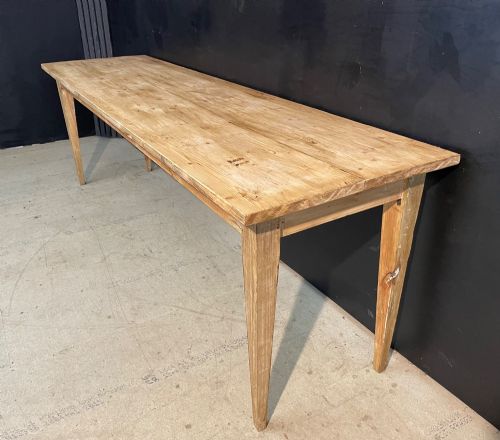
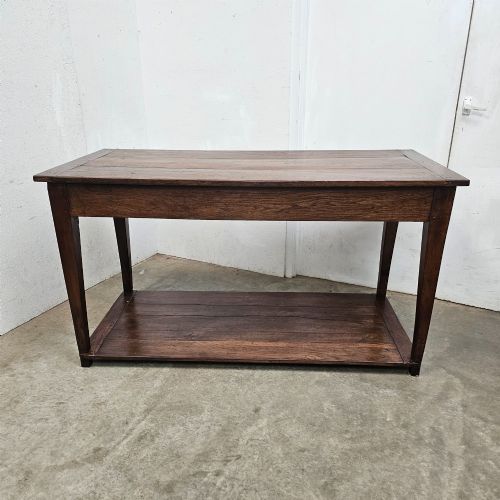
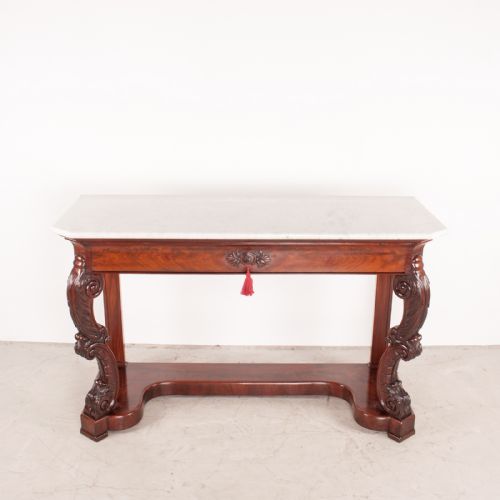
A large french console typically presents as a substantial wall-mounted or freestanding table designed to command a principal reception room or hallway. When searching for a large french console, buyers encounter diverse forms ranging from marble-topped giltwood neoclassical designs to robust oak drapers tables and work tables from provincial houses.
The material vocabulary spans heavy white Carrara and varied coloured marbles paired with carved giltwood, flame mahogany, satinwood, walnut, and pine. Pieces emerge from distinct periods including the eighteenth century, the expansive nineteenth-century Empire and Rococo revivals, and later country workshops.
Originating in grand Parisian salons or rural French country houses, these furniture items served as serving tables, sideboards, or decorative consoles beneath matching pier mirrors. The selection balances formal gilt elegance with the heavy utility of scrubbed oak and bleached pine preparation surfaces.
How they were made
Traditional construction relies on dense timbers like oak, mahogany, and walnut joined by hand, often supporting heavy slabs of shaped marble without mechanical fixings. Carvers shaped gesso and giltwood frames with scrolls and leaf motifs, while ironwork frameworks provided alternative industrial rigidity.
Surface treatments define the visual weight, moving from high-status hand-applied gilding and flame mahogany veneers to simple paint layers and bleached timber finishes. Joinery traditions accommodated the massive scale of monumental drapers tables and monumental console frames through robust tenon and mortise framing.
Object variations include wall brackets, drapers tables, work tables, pier mirrors, and serving tables alongside standard console formats.
What varies in quality
Quality rests in the crispness of carved detail across giltwood and walnut frames, where deeply undercut acanthus leaves and fluid scrolls distinguish superior craftsmanship from mechanical repetition. The choice of timber also dictates grade, separating highly figured flame mahogany and matched satinwood veneers from utilitarian pine.
The integration and thickness of the marble top alters the stature of the console, with heavy moulded Carrara slabs showing superior mineral depth compared to replacement tops. Proportional harmony and original surface patination determine whether a piece retains its architectural integrity.
The Large French Console Glossary
- Console
- A table designed to stand against a wall, frequently fixed with brackets or supported by front legs.
- Pier glass
- A tall mirror specifically sized to hang on the wall space between windows.
- Giltwood
- Timber coated with fine gold leaf applied over a prepared gesso ground.
- Drapers table
- A long, sturdy utilitarian wooden table historically utilised for measuring and folding textiles.
- Carrara marble
- A heavy white or grey-veined stone quarried in Italy, frequently utilised for high-status table surfaces.
Large French Console: Frequently Asked Questions
Where do you put a large console?
These large consoles suit grand hallways, principal living rooms, or dining spaces where their scale balances high ceilings and generous wall space.
They function effectively beneath large overmantel mirrors or pier glasses to create a unified architectural arrangement.
How are marble tops secured?
Most heavy marble slabs rest securely upon the wooden console frame by their own substantial weight rather than rigid mechanical fixings.
This loose placement allows the stone to be lifted off for safe transport and repositioning.
What is a drapers table?
A drapers table is a long, utilitarian wooden work table originating from French provincial textile shops and country houses.
Their robust construction and generous proportions make them suitable for modern dining or serving use.
How do I identify Empire style?
Empire pieces display classical symmetry, dark flame mahogany veneers, and restrained bronze or gilt mounts reflecting Napoleonic taste.
Architectural columns and austere geometric lines dominate over the flowing curves of earlier Rococo designs.