

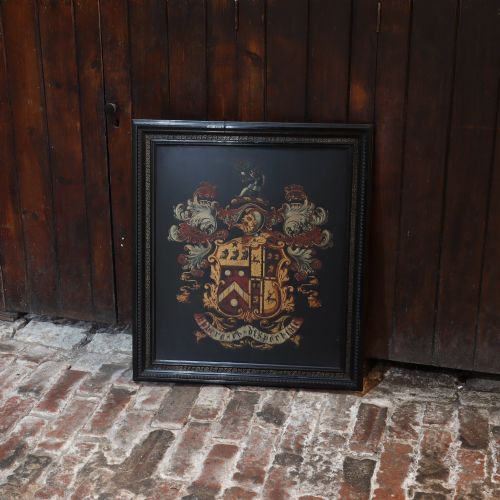
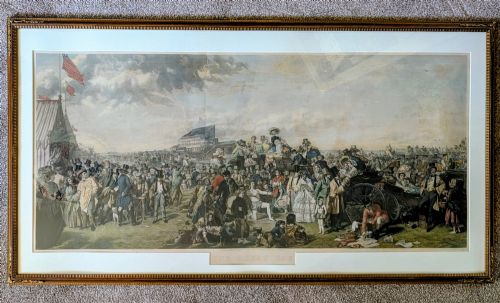
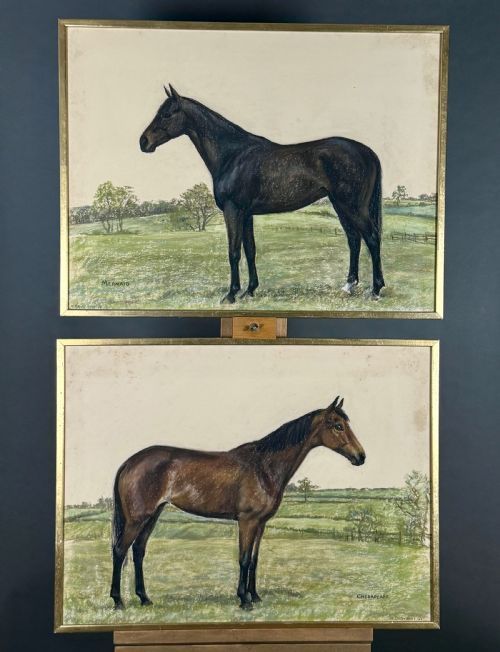
Large Framed Artwork
When you search for large framed artwork, you are looking at substantial wall pieces that dominate a room and anchor an interior.
Large Framed Artwork
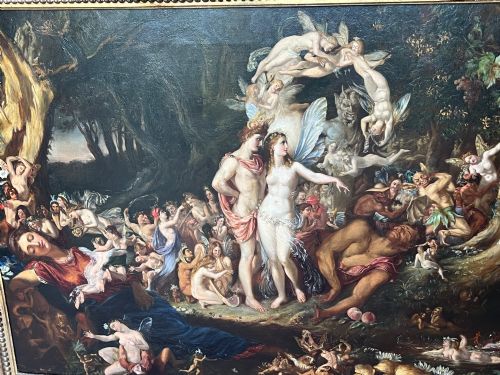
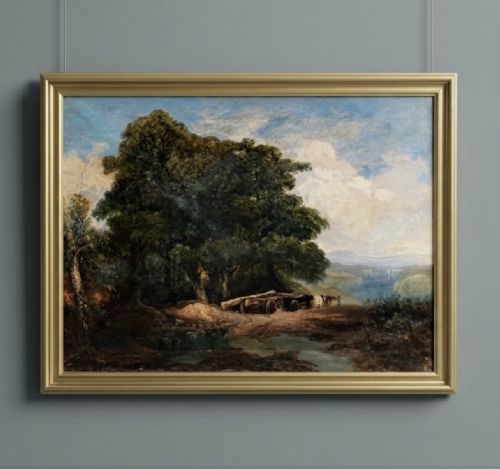
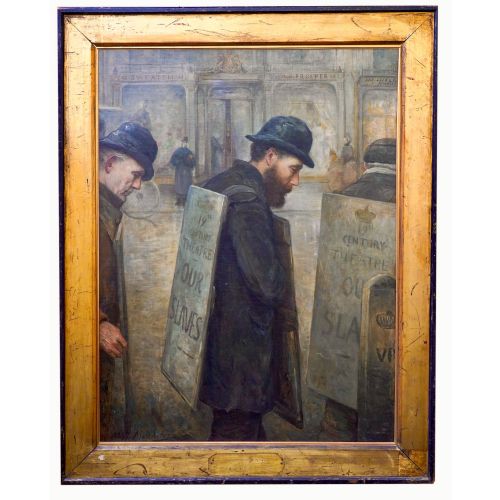
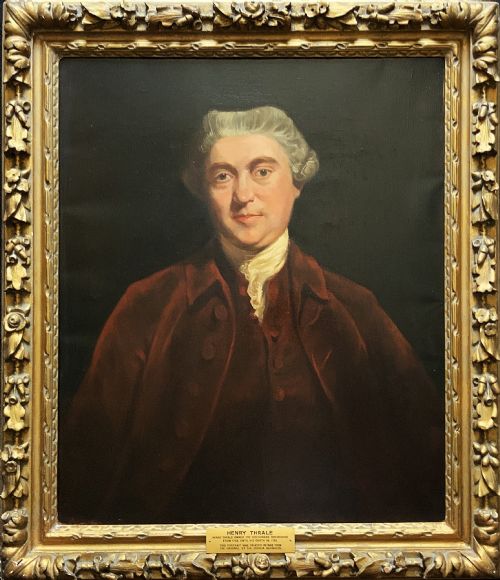
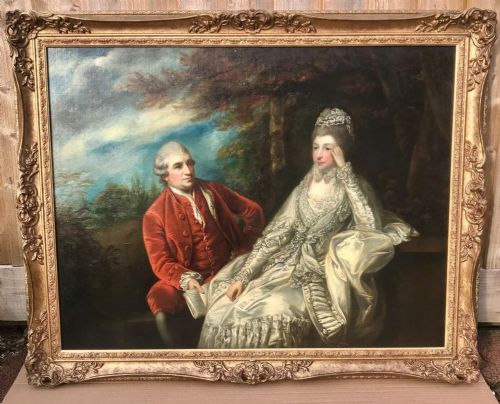
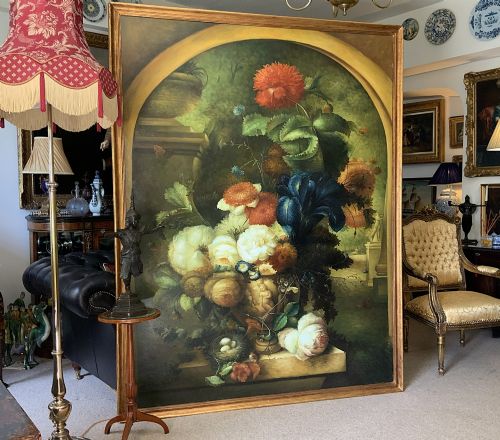
Large framed artwork spans centuries of visual culture, reaching from eighteenth-century gouache and oil paintings through to mid-twentieth-century canvases and prints. When searching for large framed artwork, you encounter varied forms including grand portraits, romantic landscapes, floral still lifes, and historical genre scenes. The selection includes works created in Britain, continental Europe, and beyond, utilising diverse supports from canvas and wood panel to paper and textile.
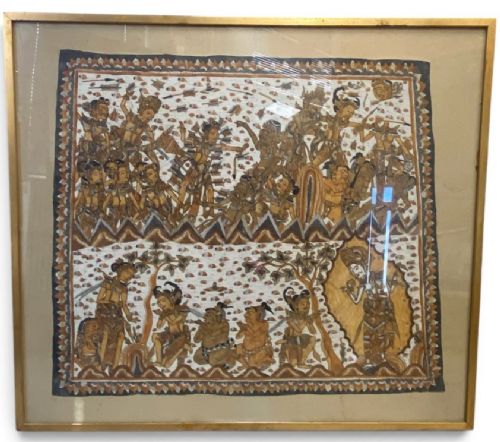
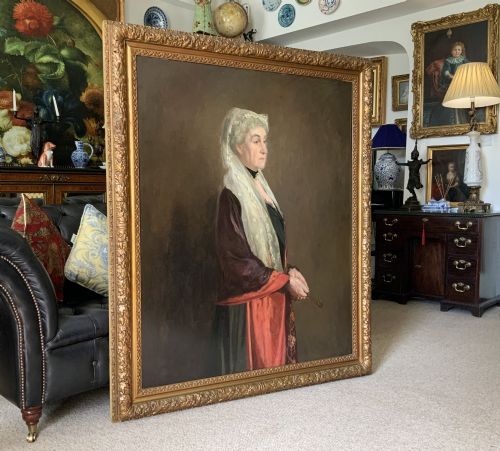
The versions met most frequently on this page date from the nineteenth century and the early decades of the twentieth century. These include substantial oil paintings in heavy wooden or gilt frames, decorative wall prints, and portraiture reflecting Victorian and Edwardian tastes. Alongside these traditional European works, the category encompasses international items such as Chinese ancestral scrolls and Balinese Kamasan paintings.
Many of these pieces serve as statement focal points, originally conceived to occupy significant wall space in period drawing rooms, halls, or public interiors. Their framing is often integral to the piece, featuring original period mouldings like Hogarth frames or ornate gilded surrounds that complement the scale of the artwork within.
Materials and Techniques
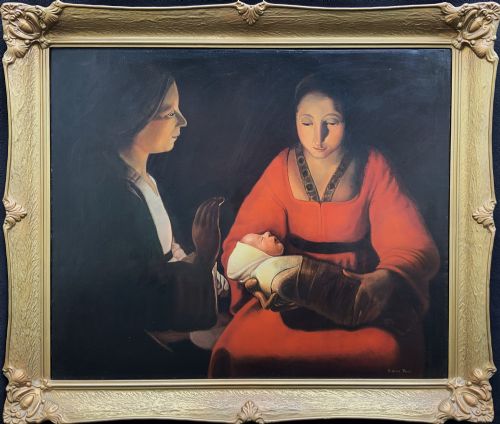
Oil paint applied to canvas remains the dominant medium among these large works, allowing artists to build rich textures and deep tonal ranges across expansive surfaces. Painters worked with stretched canvas supported by wooden stretcher frames, frequently housed within heavy timber surrounds finished in gilt or dark polish.
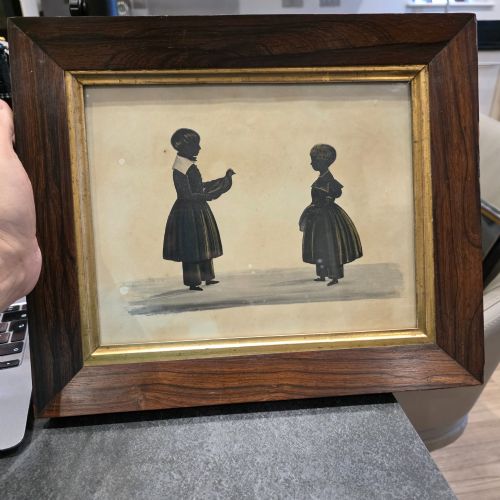
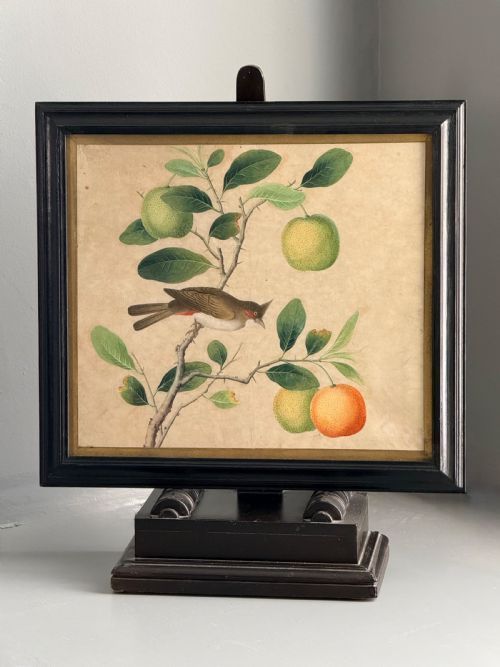
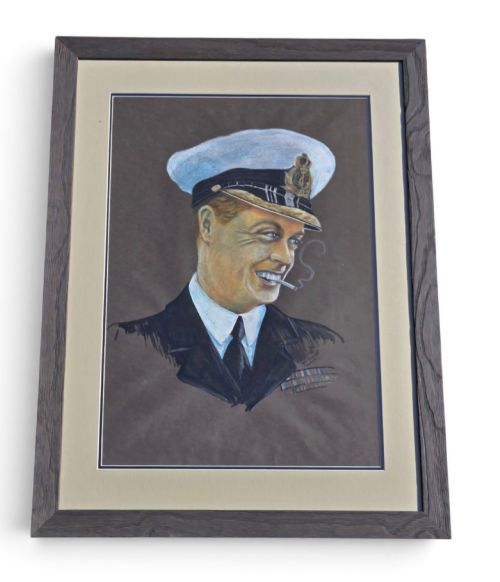
Alternative supports appear across the selection, including paper, pith paper, wood panels, and textiles such as silk. Works on paper or textile, including pastels, prints, and gouache, rely on protective glass glazing within custom timber frames to preserve delicate pigments.
Framing technique is central to the presentation of these pieces, employing carved wood, gesso, and applied leaf gilding to create robust borders that support heavy canvases and protect the edges of panels over centuries.
Several pieces capture horses galloping, dogs waiting, and royalty posing, proving that ancestors loved documenting their pets just as much as we do.
Evaluating Quality
The distinction between standard decorative pieces and finer works rests upon the execution of the brushwork and the anatomical or perspective accuracy within the composition. Master painters demonstrate control over light, shadow, and narrative depth, whereas secondary works rely on formulaic repetition or studio standardisation.
Condition of the primary support and the original pigments dictates the integrity of a piece. Works retaining their untouched surface without excessive overpainting or canvas relining stand at an advantage over those that have undergone heavy restoration.
The relationship between the artwork and its frame influences the overall integrity. Pieces retaining their original period frame, whether an ornate nineteenth-century gilt moulding or a specific regional timber surround, offer a more unified historical object.
Richard Sebastian Bond·Felix Stone Moscheles·Sir Joshua Reynolds·Thomas Smythe·W.R. Waters·John Opie RA·James Hamilton ARSA·TB Hardy·Konstantin Stoitzner·George Watson·Harold Knight RA
The Large Framed Artwork Glossary
- Gouache
- An opaque water-based paint medium consisting of pigment, water, and a binding agent such as gum arabic. It produces a flat, matte colour surface that differs from the translucent qualities of traditional watercolour.
- Canvas
- A heavy woven fabric, typically made from flax or hemp in earlier periods and later cotton, used as a surface for oil and acrylic painting. It is stretched tightly over a wooden frame before painting.
- Gilt Wood
- Timber that has been coated with a thin layer of gold leaf or metallic powder applied over a prepared gesso ground. It provides a reflective, decorative finish characteristic of period picture frames.
- Engraving
- A printmaking technique where an artist incises a design onto a hard metal plate using a sharp steel tool called a burin. Ink is then pressed into the grooves and transferred under pressure to paper.
- Pastel
- A dry painting medium in the form of a stick, consisting of pure powdered pigment and a binder. Pastel works require protection under glass to prevent the loose pigment from smudging.
Large Framed Artwork: Frequently Asked Questions
How do I hang heavy framed artwork safely?
Substantial pieces require secure wall fixings distributed evenly across the frame weight. Utilising professional picture hooks screwed directly into wall studs or using heavy-duty cavity anchors ensures stability for large canvases.
Positioning the centre of the artwork at eye level provides the most balanced visual placement within a room. Consideration must also be given to avoiding direct, intense sunlight that can fade historical pigments over time.
What is a portrait after an original?
A portrait after an original is a painting executed by a later artist or a studio assistant referencing a well-known composition. These works served as study pieces or decorative iterations of famous historical portraits.
Such paintings often capture the exact composition of the primary source while reflecting the painting techniques of the subsequent era in which they were produced.
How do I care for antique oil paintings?
Maintaining a stable room environment with moderate humidity protects both the wooden stretcher and the canvas support. Sudden temperature fluctuations can cause the canvas to slacken or the paint layer to crack.
Dusting should be performed gently with a soft, dry brush, avoiding any liquids or chemical cleaners on the painted surface. Professional conservation should be sought if structural repairs to the canvas or cleaning of discoloured varnish become necessary.