




Large Framed Architectural Landscape
A large framed architectural landscape brings depth and scale to a room, drawing the eye into classical ruins, urban vistas or country views.
Large Framed Architectural Landscape
When you search for a large framed architectural landscape, you are looking at substantial works designed to command a wall, combining buildings, townscapes or natural scenery within a defined boundary.
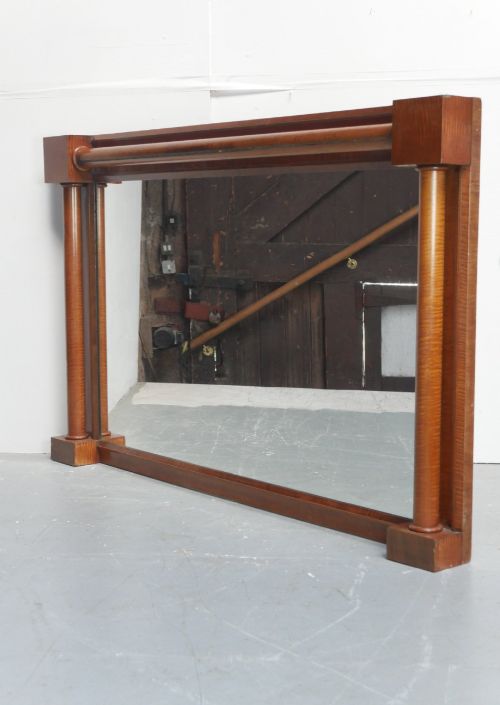
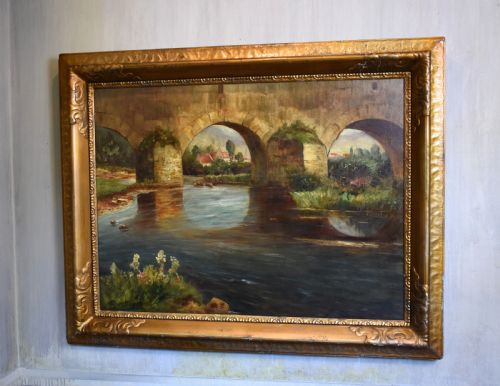
The pieces appearing here span oils, watercolours, mixed media, prints and mirrors, reaching from the Victorian era through the nineteenth century and into the mid-twentieth century.
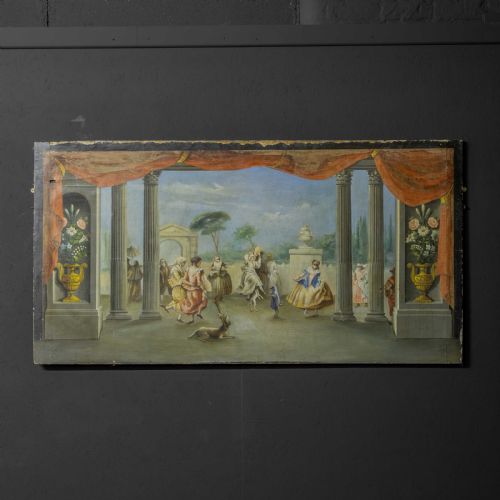
You will encounter works framed in wood, gesso and gold leaf, often depicting expansive European cityscapes, Gothic castles, classical scenes and coastal homes.
Materials and construction
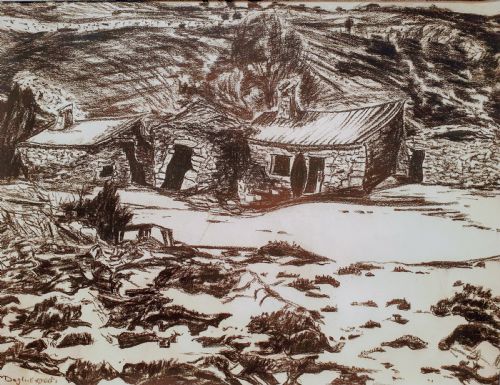
Works of this scale rely on robust supports such as canvas, heavy paper or wood panels, carrying mediums from oil paint and watercolour to charcoal and mixed media.
Frames employ carved wood and gesso, finished with gold leaf or left in natural grains like satin birch to support heavy glass or stretched canvas.
One landscape records a windy day in the South of France, capturing farmhouses and olive trees while the mistral blows.
Assessing quality and craftsmanship
Quality rests in the handling of perspective and light within the composition, where skilled draughtsmanship and confident brushwork separate ambitious works from simpler decorative items.
The physical framing matters equally, as deep mouldings, crisp gesso work and well-preserved gilt or timber enrich the visual weight of the landscape.
Karl Herrle·Henry Sanders·Franz Reder-Broili·George De Paris·Otto Pilny
The Large Framed Architectural Landscape Glossary
- Gesso
- A plaster-like mixture applied to wood frames before gilding or painting. It provides a smooth base that can be moulded into relief ornamentation.
- Gold Leaf
- Extremely thin sheets of beaten gold applied to frames or surfaces. It offers a lasting metallic lustre that catches room light.
- Overmantel Mirror
- A large mirror designed to hang specifically above a fireplace mantel. These pieces frequently incorporate architectural framing to anchor a room.
- Satin Birch
- A dense hardwood prized for its characteristic sheen and figured grain. Cabinetmakers use it for polished mirror frames and decorative surrounds.
Large Framed Architectural Landscape: Frequently Asked Questions
How do I hang a heavy framed landscape?
Substantial pieces require secure wall fixings directly into studs or masonry rather than standard plasterboard hooks. Distribute the weight evenly using heavy-duty wire or dual mounting points.
Ensure the hanging height places the centre of the work at eye level for balanced viewing within the room.
Where should I place a large architectural view?
These works suit prominent walls in reception rooms, hallways or above fireplaces where their scale can dominate without feeling cramped. Keep them away from direct sunlight and damp zones to protect paper, canvas and gilt frames.
Pairing a large architectural landscape with simple surrounding decor allows the detail of the buildings and perspective to remain the focal point.
How do I clean an antique gilt frame?
Dust the carved surfaces gently with a soft, dry brush to remove loose particles without disturbing delicate gesso or leaf. Avoid all liquid cleaners, commercial sprays or rubbing, which can strip historic gilding.
Professional conservation is recommended if the gold leaf flakes or the timber structure shows instability.
What defines a Victorian architectural landscape?
Victorian examples often combine detailed topographical precision with dramatic lighting, reflecting nineteenth-century romanticism and an interest in classical or Gothic structures. They are usually housed in heavy, ornate gilt or wood frames.
The brushwork tends to balance realistic detail with atmospheric depth, capturing grand urban vistas or historic European landmarks.