
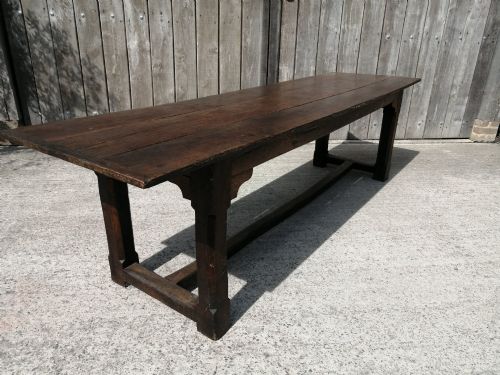
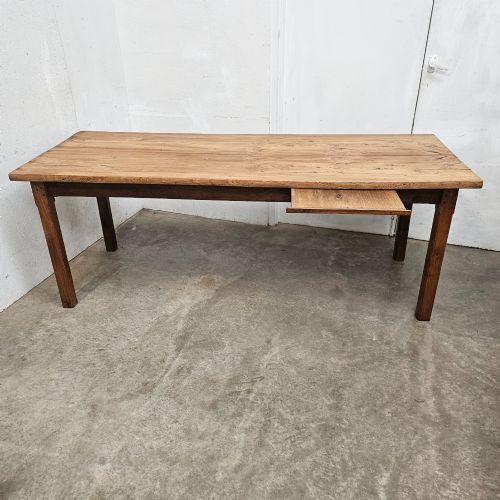
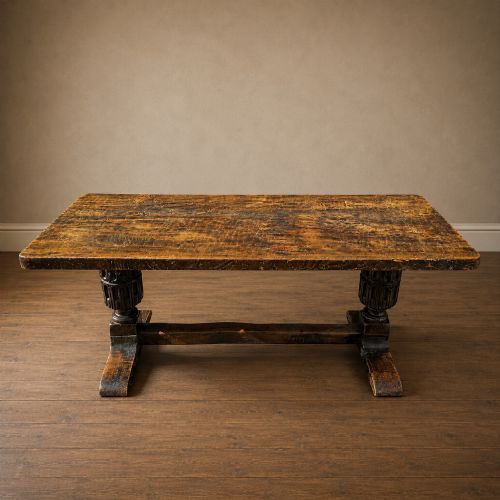
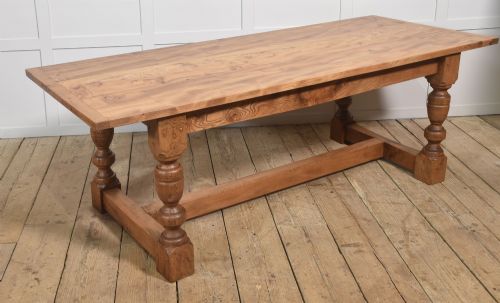


Large Elm Refectory Table
A large elm refectory table brings unmistakable grain and honest scale to a room, offering the substantial seating that anchors a busy kitchen or dining hall.
Large Elm Refectory Table
A large elm refectory table serves as a sturdy dining surface, seen across styles such as rustic farmhouse, French provincial, and English country. These pieces draw on historical forms from the seventeenth, eighteenth, and nineteenth centuries, including Georgian and Victorian periods.
Buyers will encounter rectangular dining tables and tavern tables constructed primarily from timber. Many examples feature robust timber tops supported by traditional framing, occasionally including practical additions like side drawers or extending mechanisms.
Origins span English and continental workshops, with French provincial and Spanish farmhouse variants appearing alongside domestic pieces. The construction ranges from single and two-board tops to multi-plank configurations supported by turned legs or trestle bases.
What varies in quality
The quality of a large elm refectory table depends largely on the selection and thickness of the timber used for the top boards. Single and two-plank tops demonstrate superior material choice compared to multi-plank alternatives.
Construction integrity defines the upper tier of these tables, marked by stable framing and honest timber integration between elm tops and supporting oak or mixed-wood bases. Surface patination accumulated through generations of use further separates standard examples from exceptional ones.
Listings feature elm and oak construction across seventeenth, eighteenth, and nineteenth-century periods, including Georgian and Victorian examples.
The Large Elm Refectory Table Glossary
- Refectory table
- A long dining table traditionally used in monasteries and large halls for communal meals. These pieces are characterised by their elongated proportions and robust undercarriages.
- Elm
- A dense, durable hardwood known for its interlocking grain pattern which resists splitting. This timber was frequently chosen for heavy-use furniture.
- Plank top
- A table surface constructed from wide boards joined lengthwise. Tops may consist of a single plank or multiple boards depending on available timber width.
- Tavern table
- A smaller or sturdier form of dining table historically found in public houses. They often feature robust turned legs and straightforward timber construction.
- Patina
- The surface sheen and colour developed by wood over decades of handling, cleaning, and exposure to light. This quality indicates age and use.
Large Elm Refectory Table: Frequently Asked Questions
How do I care for an antique elm table?
Clean the surface using a soft, slightly damp cloth and dry it immediately to protect the wood. Avoid harsh chemical cleaners and place the table away from direct heat sources to prevent the timber from splitting.
Wax the wood occasionally with a traditional beeswax to maintain the finish and nourish the grain. Use placemats and coasters to protect the surface from moisture and hot dishes during everyday dining.
Were these tables used in kitchens?
Farmhouse and provincial tables served as the centre of domestic life for food preparation, daily dining, and household tasks. Their heavy timber construction was built to withstand demanding kitchen work.
Over the centuries, these tables absorbed the daily wear of family life, which contributed to the character and depth found in the timber today.
How can I tell the period of a refectory table?
Examine the construction methods visible underneath the top and around the joints. Hand-cut joinery and timber characteristics often point towards earlier seventeenth or eighteenth-century origins, while later nineteenth-century pieces may show different machining signs.
Consider the style of the legs and stretcher base, as turned supports and framing details frequently reflect the prevailing furniture fashions of Georgian or Victorian eras.
What is a two board top?
A two board top is constructed from just two wide planks of timber joined together to form the entire surface. This indicates that the maker had access to mature trees yielding exceptionally wide boards.
Tables featuring single or two-plank tops are particularly valued for their clean appearance and the continuity of the elm grain across the width of the table.