
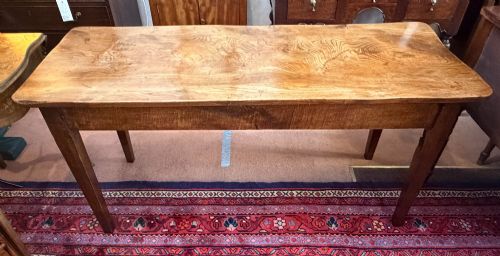
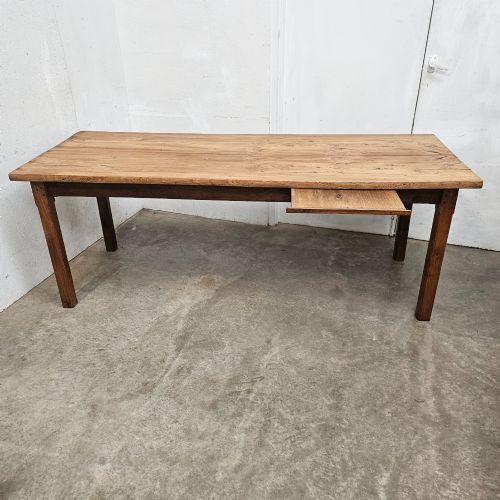


French Elm Farmhouse Table
A french elm farmhouse table brings centuries of rustic utility and warm timber grain straight into a modern kitchen.
French Elm Farmhouse Table
A french elm farmhouse table is a heavy, utilitarian dining piece built to serve large country households across generations. Buyers searching this phrase want a functional centrepiece defined by deep wooden character and provincial practicality.
The examples found here span the eighteenth and nineteenth centuries, taking the form of dining tables, trestle tables, refectory tables, and harvest tables. Most pieces originate from rural regions such as Brittany and the south west of France.
Buyers are most likely to encounter nineteenth-century rectangular dining tables alongside scrubbed sycamore and elm trestle variants. Oval formats and pieces incorporating oak, ash, pear wood, or cherry also appear.
Materials and construction methods
These tables rely primarily on solid elm timber, chosen for its toughness and distinctive interlocking grain. Joinery is robust and straightforward, designed to withstand daily domestic labour and heavy use without losing structural integrity.
Secondary timbers such as sycamore, oak, ash, fruitwood, and pear wood appear in mixed-material builds and trestle supports. Many surfaces show the marks of hand scrubbing and centuries of traditional woodworking techniques.
Some nineteenth-century tables come with a side serving of barbecue readiness or Christmas dinner pedigree straight from South West France.
Distinguishing quality and character
Quality in these tables rests in the depth of patina accumulated across the timber top and the integrity of the original joints. Two-board tops and substantial board thickness separate more impressive provincial examples from simpler utilitarian boards.
The balance between the rustic wear of the timber and the overall stability of the frame determines the desirability of a piece. Finer examples display harmonious proportion in their stretcher bases and minimal timber replacement over time.
The French Elm Farmhouse Table Glossary
- Elm
- A hard, durable wood with a characteristic interlocking grain that resists splitting. It has long been favoured for heavy-use country furniture.
- Trestle table
- A table consisting of two or more supports connected by a horizontal beam. This design provides maximum legroom beneath the top.
- Refectory table
- A long, narrow dining table originally built for monastic dining halls. In a French country context, it describes generous proportions suited to large gatherings.
- Scrubbed
- A finish achieved by vigorous washing and cleaning of the wooden surface. This treatment removes old grease and dirt to reveal the clean, pale grain beneath.
- Dough bin
- A domestic wooden trough with a lid used historically for rising bread dough. Some examples are adapted into low tables.
French Elm Farmhouse Table: Frequently Asked Questions
How do I clean a french elm farmhouse table?
Wipe the surface regularly with a damp cloth and mild soap, avoiding harsh chemical cleaners that strip the historic finish. Apply natural beeswax periodically to nourish the dry timber and maintain its protective sheen.
Keep the wood away from direct heat sources and extreme humidity shifts to prevent the heavy boards from warping or splitting. Treat spills promptly to protect the porous grain from staining.
What is a trestle table?
A trestle table uses upright supports joined by a central beam rather than four standard corner legs. This construction method maximises legroom and allows benches to tuck neatly underneath.
French country versions frequently pair sycamore frames with thick elm tops for robust structural support. This format was standard in large agricultural kitchens where flexibility around the seating was essential.
How old is an antique elm table?
Most pieces date from the eighteenth and nineteenth centuries, reflecting the height of provincial French craftsmanship. Construction details like hand-cut joints and uneven board widths help confirm this age range.
Earlier examples often display pegged joinery and deeper, darker patination built up through decades of domestic use. Nineteenth-century variants frequently exhibit scrubbed surfaces and lighter, brighter timber tones.