

Large Dining Sideboard
A large dining sideboard anchors a room with presence, offering deep storage and sturdy timber service for serious hospitality.
Large Dining Sideboard
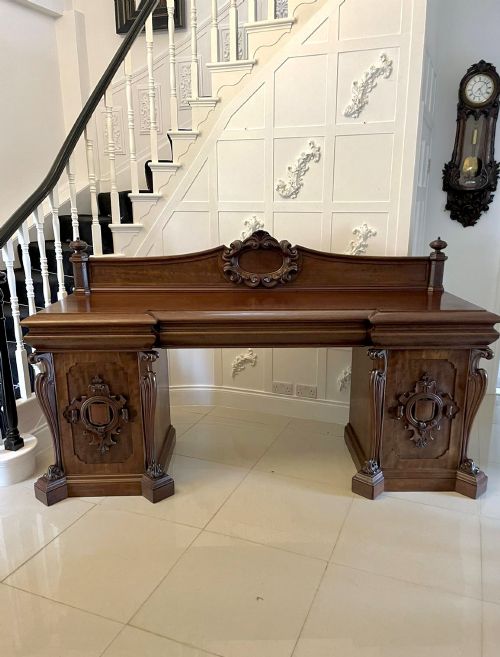
A large dining sideboard provides substantial storage and a wide serving surface designed to anchor a formal dining room. The pieces found here span foundational periods including the 18th Century, George III, Regency, and Victorian eras, alongside Edwardian and later revivals.
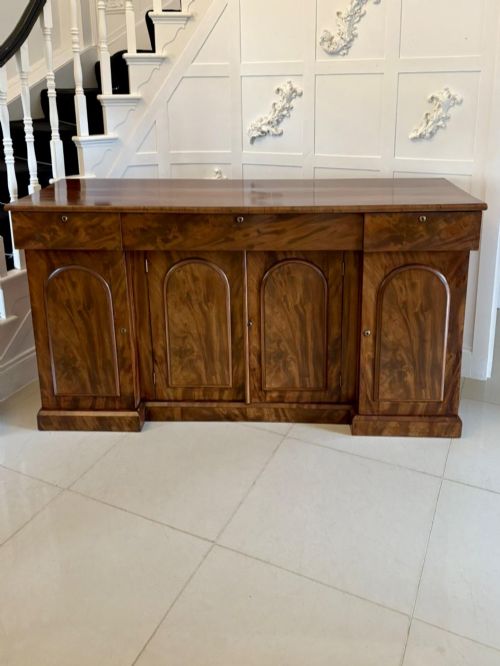
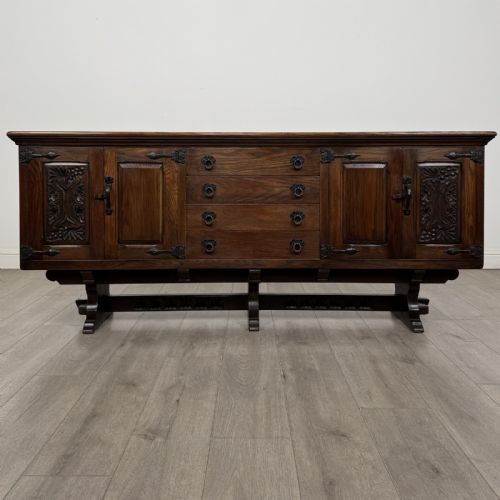
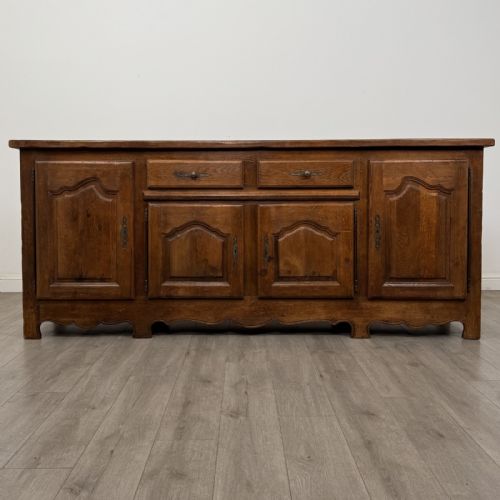
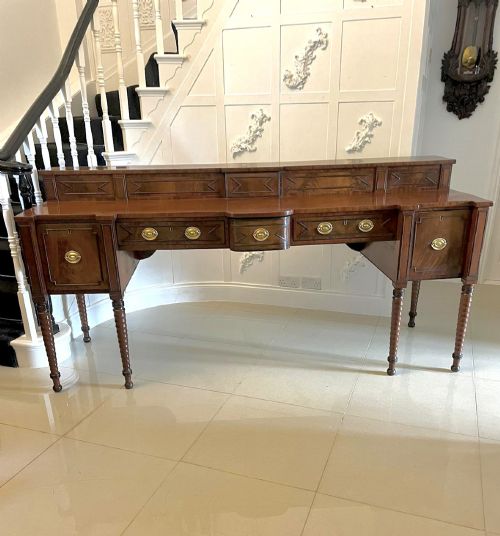
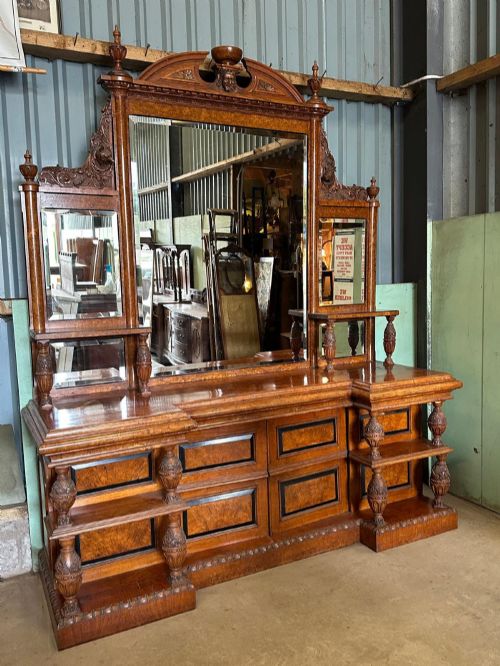
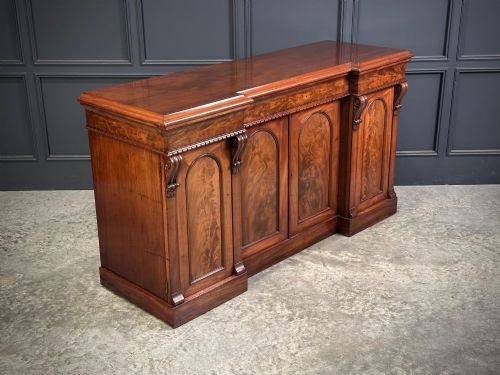
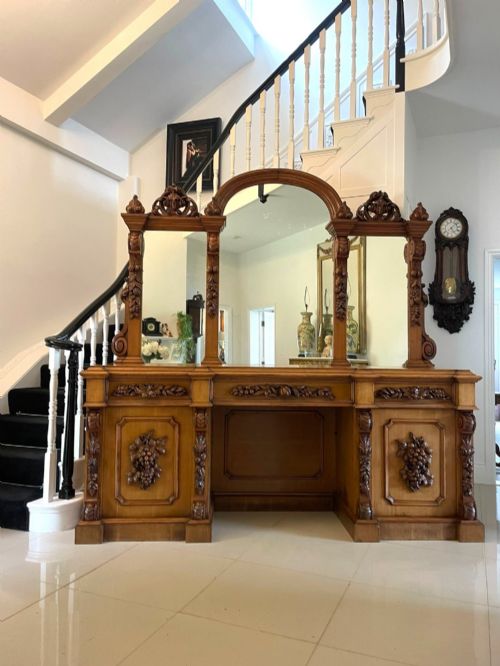
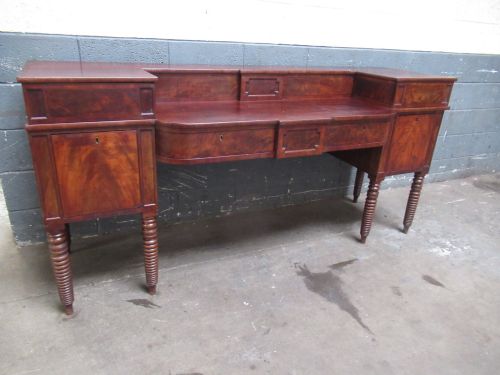
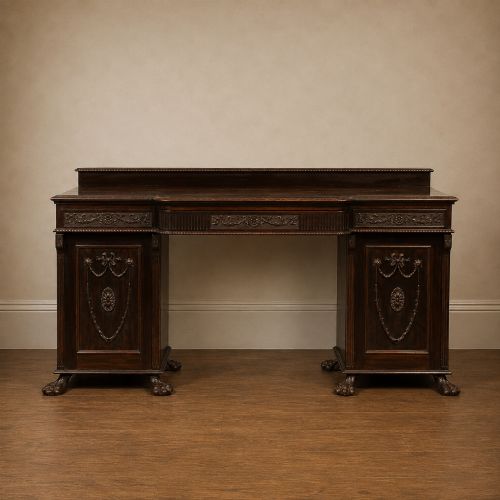
Buyers will most frequently meet substantial timber examples constructed in mahogany, flame mahogany veneer, and oak. These forms range from pedestal sideboards and breakfronts to stage-back and mirror-backed variations intended for display and dining utility.
How they were made
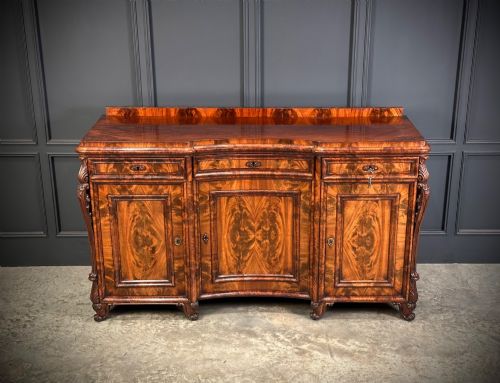
Cabinet makers utilised dense hardwoods such as mahogany and oak, often applying figured mahogany veneer or flame mahogany to principal surfaces for striking visual grain patterns. Structural integrity relied on traditional joinery, sturdy stretcher bases, and substantial pedestals.
Decorative detail emerged through skilled carving, satinwood inlay, and brass handles. Specialised forms incorporate glass panels, mirror backs, and occasionally mother of pearl inlay to elevate the visual weight of the furniture.
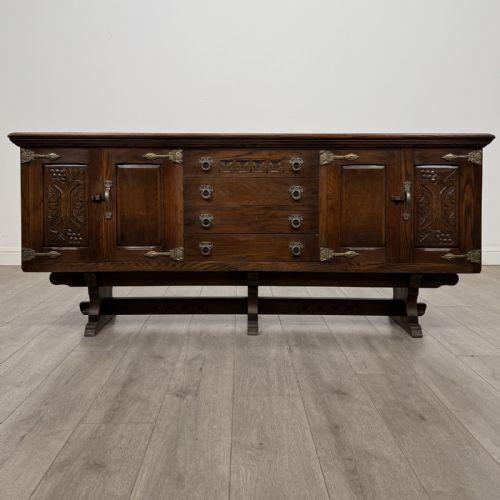
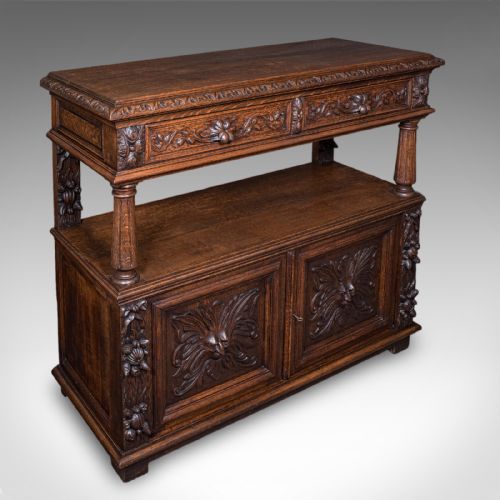
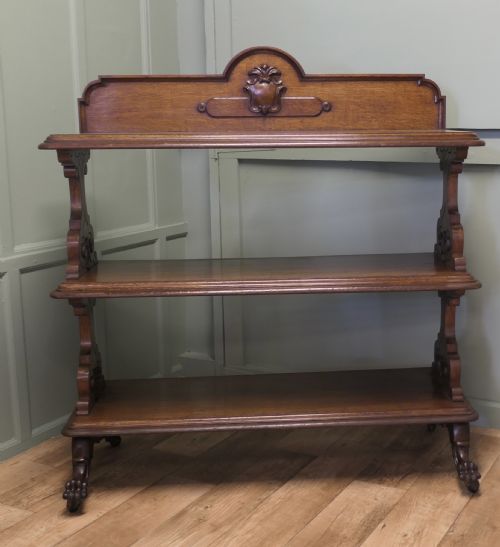
A mischievous carved green man peers out from nineteenth-century oak, keeping a watchful eye on the dining room.
What varies in quality
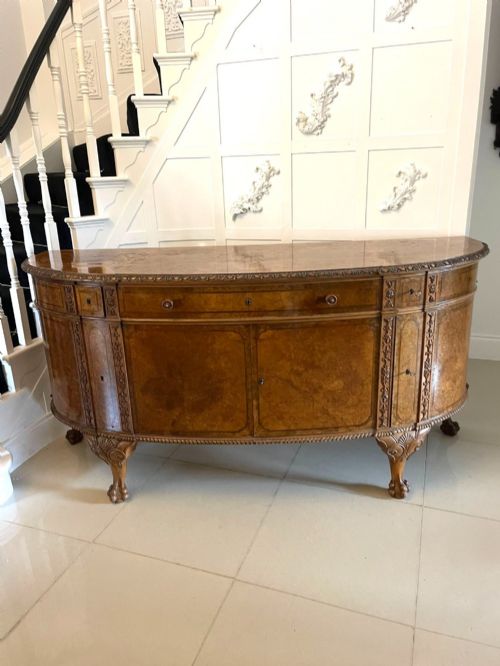
The distinction between standard execution and top-tier craftsmanship rests on the selection of timber figures, such as flame mahogany or burr walnut, and the crispness of hand-carved ornamentation. Superior examples display balanced proportions, harmonious inlay work, and robust structural framing that withstands heavy daily use.
Refinement in secondary woods, drawer construction, and original hardware further separates exceptional pieces from simpler utilitarian servers. The integration of architectural elements like breakfront profiles and pediments dictates the overall architectural presence of the sideboard.
The Large Dining Sideboard Glossary
- Breakfront
- A cabinet or sideboard whose central section projects forward from the flanking wings. This architectural arrangement creates depth and visual interest in large dining spaces.
- Flame mahogany
- A veneer cut from timber where the branch junctions meet the trunk, producing a rippling, flame-like pattern. Cabinet makers prize this material for principal drawer fronts and doors.
- Pedestal sideboard
- A form featuring distinct cabinet pedestals supporting a central surface or drawers. This heavy configuration often dates to the Regency and Victorian periods.
- Stage-back
- A raised section at the rear of a serving table or sideboard used to display plate or provide tiered shelving. Scottish iterations frequently utilise this practical feature.
- Satinwood
- A luminous hardwood with a golden-yellow sheen used extensively for stringing and contrasting inlay work on George III and Edwardian pieces.
Large Dining Sideboard: Frequently Asked Questions
What is a large dining sideboard used for?
These substantial pieces serve as a central staging area for food and drink service during formal meals. They also offer deep interior storage for linen, cutlery, and dining accessories.
Historically, they evolved to meet the demands of large households hosting elaborate dining rituals. Today, they remain functional focal points in dining rooms requiring significant storage capacity.
How do I identify a George III sideboard?
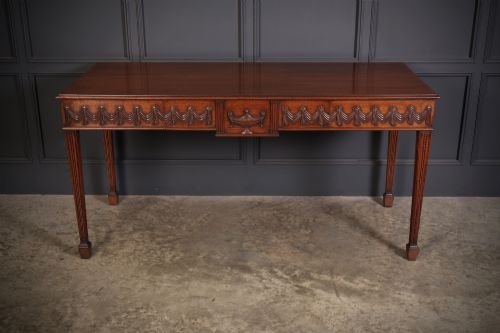
George III pieces typically exhibit elegant proportions, fine satinwood inlay, and tapered legs ending in spade feet. They favor classical symmetry and restraint over heavy carving.
Many incorporate serpentine or bow fronts constructed from rich mahogany. Their refined hardware and lighter aesthetic distinguish them from later Victorian interpretations.
What timber materials were used?
Mahogany and oak form the structural backbone of the majority of these listings. Cabinet makers frequently employed flame mahogany veneer to create striking decorative surfaces on doors and drawers.
Accents of satinwood, walnut, and brass appear across various styles. Pollard oak and burr walnut are also utilised in specific Victorian and Edwardian iterations.
How do I live with a large sideboard?
Integrating a substantial sideboard requires measuring wall clearance and ceiling height to accommodate mirror-backed or stage-back variants. Ensure the room can support the visual weight of dense timbers like oak or mahogany.
Use the wide top surface for serving or display while utilising the internal cupboards for heavy dining ware. Routine maintenance involves simple polishing to preserve the timber grain.