

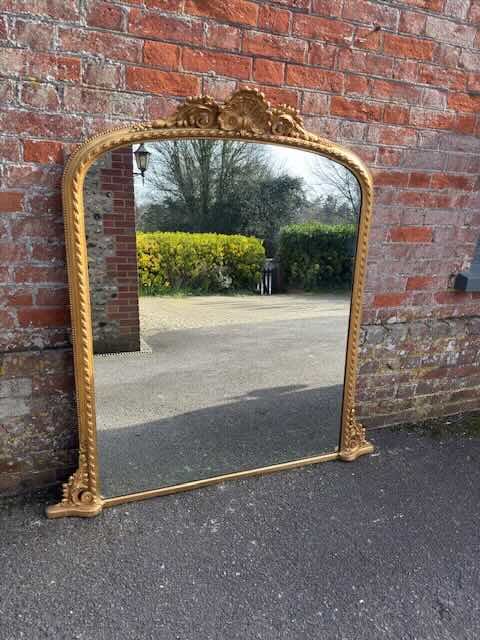
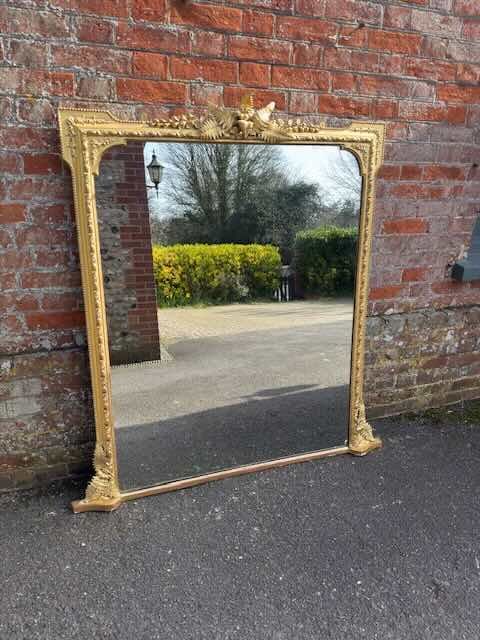


Large Decorative Fireplace Mirror
A large decorative fireplace mirror sets the scale of a room, reflecting light across heavy frames.
Large Decorative Fireplace Mirror
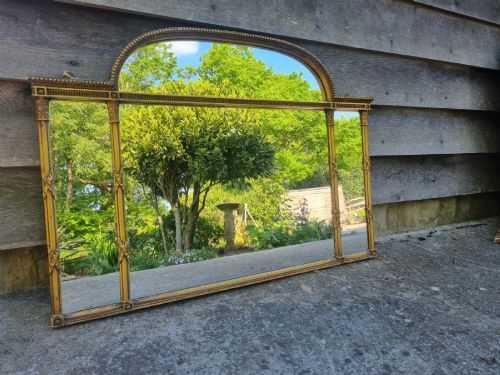
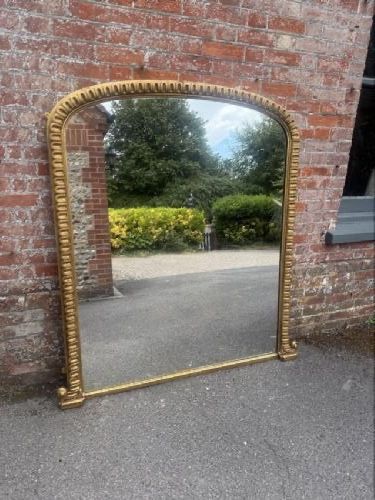
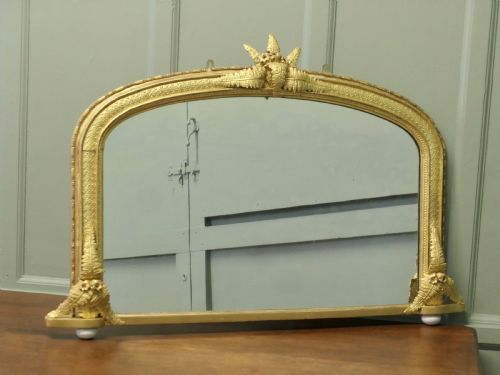
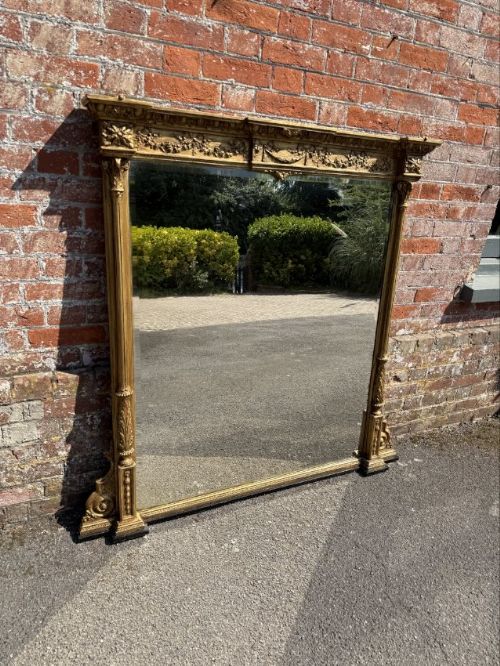
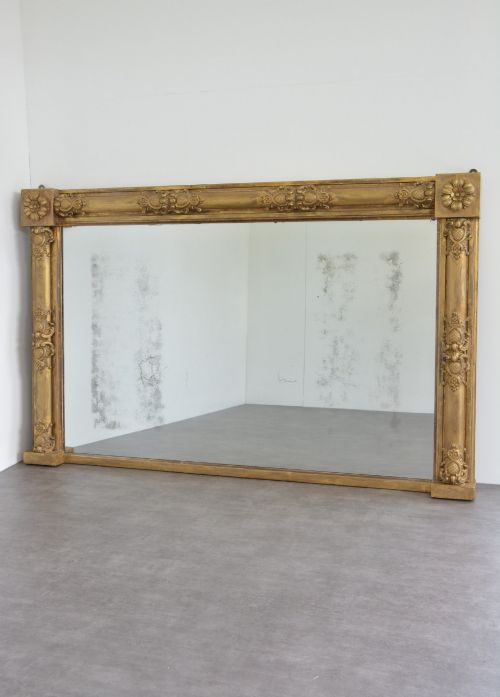
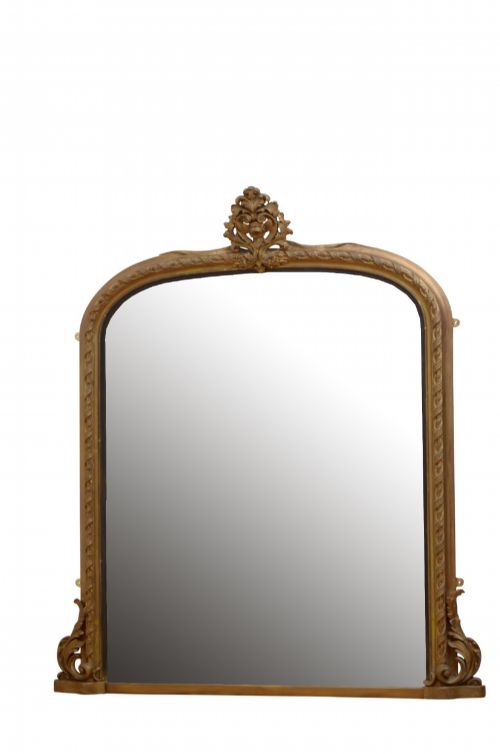
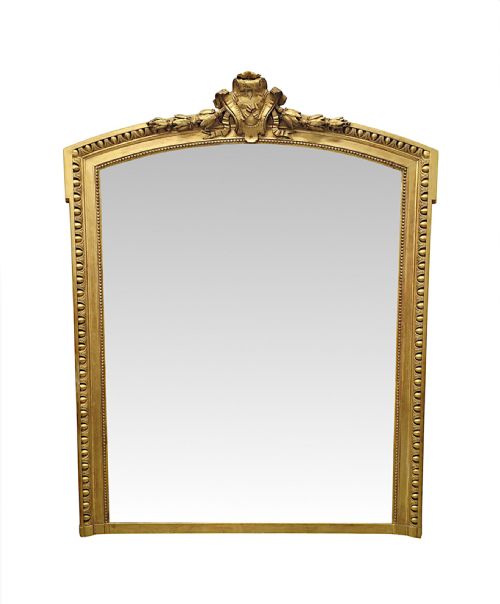
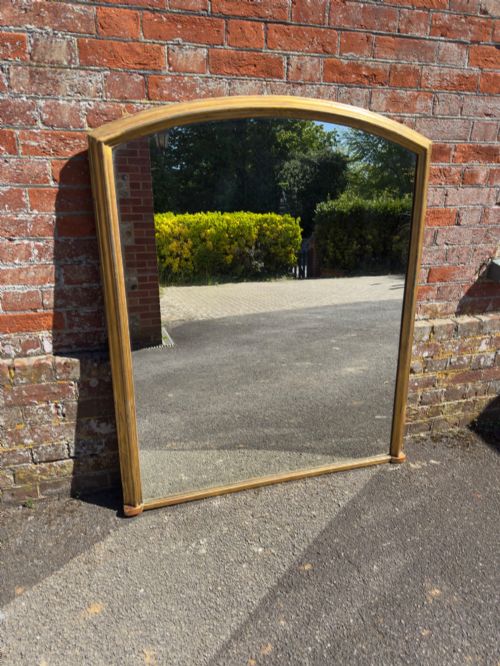
A large decorative fireplace mirror sits above a mantelpiece, designed to command the chimney breast and draw light into the reception room. These pieces appear predominantly as overmantel mirrors shaped with arched tops, pediments, or central cartouches.
The inventory on this page draws heavily from the nineteenth century, including Victorian, Regency, and Edwardian periods. Pieces emerge in forms such as wide landscape frames and tall vertical wall mirrors.
Makers and craftsmen of the period utilised styles ranging from Rococo Revival and French Chateau to Adams design. The most frequent encounters on this page are nineteenth-century giltwood overmantels featuring carved wood and gesso ornamentation.
Materials and construction methods
Frames are constructed from wood, specifically carved wood and ebonised wood, providing a robust structural base. Artisans applied layers of gesso over the wooden carcass to build up crisp relief detail for moulding.
Giltwood and gold leaf finishes were applied to the gesso surfaces, creating the metallic sheen characteristic of the period. Composition ornaments were also utilised for intricate decorative mouldings on arched and shaped tops.
Mirror glass panels are fitted into these frames, occasionally displaying light foxing from age. Silvered and etched glass variations occur across Victorian and later iterations.
Listings span the 18th century, Regency period, 19th century, and Edwardian era, utilising glass, giltwood, gesso, and ebonised wood.
Judging quality and execution
Quality rests in the crispness of the carved wood and gesso ornamentation. Deeply undercut relief and sharp detailing on rope twists or cartouches indicate superior craftsmanship.
The integrity of the gilding and the preservation of the original gold leaf distinguish finer examples. Subtleties in proportion, such as well-balanced decorative pediments and harmonious arched profiles, separate standard joinery from distinguished work.
The Large Decorative Fireplace Mirror Glossary
- Overmantel mirror
- A large mirror specifically designed to be hung or placed upon the mantelpiece above a fireplace. These frequently follow the horizontal width of the hearth below.
- Gesso
- A plaster-like mixture applied to wood frames and carved or moulded into decorative motifs before gilding. It allows for sharp relief work.
- Giltwood
- Timber that has been coated with gold leaf or gilt. This finish creates a bright reflective surface that catches room light.
- Foxing
- Age-related spots and discolouration within the mirror glass itself. This chemical oxidation appears as small dark patches.
- Cartouche
- An ornamental tablet or panel resembling a scroll or shield, often placed centrally on the pediment of a mirror frame.
Large Decorative Fireplace Mirror: Frequently Asked Questions
Where should an overmantel mirror be hung?
An overmantel mirror is traditionally placed directly on the mantel shelf or hung securely to the wall just above it. This positioning reflects light from windows across the living space.
Ensure the wall fixings match the substantial weight of carved wood and gesso frames before mounting.
How do I identify a Victorian mirror?
Victorian mirrors often feature heavy giltwood frames, arched tops, and rich gesso ornamentation produced between the mid and late nineteenth century. Look for stylistic cues such as Rococo Revival curves or ebonised details.
Construction methods utilising layered composition ornaments on wood provide further clues to this era.
What causes foxing on antique glass?
Foxing occurs when moisture breaks down the silver backing of the mirror glass over many decades. This creates characteristic dark spots and cloudy patches across the reflection.
Many collectors value light foxing as proof of genuine age and historical continuity.
Can these mirrors be used in rooms without fireplaces?
These pieces function effectively as large wall mirrors or hall mirrors in any suitably proportioned room. Their scale helps to expand visual space and brighten dark hallways.
Secure mounting is essential given the considerable weight of timber and glass.