


Large Decorative Area Rug
A large decorative area rug anchors a room with scale, pattern, and the rich texture of wool and cotton.
Large Decorative Area Rug
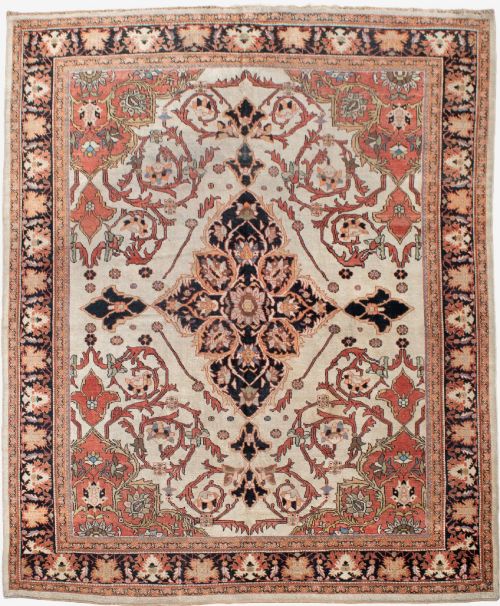
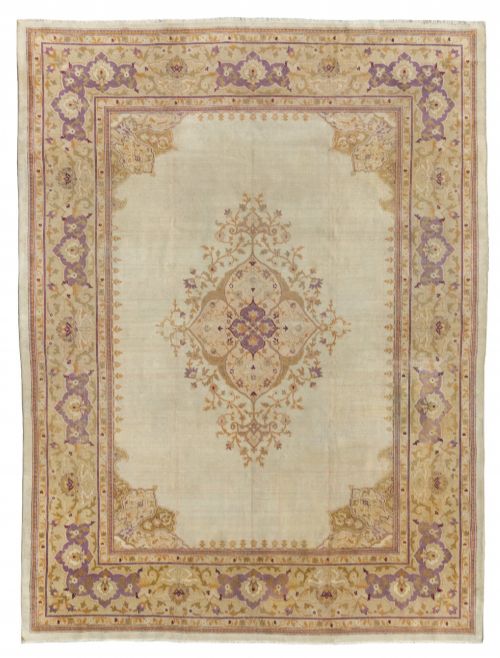
A large decorative area rug is a floor covering designed to define a major space through traditional Persian, Ottoman, and North Indian designs. These textiles carry significant presence, often measuring well over three or four metres in length.
The pieces available here lean heavily toward room-size carpets from the late nineteenth century and the early twentieth century. Examples include grand Heriz, Ushak, Mahal, and Amritsar carpets originating from Turkey, Persia, and India.
Buyers seek these carpets to bring history and ground a large interior scheme. The selection encompasses room-size carpets, oversize carpets, and fragment pieces dating from the eighteenth century up to the nineteen-twenties.
Materials and construction
These carpets rely on natural wool and cotton foundations, utilising durable plant and animal fibres for both pile and warp threads. Weavers knotted and wove these materials by hand to create dense, resilient floor coverings.
The regional traditions range from Persian Heriz and Mahal workshops to Turkish Ushak and North Indian Amritsar production. Each centre employed distinct knotting densities and dye traditions to achieve their characteristic handles and palettes.
Listings feature traditional styles including Persian, Ottoman, and North Indian aesthetics, spanning wool and cotton constructions from the eighteenth century to nineteen-twenty.
Defining quality and character
Quality rests in the balance of design proportion, wool quality, and the integrity of the foundation. A finer weave allows for sharper pattern definition, whilst resilient wool ensures the pile survives decades of foot traffic.
The handling of natural dyes creates depth that changes across the surface of the rug. Pieces showing harmonious wear and consistent structural integrity stand apart from those with heavy losses to the pile or foundation.
The Large Decorative Area Rug Glossary
- Heriz
- A style of Persian carpet known for bold geometric medallions and robust structural wool. These pieces originate from the Heris region in northwestern Iran.
- Ushak
- A Turkish carpet tradition celebrated for large-scale floral patterns and soft, luminous coloration. They were woven in the town of Usak using wool on a wool or cotton foundation.
- Kilim
- A flat-woven carpet or rug made without a pile. These pieces are constructed by tightly interweaving warp and weft strands.
- Fragment
- A surviving portion of a larger historic carpet. These remnants preserve ancient weaving techniques and historical design details from centuries past.
- Mahal
- A category of room-size Persian carpet produced in the Mahallat region, featuring expansive floral motifs and muted overall palettes.
Large Decorative Area Rug: Frequently Asked Questions
Where do large decorative area rugs work best?
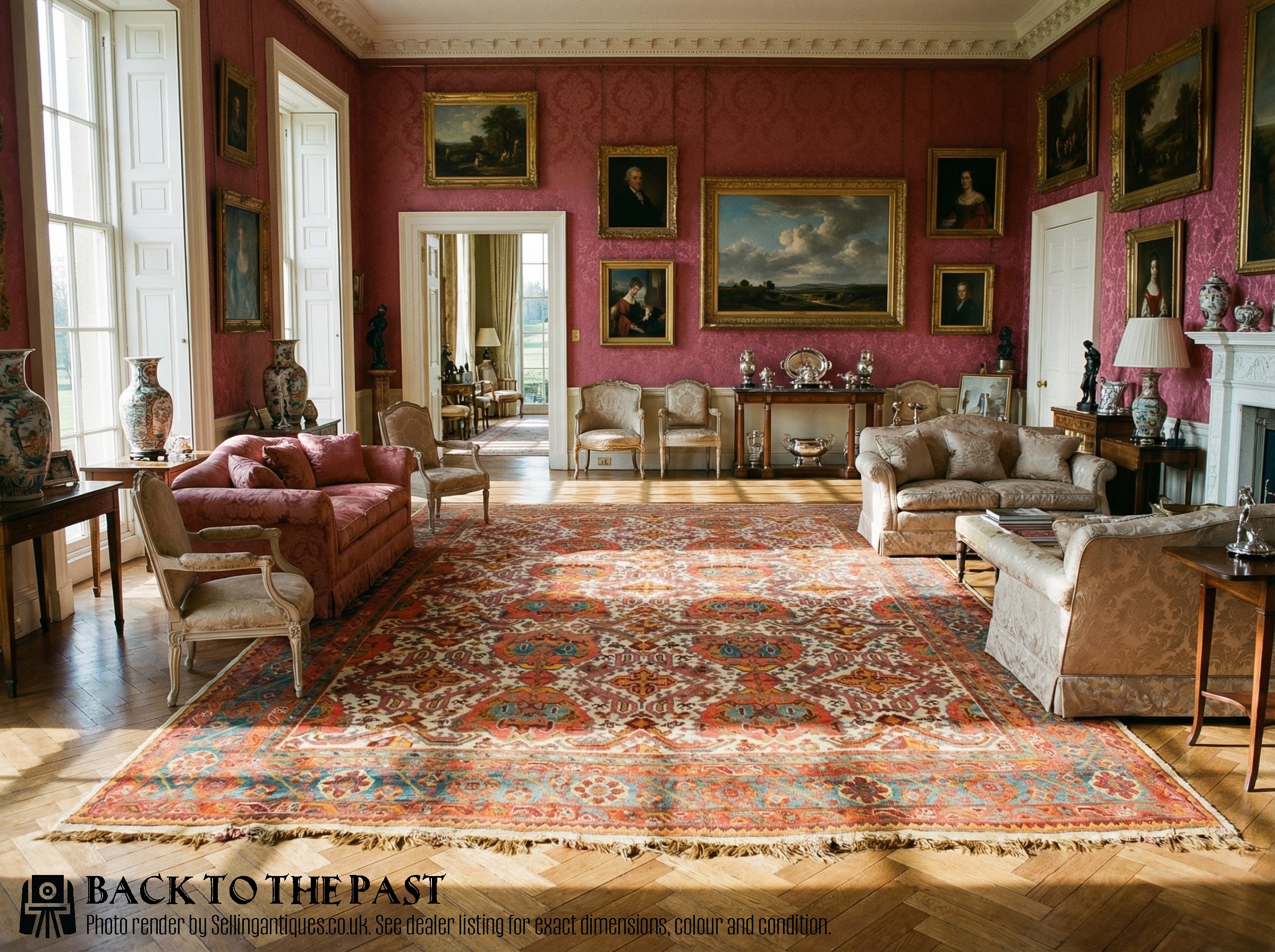
These large carpets suit principal reception rooms, dining halls, and expansive living spaces where furniture can sit comfortably atop the field. Their generous proportions help anchor high-ceilinged rooms and unify scattered seating arrangements.
Because they span multiple metres, measure your floor space carefully before selecting a carpet. Leave a balanced border of exposed flooring around the edges to frame the piece properly.
How do I care for an antique wool carpet?
Vacuum these textiles gently with a suction-only attachment, avoiding the rotating brush bars that can pull at ancient wool piles. Rotate the carpet every year or two to ensure even exposure to foot traffic and sunlight.
Professional cleaning should be handled by specialists experienced in antique plant-dyed textiles. Address spills immediately by blotting with a clean white cloth rather than rubbing.
How do I tell an Ushak carpet apart from a Heriz?
Ushak carpets typically display expansive, curvilinear floral sprays and softer, muted pastel or terracotta tones. Their designs feel open and relaxed compared to tighter, more structured compositions.
Heriz carpets rely on strong geometric medallions, sharp angles, and robust primary colours like rust and navy. The drawing in a Heriz is architectonic and bold, whereas Ushak leans towards floral fluidity.