
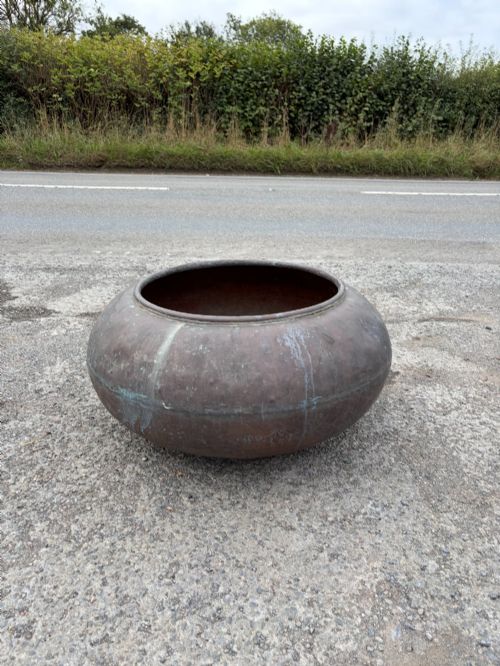
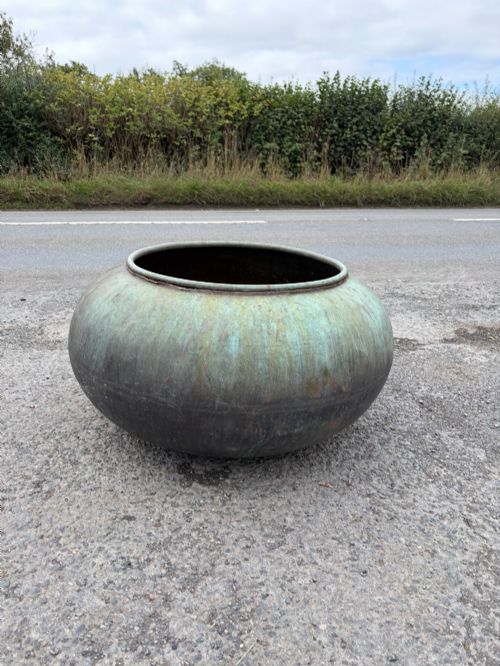
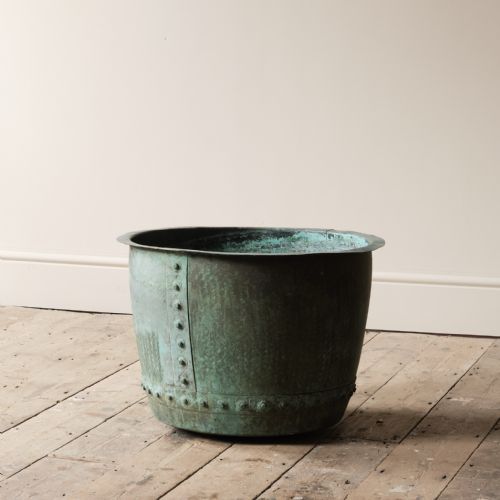
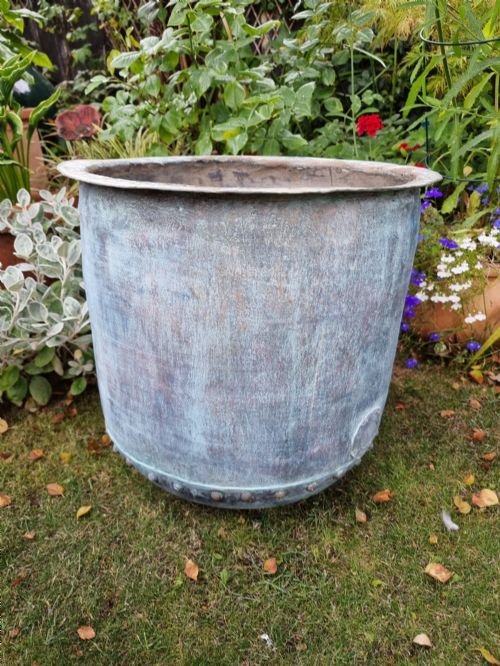
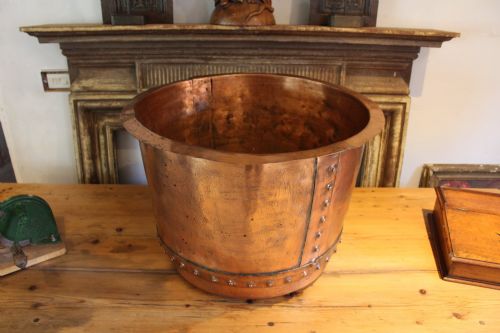
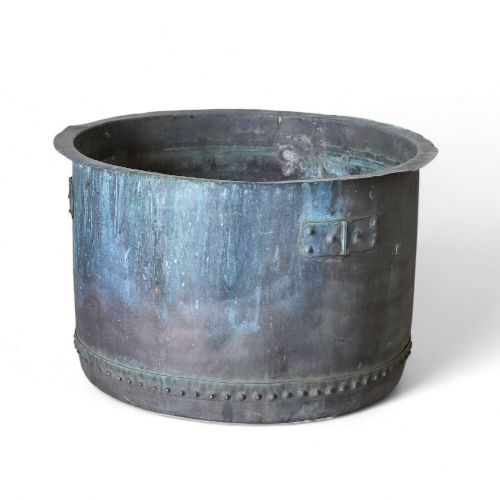
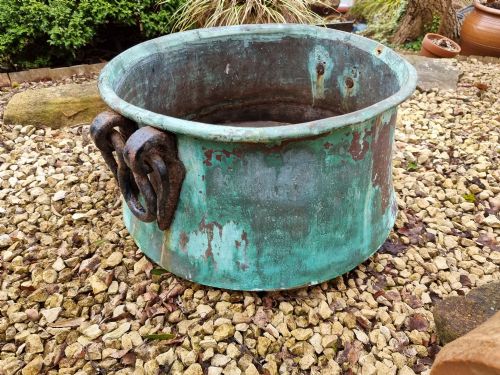
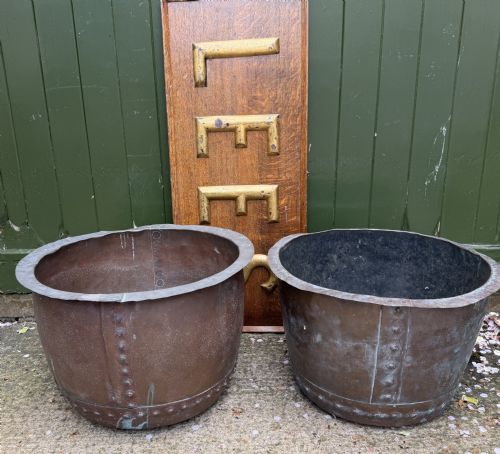


Large Copper Wash Tub
These large copper wash tubs bring robust utility and rich surface warmth to contemporary interiors and gardens alike.
Large Copper Wash Tub
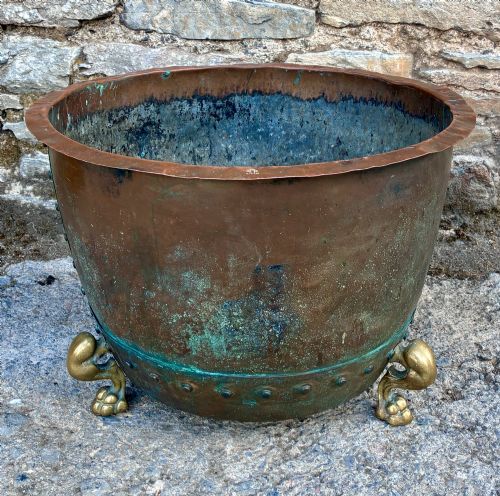
When you search for a large copper wash tub, you encounter vessels originally forged for demanding domestic and agricultural labour. The selections gathered here span nineteenth century pieces alongside Georgian and twentieth century examples, reflecting how utilitarian metalwork transitioned from functional service to decorative display.
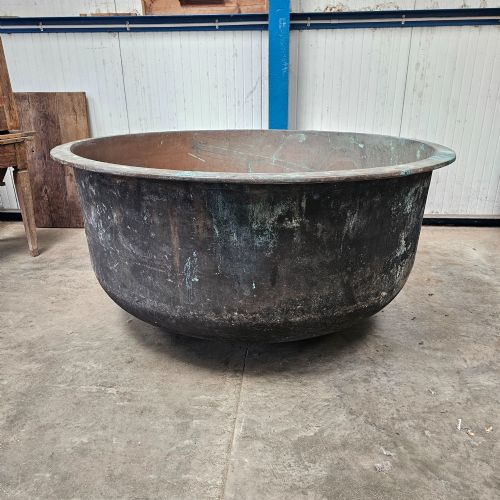
Most entries belong to the Victorian era or nineteenth century country styles, encompassing heavy cooking vessels, boilers, cheese vats, and grain measures repurposed over time. These robust containers frequently reappear in modern homes functioning as generous log bins, garden planters, and umbrella stands.
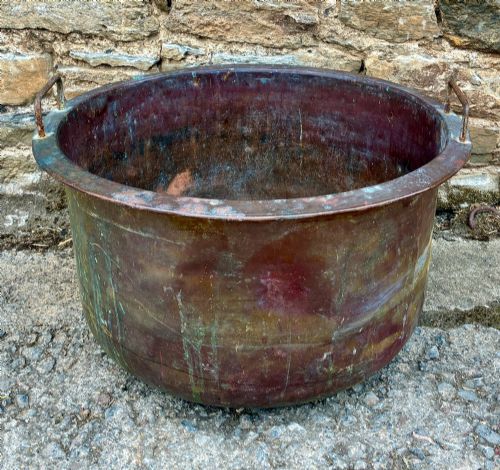
Origins stretch across English country workshops and French provincial settings, bringing varied silhouettes from straight-sided tubs to cauldrons with swing handles. Each survivor carries the distinct marks of its working past, whether housing hearth logs or planted greenery.
Materials and construction methods
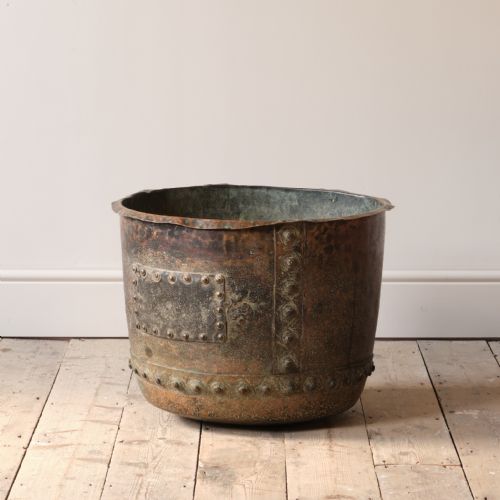
The primary material across these pieces is heavy copper, frequently paired with iron, wrought iron, cast iron, or brass for handles, rims, and structural reinforcement. Metalworkers shaped these thick sheets by hand, joining overlapping seams with rows of hand-riveted fasteners that ensure enduring strength.
Surfaces demonstrate the natural ageing process of metal exposed to the elements, displaying rich patinas alongside verdigris finishes resulting from long-term oxidation. Occasional painted elements or steel components appear, marking later repairs or specific industrial adaptations.
Materials recorded across these items include copper, wrought iron, cast iron, brass, tin, and steel.
Distinctions in quality and character
Quality in these heavy vessels rests upon the substance of the metal sheet and the integrity of the hand-riveted joints. Thicker gauge copper maintains its structural form better under pressure and develops a deeper, more varied surface patina over generations.
The visual appeal depends heavily on the honesty of the surface, where untouched verdigris and natural weathering separate superior decorative specimens from plain or overly polished alternatives. Original wrought iron swing handles and securely retained structural mounts further elevate a piece.
The Large Copper Wash Tub Glossary
- Patina
- The surface sheen and colour variation developed through age, handling, and environmental exposure. A rich patina shows layers of oxidation that cannot be artificially duplicated.
- Verdigris
- The green crust or patina formed on copper by atmospheric oxidation. This surface layer signals genuine age and prolonged exposure to moisture.
- Cauldron
- A large round pot or kettle used traditionally for boiling over an open fire. These often feature heavy wrought iron swing handles for lifting.
- Log Bin
- A deep container repurposed from industrial or agricultural use to hold firewood beside a hearth. Their generous proportions suit this domestic role perfectly.
- Riveted
- Joined together using metal bolts hammered flat at the ends. Hand-riveted seams are a hallmark of early craftsmanship before modern welding took over.
Large Copper Wash Tub: Frequently Asked Questions
What were large copper wash tubs originally used for?
These large vessels served heavy domestic and agricultural chores such as laundering linens, boiling water, and preparing large quantities of food over hearths. Their robust construction allowed them to handle intense daily workloads in Victorian and Georgian households.
Over time, many of these utilitarian containers transitioned from active service into domestic storage and garden display as their durability and aesthetic appeal became recognised.
How do I care for a copper wash tub at home?
Minimal intervention preserves the historic character and stable surface oxidation of older metalwork. Simply dust the surface gently and avoid harsh chemical cleaners that strip away the accumulated patina.
If using the vessel as a planter indoors, place a protective liner inside to prevent standing moisture from altering the interior metal or marking surfaces beneath.
How can I tell a nineteenth century copper tub from a modern reproduction?
Genuine nineteenth century pieces display irregular hand-hammered marks, hand-driven rivets with slight variations, and deep natural patinas that take generations to form. The weight of the metal and the method of joining seams reveal the older maker's hand.
Modern reproductions typically feature uniform machine stamping, unblemished shiny surfaces, and symmetrical modern fixings that lack historical wear patterns.