
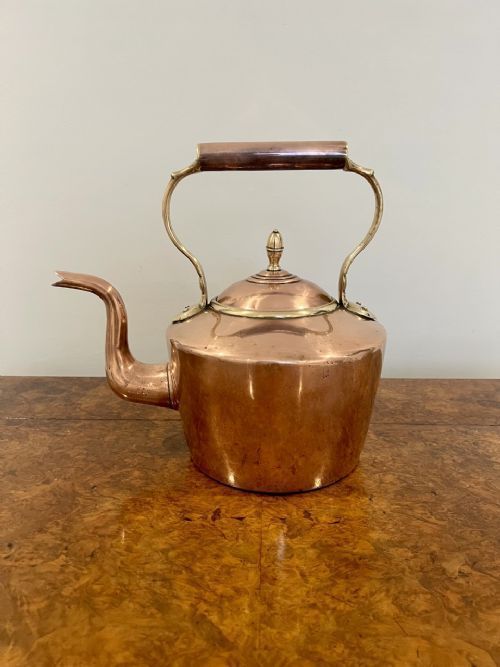


Large Copper Tea Kettle
A large copper tea kettle brings honest utility and warmth to a room, offering heavy-gauge metal and period handcraft.
Large Copper Tea Kettle
When you search for a large copper tea kettle, you are looking at substantial vessels designed for boiling water in domestic settings. The pieces available here span the Georgian and Victorian periods, capturing centuries of British metalworking history.
You are most likely to meet traditional kettles alongside related water urns and samovars. These objects range from oval-shaped kettles to hanging water urns and large samovars.
The forms originate from the eighteenth and nineteenth centuries, notably around eighteen hundred and the Victorian era. They reflect the utilitarian needs of large households before modern plumbing.
How they were made
These pieces rely on heavy copper construction, often complemented by brass fittings for handles, spouts, or taps. Iron and wood components appear as well, providing structural support and insulation for daily handling.
Makers shaped the metal by hand, joining seams with traditional techniques to withstand the heat of an open fire or stove. Many surviving examples retain a polished finish that highlights the natural lustre of the copper and brass combination.
Some nineteenth-century water urns were built large enough to supply tea for an entire manor house waking up to a freezing morning.
What varies in quality
Quality in a large copper tea kettle lies in the thickness of the metal and the integrity of the original construction. Heavier gauge copper indicates a vessel built for serious daily service rather than decorative display alone.
The refinement of the brass mounts and the crispness of the hand-beaten form separate standard utility items from exceptional examples. Details such as shaped handles and well-proportioned spouts elevate the character of the piece.
The Large Copper Tea Kettle Glossary
- Georgian
- Pertaining to the period from seventeen fourteen to eighteen thirty, known for restrained classical proportions in domestic metalwork. Pieces from this era often feature simple, elegant lines.
- Victorian
- Relating to the reign of Queen Victoria from eighteen thirty-seven to nineteen oh one, characterised by robust manufacturing and ornate decorative styles. Samovars and large urns frequently emerge from this period.
- Samovar
- A heated metal container traditionally used to boil and heat water for tea. These large vessels often incorporate internal heating tubes and spigots.
- Water urn
- A large vessel designed for storing and dispensing heated water. Hanging varieties allow the container to be swung over a heat source.
Large Copper Tea Kettle: Frequently Asked Questions
How do I use a large copper tea kettle?
These vessels serve primarily as decorative statement pieces in modern homes, bringing warmth and historical character to a kitchen or hearth.
While historic kettles can technically hold water, modern users generally avoid putting antique metal over direct heat to preserve the interior linings and exterior finish.
How do I date a copper tea kettle?
Dating relies on examining the construction methods, such as hand-beaten seams, dovetail joints, and the style of the brass handles. Georgian examples often display simpler, utilitarian forms compared to later Victorian pieces.
Material combinations also offer clues, as early nineteenth-century pieces frequently integrate specific brass and iron fixtures characteristic of the period.
How do I care for antique copper?
Maintenance involves gentle dusting and occasional cleaning with a specialised metal polish if you prefer a bright, reflective shine. Many collectors prefer to leave a natural, aged patina that develops over decades.
Keep the metal away from damp environments to prevent oxidation and protect any wooden or bone components from excessive moisture.