


Large Copper Platter
A large copper platter brings warmth and scale to a room, offering a broad metallic surface that catches the light.
Large Copper Platter
When you search for a large copper platter, you encounter heavy metal chargers, serving trays, and wall plaques spanning the nineteenth and early twentieth centuries. These vessels originate from various workshops across Britain, Japan, the Middle East, and India.
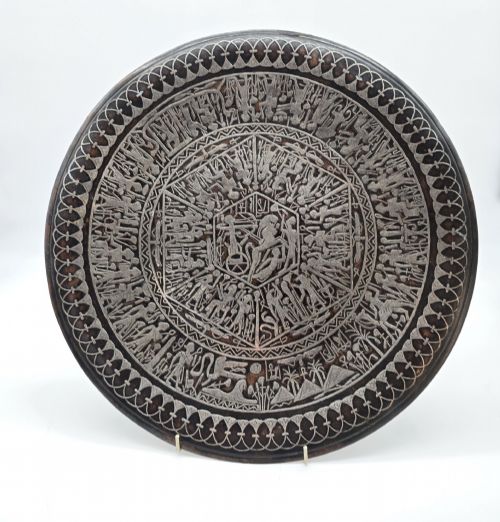
The selection ranges from British Arts and Crafts hand-beaten metalwork and Newlyn School pieces to Japanese Meiji period cloisonne enamel chargers and Egyptian Cairo Ware inlaid bronze and copper.
Materials and construction techniques
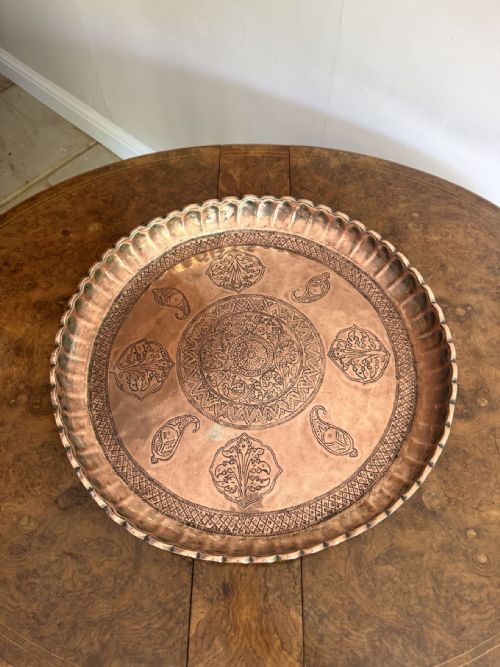
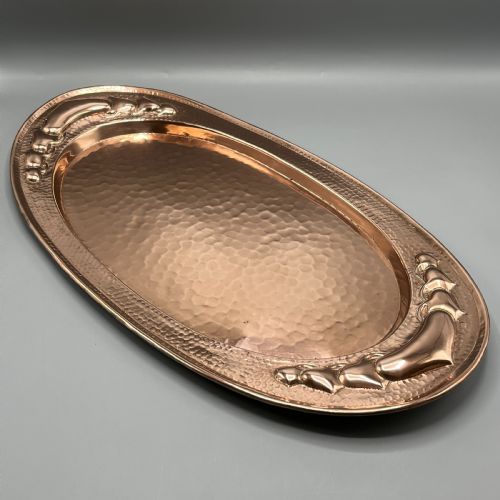
The pieces rely primarily on sheet copper, brass, and bronze, often enriched with silver inlay, brass wire, and coloured enamel. Artisans shaped the metal surfaces using repousse techniques, hammering designs from the reverse to create raised relief.
Engraving and mixed metal applications add intricate detail to the trays, whilst Japanese examples utilise cloisonne enamel wirework fired onto metal bases. Wooden elements occasionally appear in structural supports or serving handles.
Several large Japanese chargers feature startled owls gazing out from the copper surface alongside Mount Fuji.
Judging quality in metalwork
Quality rests in the crispness of the hand-hammered repousse work and the precision of the surface engraving or inlay. Superior pieces display deliberate, controlled hand-tooling rather than mechanical uniformity.
The complexity of the design and the integration of mixed metals separate standard utility trays from exhibition-grade wall chargers and artistic presentation platters.
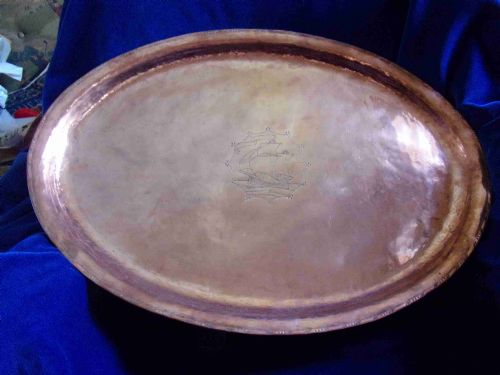
Hugh Wallis·Newlyn Copper
The Large Copper Platter Glossary
- Repousse
- A metalworking technique where the artisan hammers a design from the reverse side to form a raised relief on the front. This method defines much of the Arts and Crafts metalwork.
- Cloisonne
- An ancient technique for decorating metalwork objects with coloured enamel separated by thin strips of metal wire. Japanese makers perfected this method on large chargers.
- Charger
- A large decorative plate or platter intended primarily for display on a wall or sideboard rather than for serving food. These items often feature elaborate figural or floral scenes.
- Cairo Ware
- Metalware produced in Egypt, typically featuring heavy copper and bronze inlaid with silver and brass in intricate Islamic geometric patterns. These items date primarily to the late nineteenth century.
Large Copper Platter: Frequently Asked Questions
How do I hang a large copper platter safely?
Heavy metal chargers require sturdy wall fixings that support the total weight of the piece without stressing the rim. Adjustable brass wire display hangers distribute the load evenly across the circumference.
Ensure the wall plug matches the building material, whether brick or lath and plaster, to prevent the fixture from slipping over time.
Should I polish my antique copper platter?
Polishing removes the historical oxidation and dark patination that accumulates over decades, which collectors generally prefer to preserve. Vigorous cleaning can also thin the original metal surface or damage delicate enamel and inlay.
Dust the platter gently with a dry microfibre cloth and leave the natural ageing undisturbed.
How do I date an antique copper tray?
Dating relies on stylistic clues, manufacturing tool marks, and signature stamps found on the reverse of the metal. Arts and Crafts pieces show distinct hand-hammering textures, whilst Victorian items often incorporate revival motifs.
Comparing construction methods with documented workshop practices helps narrow the decade of production.