


Large Chimneypiece Mirror
A large chimneypiece mirror grounds a room, hanging above a fireplace to bounce light and scale the hearth.
Large Chimneypiece Mirror
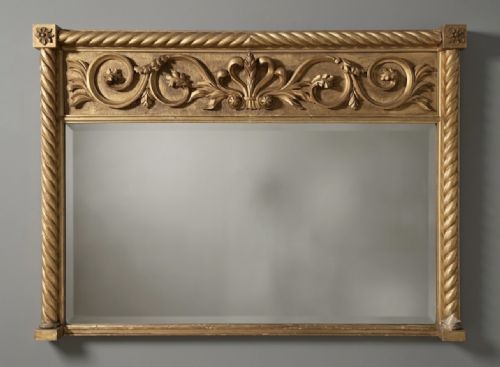
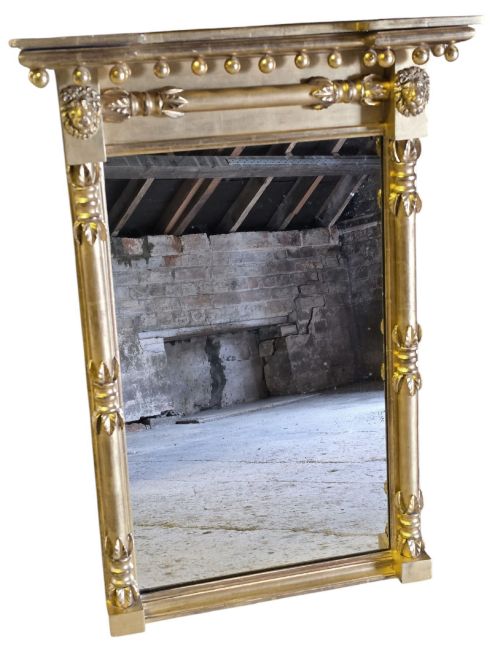
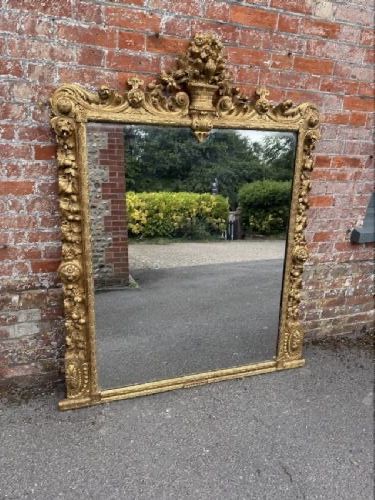
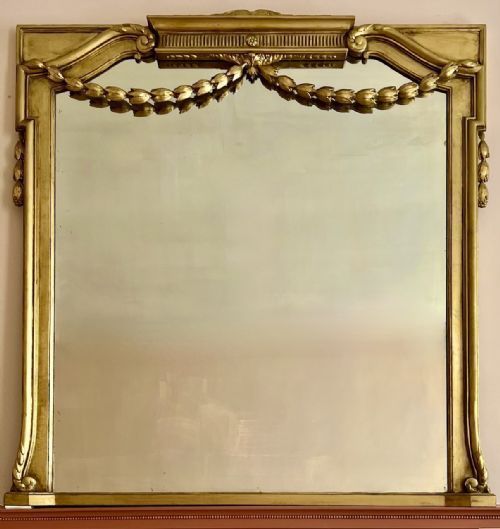
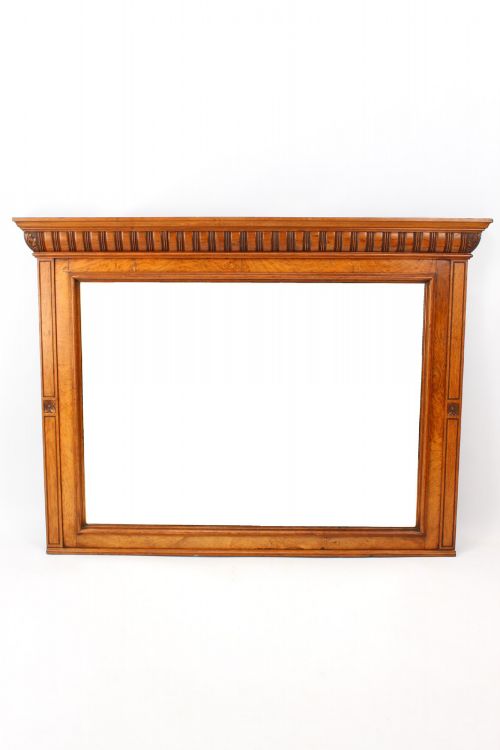
A large chimneypiece mirror most often takes the form of an overmantel mirror designed to sit directly above a fireplace. These pieces arrive from the nineteenth century, spanning Victorian, Regency, and Georgian periods alongside later nineteenth-century revivals.
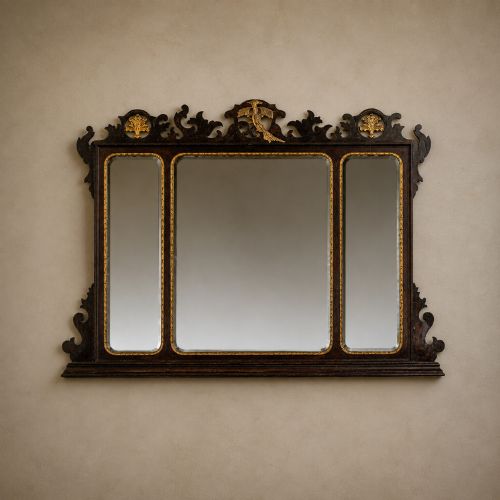
The selections span distinct revival styles including Rococo, Chippendale, and Adam, executed in broad rectangular, arched, triptych, and oval formats. English makers produced substantial wooden frames intended to dominate chimney breasts.
Overmantel mirrors frequently incorporate classical motifs, crestings such as the Ho-Ho bird, and tripartite glass panels set into robust timber structures.
Materials and Construction
Frame makers relied on carved wood, pine, oak, and mahogany as primary structural timbers, often applying gesso and composition mouldings to build up ornate relief decoration. Guilders then applied gold leaf or paint finishes directly onto the prepared gesso surfaces.
Makers integrated silvered mirror glass, sometimes retaining original plates, within heavy timber rebates secured by wooden backboards.
Large Chimneypiece Mirror Retail Price Guide 2026
Typical asking prices for large chimneypiece mirror among the pieces listed under this phrase on Sellingantiques today, from the lower quarter to the upper quarter. They describe what is for sale here now, not the wider market.
Watch for the wooden Ho-Ho bird perched atop Chippendale revival crestings, keeping a silent, wooden watch over the Victorian hearth.
Assessing Craft and Preservation
Quality rests in the crispness of the hand-carved wood details versus mass-moulded composition ornament, alongside the depth and brilliance of the original gilding. Intricate crestings, such as carved birds or foliage, demand high technical skill.
The survival of original mirror glass with natural foxing, combined with undisturbed gesso layers on the frame, separates superior examples from heavily reworked pieces.
The Large Chimneypiece Mirror Glossary
- Overmantel mirror
- A large mirror specifically proportioned to hang on the wall directly above a fireplace mantelpiece. These pieces often match the width of the fireplace surround below.
- Gesso
- A plaster-like mixture applied to wood frames to create a smooth surface for gilding or painting. Artisans carve fine details directly into this layer.
- Giltwood
- Timber coated with gold leaf over a prepared base. This finish provides a warm, reflective surface suited to formal nineteenth-century interiors.
- Triptych
- A mirror divided into three distinct vertical panels. This configuration was popular during the Regency and Victorian eras to widen reflections.
- Parcel-gilt
- A decorative treatment where only selected portions of a painted or stained wooden frame receive gilding. This highlights specific carved details against a contrasting background.
- Composition
- A moulded mixture of whiting, resin, glue, and oil pressed into ornament. Makers used this material to achieve complex relief work economically.
Large Chimneypiece Mirror: Frequently Asked Questions
How do I secure a heavy mirror to the wall?
Large overmantel mirrors carry substantial weight from timber frames and thick glass panels. Secure heavy-duty fixings directly into wall studs or masonry using appropriate brackets.
Distribute the load evenly across multiple points to prevent frame distortion and ensure safe hanging above a fireplace.
Are the mirror plates original?
Many nineteenth-century pieces retain their original glass, which often displays minor foxing, dark spots, and subtle waviness. These characteristics confirm age and authenticity.
Replacement glass appears clearer and lacks the characteristic distortion found in older silvered plates.
What distinguishes a Regency mirror from a Victorian one?
Regency frames often display restrained classical motifs, parcel-gilt finishes, and tripartite glass formats influenced by architectural proportions. Victorian pieces tend toward heavier ornamentation, arched tops, and robust revival styles.
Design details and timber choices help assign these large chimneypiece mirrors to their respective nineteenth-century decades.