
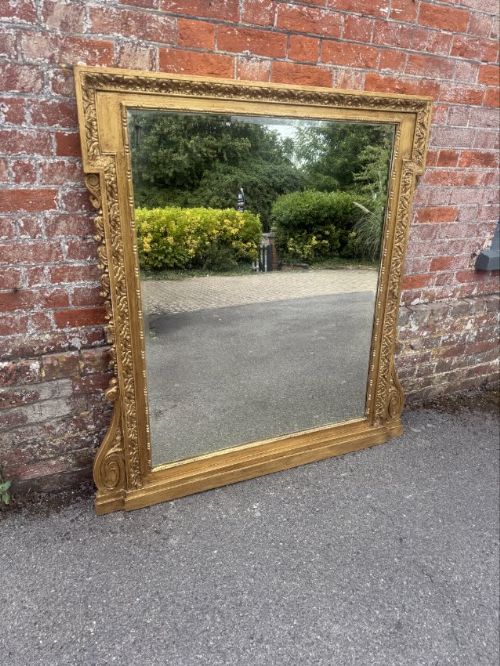
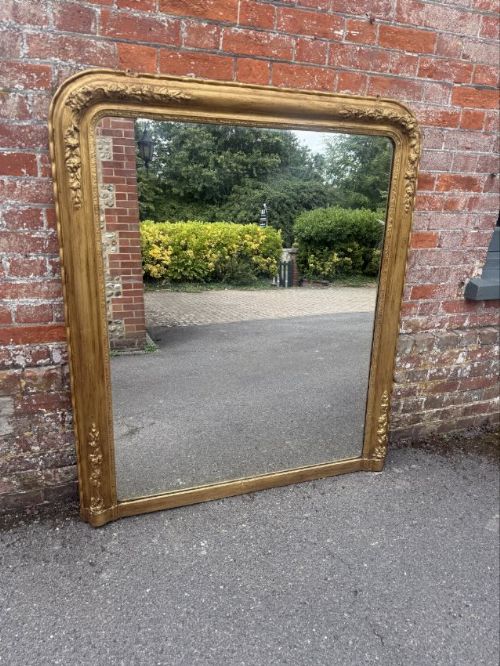
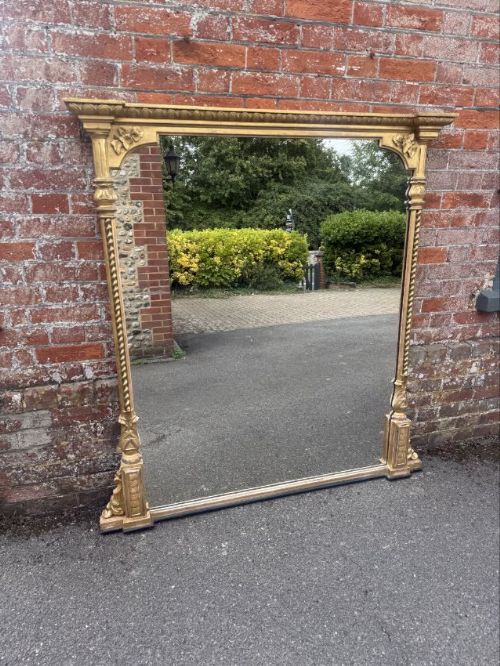
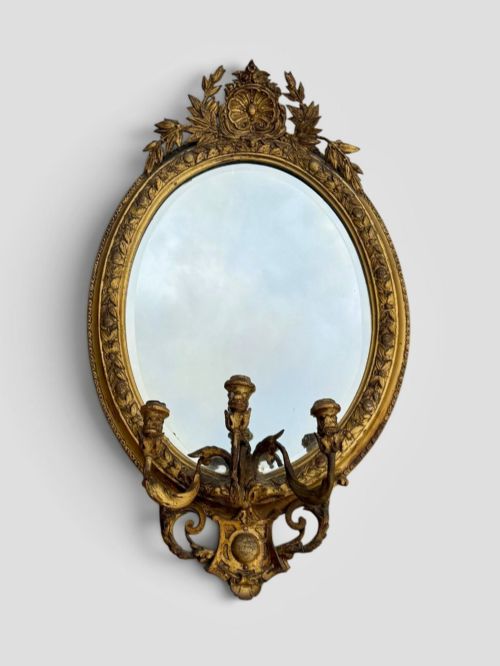
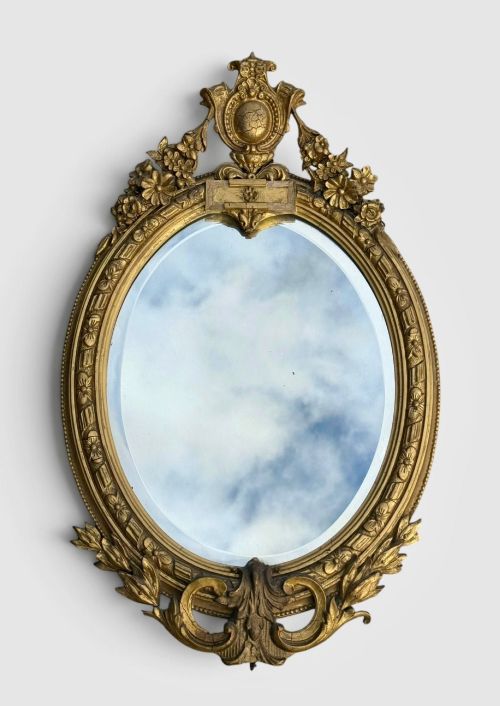
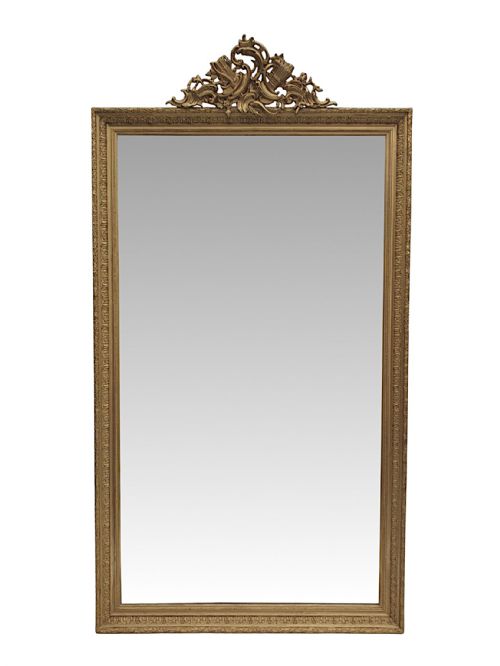
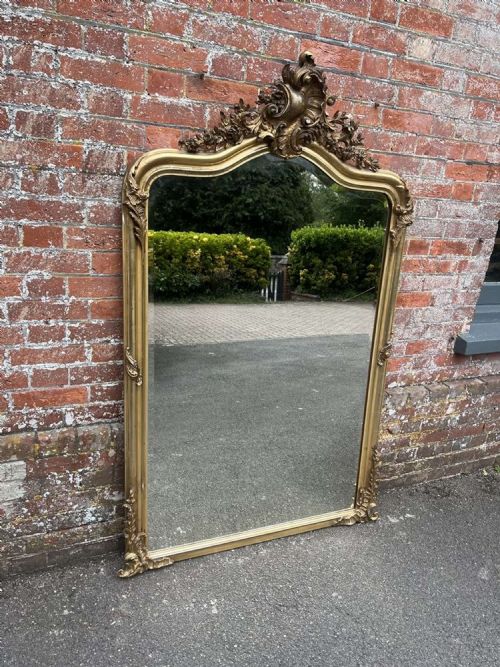
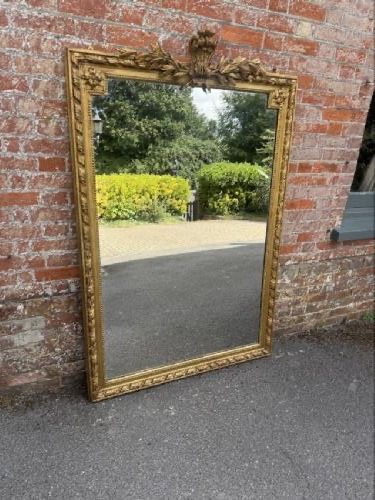
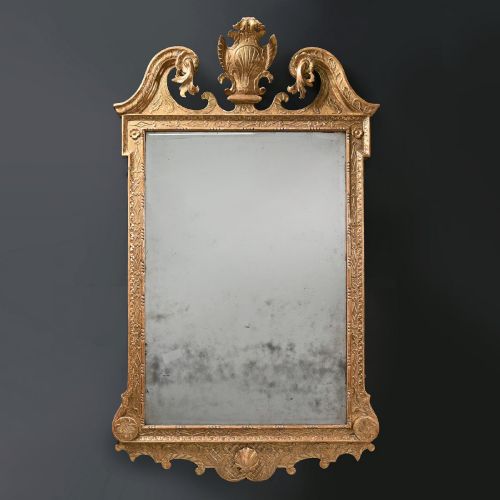
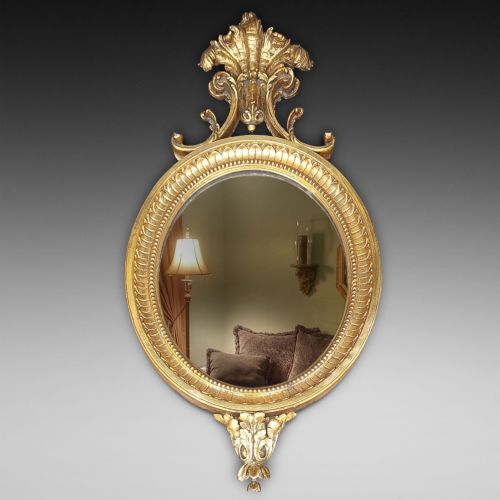
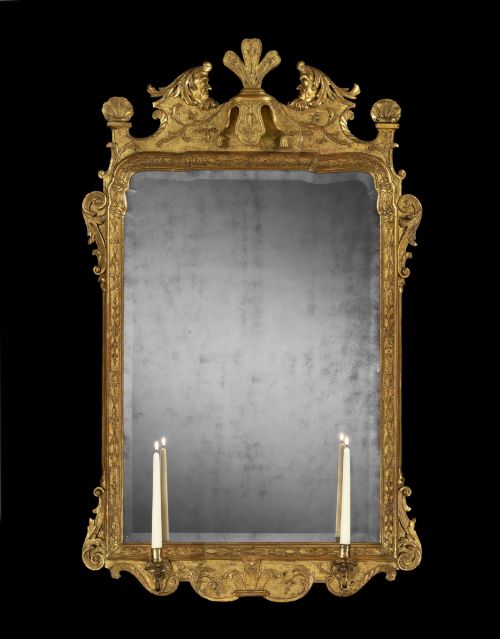


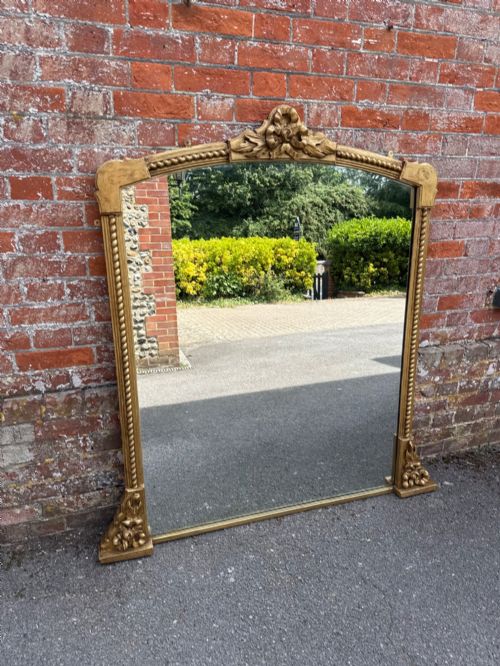
Gesso Giltwood Wall Mirror
When choosing a gesso giltwood wall mirror, you are selecting a decorative architectural focal point shaped by centuries of carving and gilding traditions.
Gesso Giltwood Wall Mirror
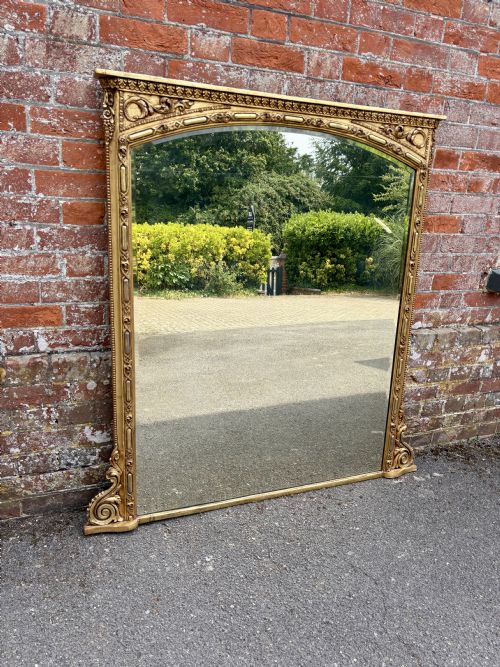
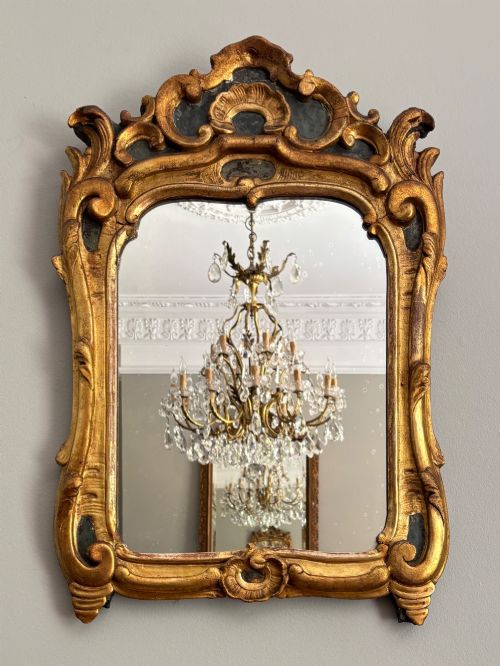
A gesso giltwood wall mirror combines a wooden structural foundation with moulded gesso ornament and gold leaf surfacing. These pieces range from compact pier mirrors and oval frames to large overmantel mirrors designed to sit above a fireplace.
The nineteenth-century Victorian pieces represent the most common encounters on this page, often showing arched tops, rope twist details, and elaborate Rococo Revival or French Chateau styling. Earlier eighteenth-century examples draw upon George II and Regency design idioms, displaying deep relief carving and structured proportions.
Makers and workshops across England, France, and Italy produced these looking glasses for domestic parlours and formal drawing rooms. Overmantel mirrors and pier glasses dominate the selection, functioning historically to reflect candlelight and amplify natural daylight within a room.
Materials and construction methods
Makers built the foundational framework using carved wood, typically pine or hardwood, assembled with traditional joinery to support the substantial weight of the glass. Over this timber base, layers of gesso - a mixture of chalk and size - were applied and smoothed to receive intricate decorative moulding.
Gold leaf was then laid over the gesso ground, sometimes combined with painted or ebonised details to accent the relief work. The mirror plates themselves often utilised original mercury glass or early silvered glass, secured within the rebated frame behind protective backing boards.
Listings include Victorian, Regency, and 18th Century periods alongside materials such as gesso, giltwood, and brass.
Factors determining quality
The depth and crispness of the gesso moulding separate finer examples from simpler production pieces. Skilled modellers achieved sharp undercut relief and clean botanical or scroll motifs that retain their definition beneath layers of gilding.
The preservation of the original gilt surface and mirror plate dictates the historical integrity of the piece. Subtle patination, minor craquelure in the gesso, and untouched mercury glass plates indicate genuine age and uncompromised character.
John Belchier·Butti and Son
The Gesso Giltwood Wall Mirror Glossary
- Gesso
- A dense preparation mixture of plaster, chalk, and glue applied to a wooden frame to create a smooth surface for carving and gilding. This compound allowed makers to achieve high-relief ornamentation.
- Giltwood
- Timber that has been coated with gold leaf or gold paint to simulate solid gold objects. It provides the reflective metallic sheen characteristic of formal period frames.
- Overmantel Mirror
- A large mirror specifically designed to hang on the wall directly above a fireplace mantelpiece. These pieces often feature wide rectangular or arched proportions to span the width of the hearth.
- Pier Mirror
- A tall, narrow mirror made to hang on the wall space between two windows, known as the pier. They frequently accompanied matching console tables in nineteenth-century interiors.
- Mercury Plate
- An early type of mirror glass backed with a tin and mercury amalgam before the invention of the modern silvering process. It often produces a characteristic mottled and starry reflection.
- Rococo Revival
- A nineteenth-century design style drawing on eighteenth-century French motifs, characterised by asymmetrical scrollwork, C-scrolls, and naturalistic floral elements.
Gesso Giltwood Wall Mirror: Frequently Asked Questions
What is a gesso giltwood wall mirror?
A gesso giltwood wall mirror is a decorative looking glass featuring a wooden base coated in chalk-based gesso and finished with gold leaf. These pieces utilise moulded and carved ornamentation to create ornate frames.
They were produced across several centuries, with styles ranging from eighteenth-century George II designs to Victorian and revivalist interpretations.
Where were overmantel mirrors placed?
Overmantel mirrors were designed specifically to be mounted on the wall directly above a fireplace mantelpiece. Their broad proportions and arched or shaped tops suited the architectural focal point of a formal room.
Historically, placing a mirror above the hearth helped distribute firelight and daylight throughout the interior space.
How do I distinguish nineteenth-century pieces from eighteenth-century ones?
Eighteenth-century examples often display hand-carved wooden elements beneath the gesso and heavier architectural proportions associated with George II or Regency styles. Nineteenth-century Victorian pieces frequently employ moulded gesso over simpler timber frames with Rococo Revival motifs.
Examining the construction behind the frame and the characteristics of the mirror plate helps clarify the period.
How should I live with an antique mirror?
Living with an antique mirror requires careful placement away from direct moisture and strong fluctuating heat sources that could affect the gesso and wood. Wall fixings must be robustly installed to support the substantial weight of the timber frame and glass.
Cleaning should be done gently with a dry or barely damp cloth, avoiding chemical sprays that might harm the antique gilt surface.