



Large Ceramic Punch Bowl
A large ceramic punch bowl is a grand vessel for communal gatherings, combining practical capacity with striking decorative presence on a table.
Large Ceramic Punch Bowl
When you search for a large ceramic punch bowl, you encounter substantial vessels created for social hospitality, most frequently originating from the eighteenth and nineteenth centuries. These pieces span Chinese Export porcelain, Japanese Imari, and English earthenware traditions.
Originating from periods such as the Qing dynasty and nineteenth century manufacturing hubs, these items served as the centrepiece for large gatherings and festive hospitality. Their scale and decorative schemes remain primary draws for collectors today.
Materials and production
Potters utilised porcelain and earthenware as the foundational bodies for these substantial vessels, shaping them by hand or wheel before firing. The resulting structures provided a durable canvas for complex surface decoration.
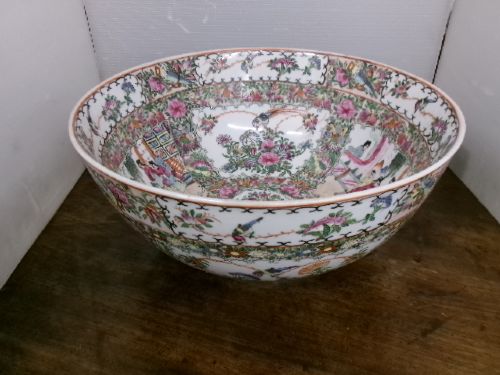
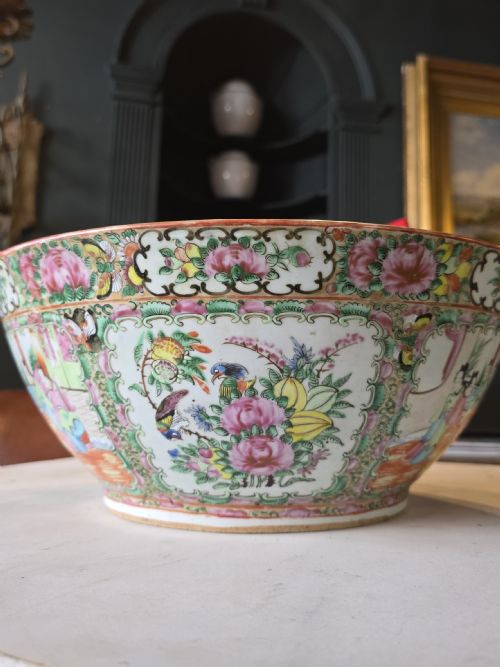
Artisans applied overglaze enamel, cobalt glaze, and gold leaf or gilding to achieve the rich colour palettes seen on Chinese Famille Rose and Japanese export pieces. Hand painting defined the intricate motifs that cover the exteriors and interiors.
Listings span the eighteenth and nineteenth centuries, incorporating porcelain and earthenware bodies decorated with cobalt glaze, enamel, and gold leaf.
Assessing quality and execution
The precision and detail of the hand painting distinguish superior examples from standard production, particularly in the rendering of facial expressions and floral motifs. Finer pieces demonstrate greater control over enamel thickness and cobalt blue clarity.
The crispness of form and the integration of gilding or gold leaf separate exceptional items from simpler utilitarian wares. Better preserved bowls retain the vibrancy of their original overglaze enamel without excessive rubbing.
Doulton Burslem·Ryuzan·Edm'e Samson
The Large Ceramic Punch Bowl Glossary
- Famille rose
- A major palette of Chinese ceramic glazes introduced in the eighteenth century, dominated by opaque pink enamel. It allowed for nuanced shading of floral and figural scenes.
- Imari
- A style of Japanese export porcelain featuring deep cobalt blue and iron red, frequently highlighted with gold. These wares were produced primarily for European and American markets.
- Armorial
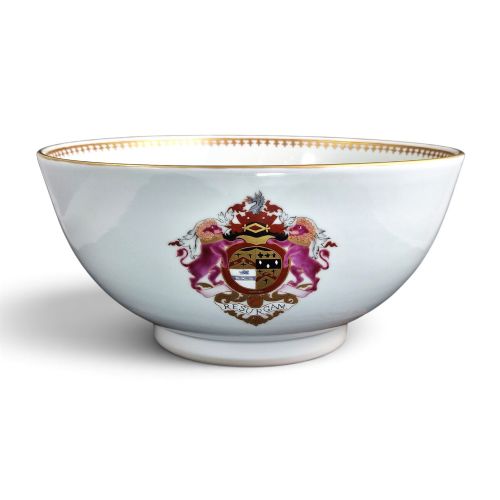
- Ceramic decoration incorporating family coats of arms or crests, commissioned specifically by wealthy patrons. Such pieces represent bespoke orders from international trade periods.
- Overglaze enamel
- Pigments applied to a previously fired and glazed ceramic surface, requiring a subsequent low-temperature firing to fuse the colours. This technique permits a wide spectrum of brilliant hues.
- Cobalt glaze
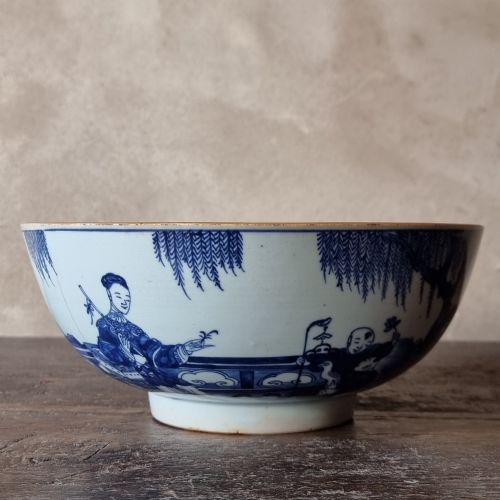
- A metallic oxide pigment applied under the glaze to produce a deep blue colour that withstands high firing temperatures. It forms the basis of many traditional blue and white designs.
Large Ceramic Punch Bowl: Frequently Asked Questions
How were large ceramic punch bowls used?
These large vessels served at communal gatherings for mixing and serving alcoholic punches or other beverages to groups. Guests would ladle the liquid directly from the centre of the table during celebrations.
Beyond beverages, their substantial volume made them suitable for displaying fruit or acting as decorative centrepieces when not in active hospitality use.
How do I style a punch bowl at home?
Place the bowl centrally on a large dining table or sideboard where its painted motifs can be fully appreciated from all angles. Keeping the interior free of clutter highlights the craftsmanship of the base and sides.
Pair the piece with neutral surroundings to let the cobalt blue or Famille Rose enamels command attention without visual competition.
How do I date a Chinese export bowl?
Examine the stylistic indicators of the painted scenes, such as the palette composition and garment styles associated with the Qing dynasty or eighteenth century. Porcelain body characteristics and foot rim finish also offer clues to the era of manufacture.
Cross-reference these visual details with known trade periods, keeping in mind that export wares often bridged Eastern production methods with Western decorative demands.
What is the difference between Imari and Canton bowls?
Japanese Imari bowls rely on a distinct palette of cobalt blue, iron red, and gilding, often arranged in dense geometric and floral panels. They originate from specific kilns in Japan geared towards the export market.
Canton bowls, by contrast, frequently showcase Famille Rose enamels and figural Mandarin scenes reflecting Chinese export traditions of the nineteenth century.