

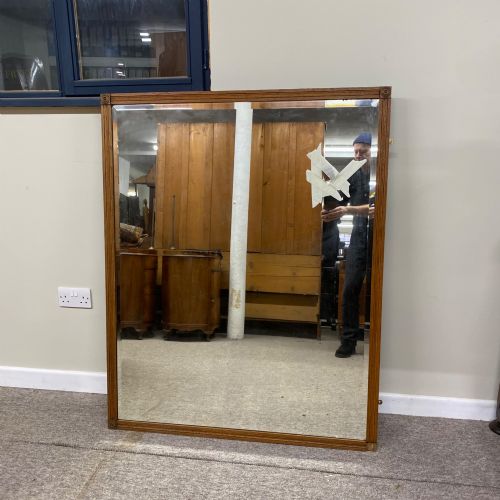
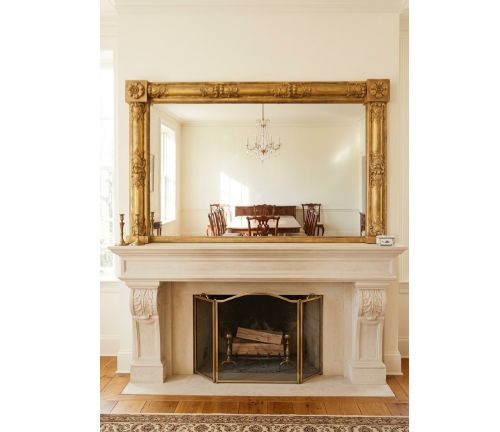
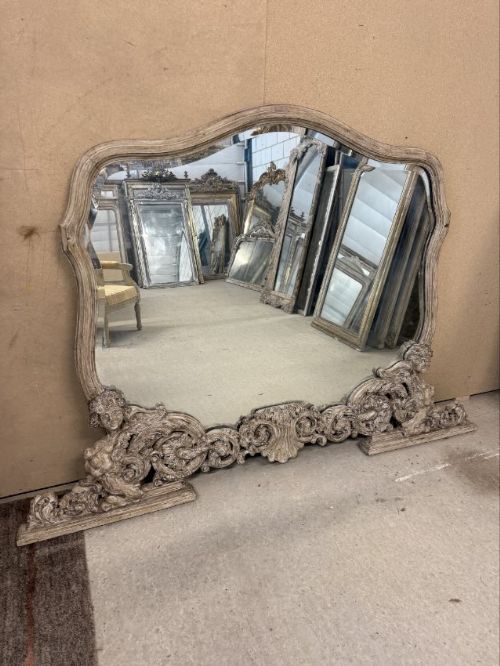
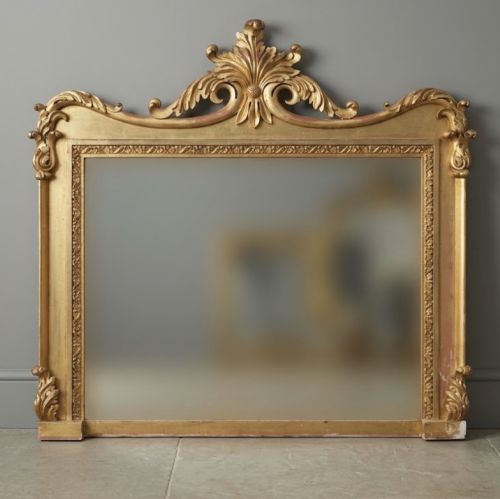
Large Carved Fireplace Mirror
A large carved fireplace mirror brings immediate architectural presence and reflected light to a principal room, anchoring the hearth.
Large Carved Fireplace Mirror
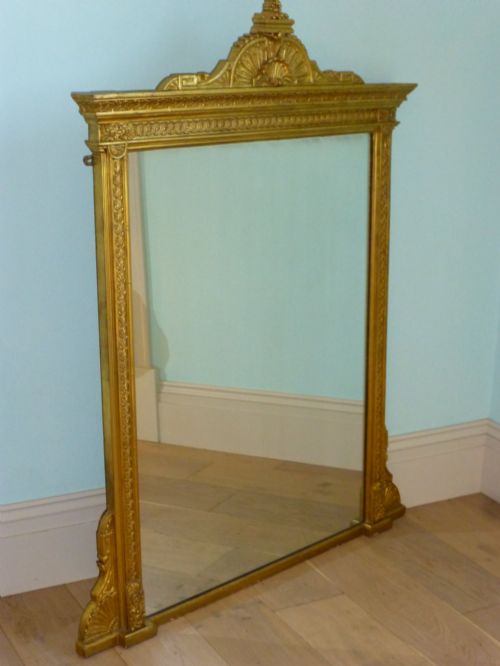
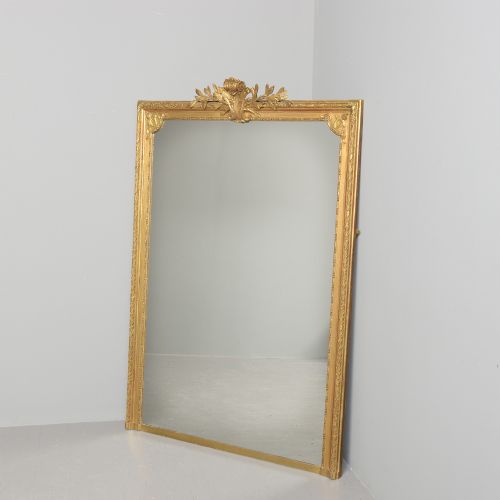
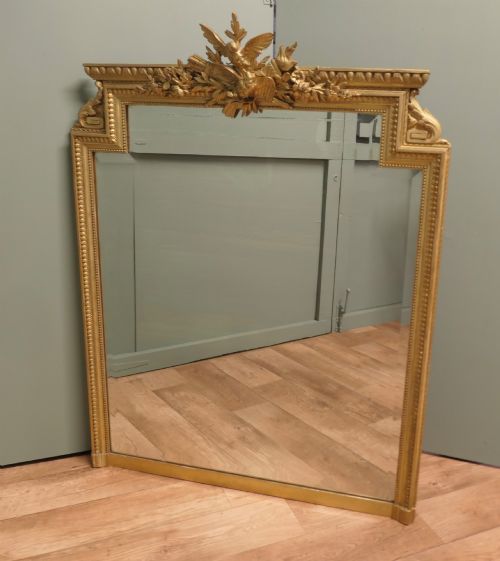
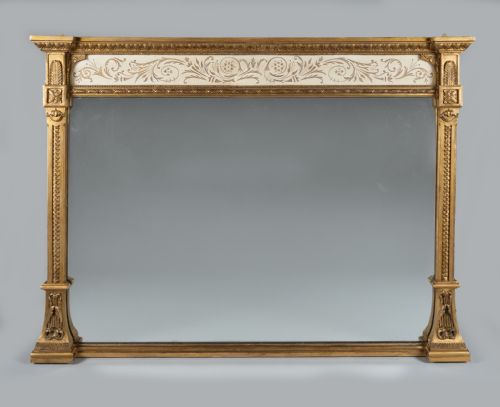
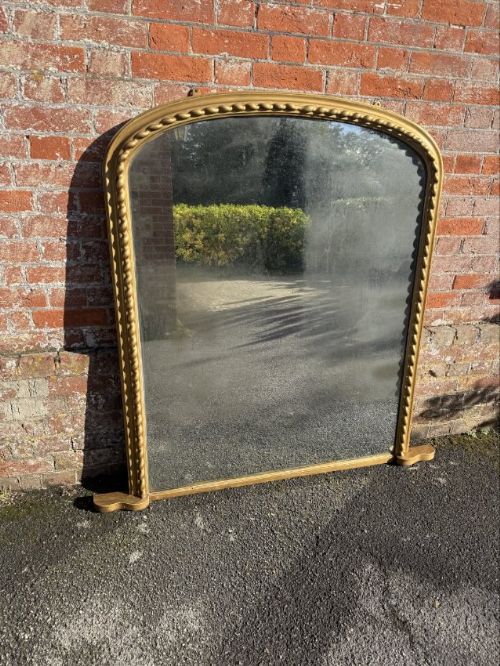
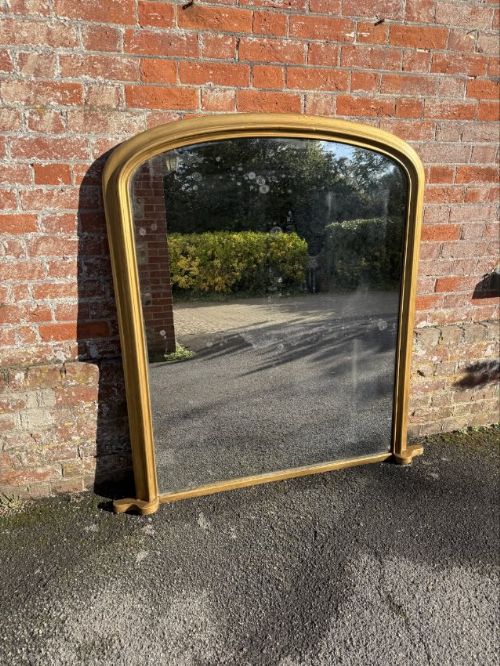
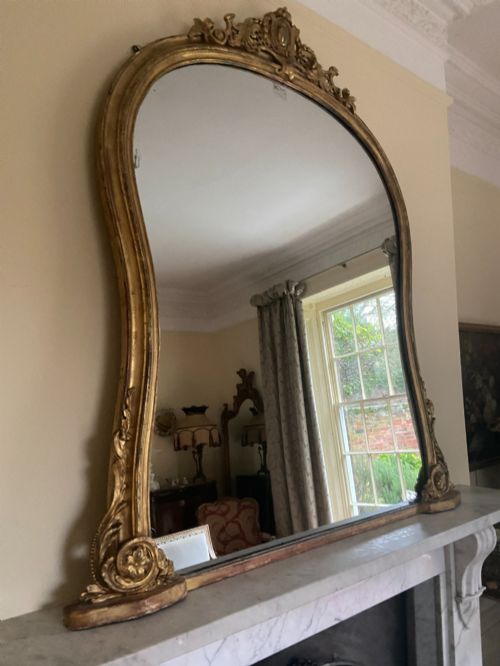
A large carved fireplace mirror typically takes the form of an overmantel mirror designed to sit directly above a mantelpiece. These pieces originate primarily from the nineteenth century, spanning Victorian, Regency, and Revival periods.
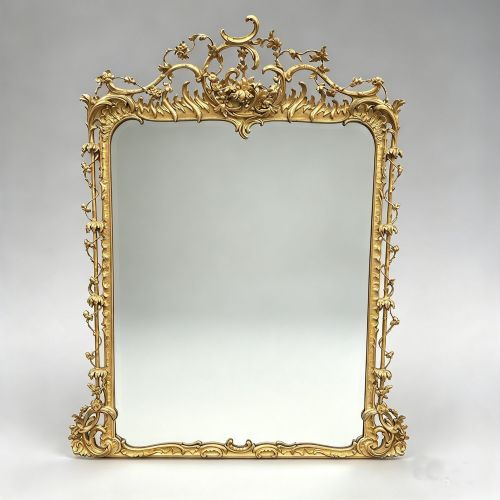
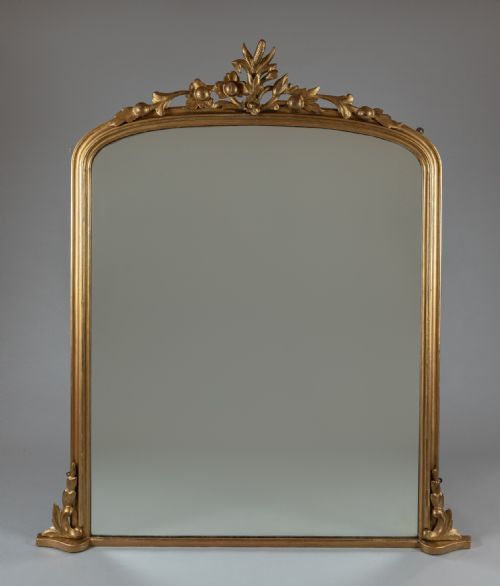
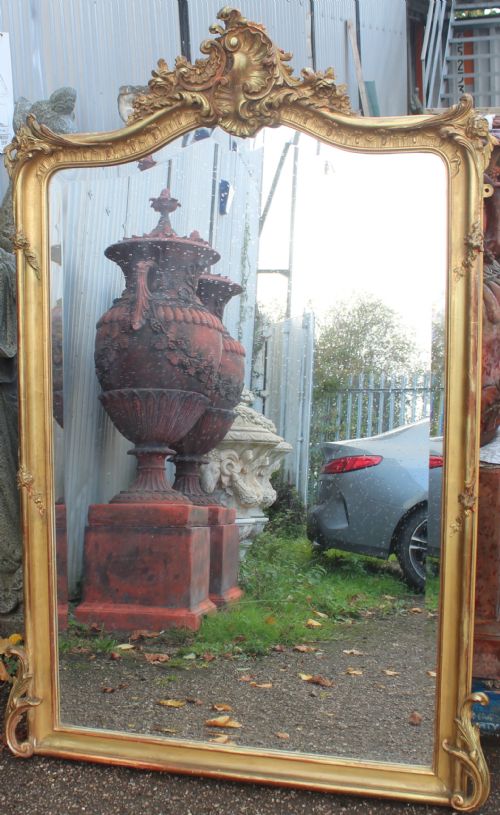
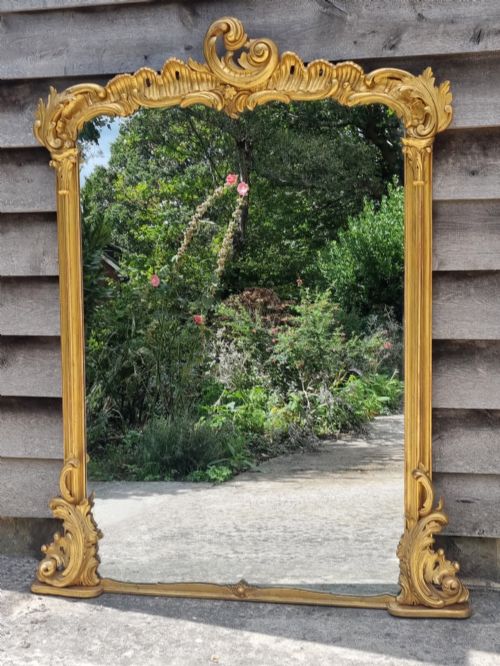
The most common version met on this page is the nineteenth-century giltwood or gesso overmantel mirror, often featuring an arched top or elaborate crest. Formats range from English country house proportions to continental Italian and French styles.
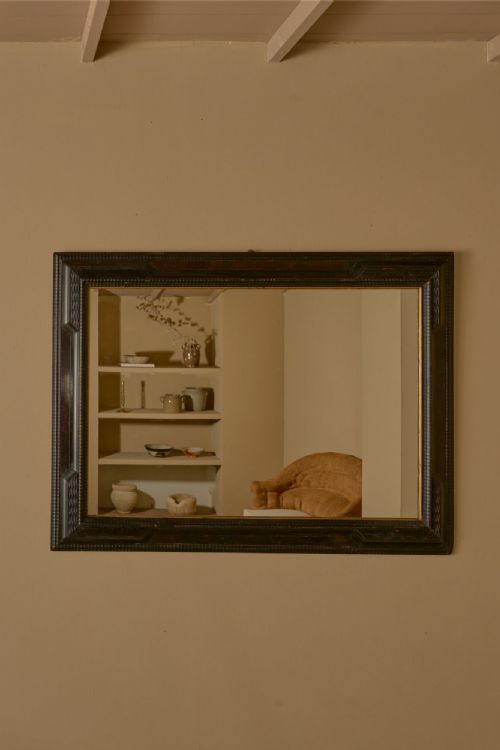
Makers and craftsmen produced these mirrors to dominate the chimney breast, frequently pairing them with architectural motifs such as rope twist frames, ribbed mouldings, and substantial pediments.
Materials and Construction
Carved wood provides the structural frame, frequently built from mahogany, oak, or softer timbers beneath the decorative surface. Artisans shaped these frames by hand before applying secondary layers.
Gesso and gold leaf are applied over the wooden substrate to create the gilded finishes seen on the majority of pieces. Gesso forms the raised ornamental details and crisp scrollwork before gilding takes place.
Mirror glass is set within the rebated frame, occasionally showing historical foxing or distortion that indicates age. Backboards typically consist of heavy timber planks secured by original headless nails or screws.
Large Carved Fireplace Mirror Retail Price Guide 2026
Typical asking prices for large carved fireplace mirror among the pieces listed under this phrase on Sellingantiques today, from the lower quarter to the upper quarter. They describe what is for sale here now, not the wider market.
Quality Variations
The depth and crispness of the carving set exceptional examples apart from standard production. Superior pieces display undercut foliage, sharply defined pediments, and meticulously modeled gesso enrichment rather than shallow or flat ornamentation.
The integrity of the original gilding and surface finish dictates the visual impact of the piece. High-quality mirrors retain their original gold leaf or early painted surfaces, whereas lesser examples suffer from heavy, unsympathetic overpainting or modern regilding that obscures the underlying detail.
Proportion and structural soundness distinguish superior frames. The best overmantel mirrors maintain rigid joints despite their weight, with balanced proportions that relate harmoniously to traditional fireplace dimensions.
The Large Carved Fireplace Mirror Glossary
- Overmantel mirror
- A large mirror specifically designed to hang or stand upon the mantelpiece above a fireplace.
- Gesso
- A plaster-like mixture applied to wood frames and carved to create raised ornamental details before gilding.
- Giltwood
- Timber that has been coated with gold leaf or gold paint to give a metallic, reflective finish.
- Rope twist
- A carved decorative moulding resembling the helical strands of a rope, common on nineteenth-century frames.
- Pediment
- The decorative architectural crowning element situated at the very top of the mirror frame.
Large Carved Fireplace Mirror: Frequently Asked Questions
What is the difference between an overmantel and a pier glass?
An overmantel mirror is specifically constructed in a landscape or tall arched format to occupy the wide wall space directly above a fireplace. Their proportions match the width of standard chimney breasts.
Pier glasses are traditionally taller and narrower, designed to hang on the narrow pier of wall space situated between two windows.
How should I clean antique mirror glass and gilt frames?
Dust the carved gesso and giltwood gently with a dry, soft brush to remove surface particles without damaging the delicate gold leaf. Moisture can lift old gesso, so liquid cleaners must be avoided on the frame entirely.
Use a minimal amount of distilled water on a soft cloth for the glass itself, taking care not to let any liquid seep behind the edges where it might affect the old silvering.
Can these mirrors be placed on a wall without a fireplace?
While designed for the hearth, many examples function successfully as large wall mirrors in hallways, dining rooms, or living spaces. Their architectural framing allows them to act as standalone statement pieces.
When hung independently, ensure the wall structure can bear the considerable weight of the timber, gesso, and glass construction.